Senate defers AI-chatbot disclosure bill amid implementation and enforcement concerns
February 08, 2025 | Senate Committee on Water and Land, Senate, Legislative , Hawaii
This article was created by AI summarizing key points discussed. AI makes mistakes, so for full details and context, please refer to the video of the full meeting. Please report any errors so we can fix them. Report an error »
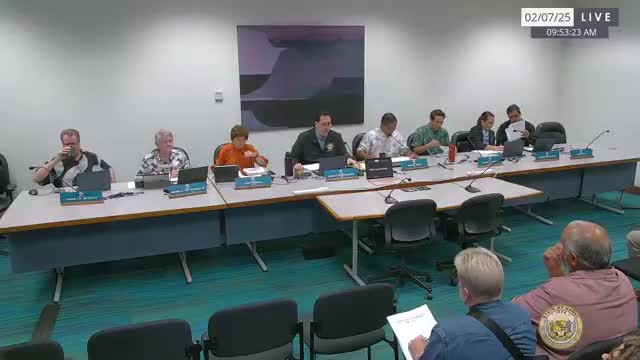
Senators heard testimony Feb. 7 on SB 640, a proposal to require businesses to disclose when consumers are interacting with artificial-intelligence chatbots or technologies capable of mimicking human behavior. The bill as drafted also authorizes private rights of action and establishes statutory penalties.
Dylan Hoffman of TechNet testified in respectful opposition, saying TechNet ‘‘understand[s] the need for consumers to be aware of their interactions with chatbots’’ but warned the bill’s definitions—particularly of "AI chatbot"—contain undefined terms that could sweep in many technologies across industries. Hoffman urged more tailored definitions to avoid unintended coverage and recommended placing enforcement authority with the state Attorney General rather than an open private right of action.
Office of Consumer Protection staff stood on written comments and raised enforcement questions. A small-business witness told the committee that broad disclosure and private litigation risk could harm small businesses that rely on AI tools for operations, noting that 99.3% of Hawaii businesses are small businesses.
Senators questioned the OCP and others about who would enforce the statute and whether treble damages and private enforcement provisions could be challenged in court. The committee concluded the measure required more work and recommended deferring decision-making so sponsors and stakeholders could refine language.
Next steps: the committee deferred SB 640 to allow clearer definitions and to consider enforcement options, including the possibility of assigning primary enforcement to the Attorney General instead of creating a broad private right of action.
Dylan Hoffman of TechNet testified in respectful opposition, saying TechNet ‘‘understand[s] the need for consumers to be aware of their interactions with chatbots’’ but warned the bill’s definitions—particularly of "AI chatbot"—contain undefined terms that could sweep in many technologies across industries. Hoffman urged more tailored definitions to avoid unintended coverage and recommended placing enforcement authority with the state Attorney General rather than an open private right of action.
Office of Consumer Protection staff stood on written comments and raised enforcement questions. A small-business witness told the committee that broad disclosure and private litigation risk could harm small businesses that rely on AI tools for operations, noting that 99.3% of Hawaii businesses are small businesses.
Senators questioned the OCP and others about who would enforce the statute and whether treble damages and private enforcement provisions could be challenged in court. The committee concluded the measure required more work and recommended deferring decision-making so sponsors and stakeholders could refine language.
Next steps: the committee deferred SB 640 to allow clearer definitions and to consider enforcement options, including the possibility of assigning primary enforcement to the Attorney General instead of creating a broad private right of action.
View the Full Meeting & All Its Details
This article offers just a summary. Unlock complete video, transcripts, and insights as a Founder Member.
✓
Watch full, unedited meeting videos
✓
Search every word spoken in unlimited transcripts
✓
AI summaries & real-time alerts (all government levels)
✓
Permanent access to expanding government content
30-day money-back guarantee
