Evanston board approves moving Willard and Bessie Rhodes dual‑language strands to Foster, 5–1
January 27, 2026 | Evanston CCSD 65, School Boards, Illinois
This article was created by AI summarizing key points discussed. AI makes mistakes, so for full details and context, please refer to the video of the full meeting. Please report any errors so we can fix them. Report an error »
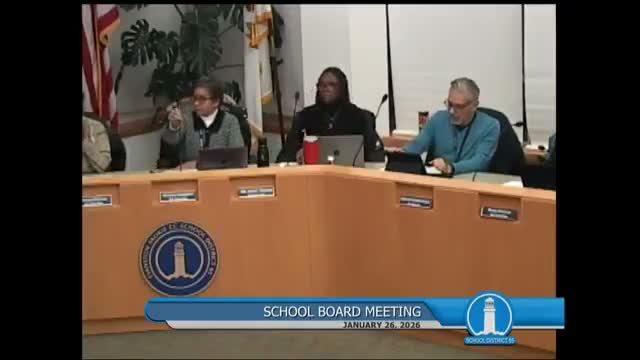
The Evanston CCSD 65 Board of Education voted 5–1 on Jan. 26 to consolidate the Willard and Bessie Rhodes two‑way immersion (TWI) strands and locate both at Foster Elementary beginning in the 2026–27 school year.
The motion passed after more than two hours of public comment in which parents, teachers and community advocates urged the board to preserve a TWI strand at Willard. Kelly Post, president of DEC, told the board that “transition plans are currently being developed without educator input,” and called on trustees and cabinet to engage classroom educators in the planning. Parent organizers shared a community survey they ran in January 2026; Meg Knappick told the board that her group’s survey (68% response rate) showed “47 percent of current Willard Tweed students will leave the program entirely” if the strand moves to Foster.
Administration and the multilingual team defended the consolidation as a way to strengthen program quality and sustainability. A district presenter said the recommendation is intended to “ensure a high quality, fully resourced TWI model with equitable access to certified bilingual staff, appropriate class sizes, and a full instructional model with fidelity.” The administration cited modeling that showed district‑wide viability if TWI operates with seven strands (rather than the previous eight), and estimated staffing savings of roughly $300,000 plus an estimated $80,000–$160,000 in transportation savings in modeled scenarios; administrators emphasized those figures are estimates and include ranges and assumptions.
Board members pressed the administration on several fronts before the vote: how current Willard and Bessie Rhodes families would be assigned (the administration said Willard students would be assigned as a cohort to Foster if the plan is approved), the reliability of the district’s enrollment and mapping data (the administration said it used the student information system and language‑screening data reported to ISBE), and the impact on TWS (Spanish‑dominant) students if classroom compositions shift toward more TWEs (English‑dominant students) in some grades.
Speakers at the podium raised three recurring concerns: transparency and timing of community engagement; transportation and safety for families who would travel to Foster (including crossings at McCormick and Green Bay); and the potential loss of bilingual students and community cohesion — particularly for families of students with IEPs who said they have not received clear transition guidance in Spanish. Parent testimony included practical safety requests such as crossing guards and traffic‑calming measures and called for explicit plans about which students would be bused and for how long.
During final roll call, the board recorded votes as: Hernandez — Yes; Updike — No; Weimer — Yes; Wilkins — Yes; Pinkard — Yes; Anderson — Yes. The motion passed 5–1. The district said it will use the coming months to complete follow‑up work — including transportation analysis and a policy review to clarify how TWI programs are categorized (magnet vs. academic program) — and to refine communications and supports for families during the transition.
The board’s approval does not itself change eligibility rules or detailed transportation policy; administration said those operational items would return to the board for further review and, where required, separate votes. The most immediate next steps identified in the meeting were to finalize transportation modeling, identify safety mitigations for affected routes, and conduct targeted outreach to families (including Spanish‑language communication) and to special‑education case managers to outline individual IEP transition provisions.
The vote followed other business that evening, including a presentation of a special‑education audit and approval of contracts and audits. The board adjourned at 9:33 p.m.
The motion passed after more than two hours of public comment in which parents, teachers and community advocates urged the board to preserve a TWI strand at Willard. Kelly Post, president of DEC, told the board that “transition plans are currently being developed without educator input,” and called on trustees and cabinet to engage classroom educators in the planning. Parent organizers shared a community survey they ran in January 2026; Meg Knappick told the board that her group’s survey (68% response rate) showed “47 percent of current Willard Tweed students will leave the program entirely” if the strand moves to Foster.
Administration and the multilingual team defended the consolidation as a way to strengthen program quality and sustainability. A district presenter said the recommendation is intended to “ensure a high quality, fully resourced TWI model with equitable access to certified bilingual staff, appropriate class sizes, and a full instructional model with fidelity.” The administration cited modeling that showed district‑wide viability if TWI operates with seven strands (rather than the previous eight), and estimated staffing savings of roughly $300,000 plus an estimated $80,000–$160,000 in transportation savings in modeled scenarios; administrators emphasized those figures are estimates and include ranges and assumptions.
Board members pressed the administration on several fronts before the vote: how current Willard and Bessie Rhodes families would be assigned (the administration said Willard students would be assigned as a cohort to Foster if the plan is approved), the reliability of the district’s enrollment and mapping data (the administration said it used the student information system and language‑screening data reported to ISBE), and the impact on TWS (Spanish‑dominant) students if classroom compositions shift toward more TWEs (English‑dominant students) in some grades.
Speakers at the podium raised three recurring concerns: transparency and timing of community engagement; transportation and safety for families who would travel to Foster (including crossings at McCormick and Green Bay); and the potential loss of bilingual students and community cohesion — particularly for families of students with IEPs who said they have not received clear transition guidance in Spanish. Parent testimony included practical safety requests such as crossing guards and traffic‑calming measures and called for explicit plans about which students would be bused and for how long.
During final roll call, the board recorded votes as: Hernandez — Yes; Updike — No; Weimer — Yes; Wilkins — Yes; Pinkard — Yes; Anderson — Yes. The motion passed 5–1. The district said it will use the coming months to complete follow‑up work — including transportation analysis and a policy review to clarify how TWI programs are categorized (magnet vs. academic program) — and to refine communications and supports for families during the transition.
The board’s approval does not itself change eligibility rules or detailed transportation policy; administration said those operational items would return to the board for further review and, where required, separate votes. The most immediate next steps identified in the meeting were to finalize transportation modeling, identify safety mitigations for affected routes, and conduct targeted outreach to families (including Spanish‑language communication) and to special‑education case managers to outline individual IEP transition provisions.
The vote followed other business that evening, including a presentation of a special‑education audit and approval of contracts and audits. The board adjourned at 9:33 p.m.
View the Full Meeting & All Its Details
This article offers just a summary. Unlock complete video, transcripts, and insights as a Founder Member.
✓
Watch full, unedited meeting videos
✓
Search every word spoken in unlimited transcripts
✓
AI summaries & real-time alerts (all government levels)
✓
Permanent access to expanding government content
30-day money-back guarantee
