Florida Senate approves bill imposing mandatory life for manslaughter of on-duty officers after heated debate
January 29, 2026 | 2026 Legislature FL, Florida
This article was created by AI summarizing key points discussed. AI makes mistakes, so for full details and context, please refer to the video of the full meeting. Please report any errors so we can fix them. Report an error »
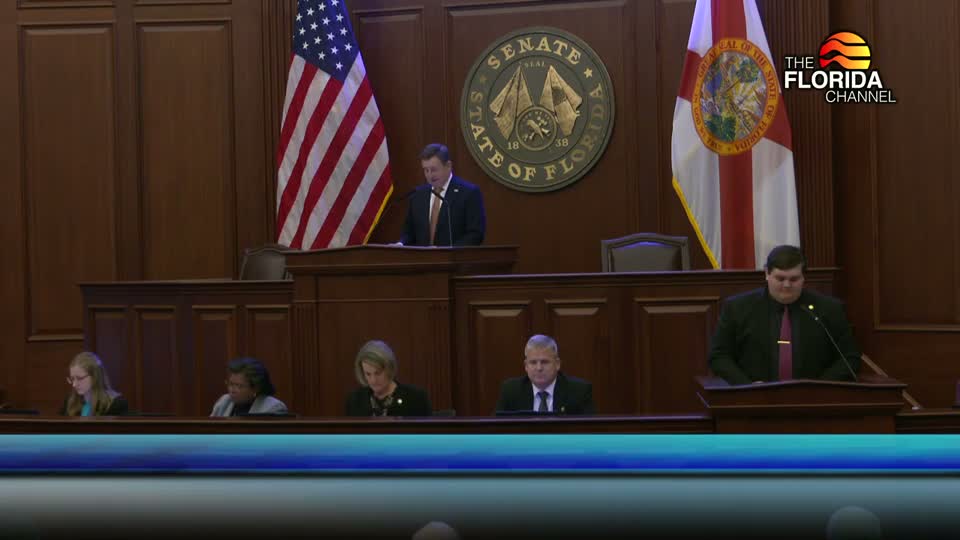
The Florida Senate on the floor Tuesday passed Committee Substitute for Senate Bill 156, a measure the sponsor said honors Officer Jason Rayner and responds to what he described as confusion in a prior prosecution. The bill adds manslaughter of a law enforcement officer to a list of offenses that carry a mandatory life sentence without eligibility for release and amends the statutory language to reference an officer's "official duties." The Senate recorded 31 yays and 4 nays.
Senator Lee, sponsor of the bill, told colleagues the legislation "puts a termination of who was at fault during a police interaction where it belongs, fully in the hands of the court." He said the bill aims to correct what he and supporters view as prosecutorial and jury-form problems in a case involving Officer Rayner and to ensure "the sentencing" phase yields proportional punishments.
Opponents said the bill removes statutory guardrails that currently protect civilians from unlawful use of force. Senator Bracey Davis said the measure "says that if law enforcement officers arrest and detain you, even if that detention is unlawful, you have no legal right to resist," and warned it would require people to "endure force first and perhaps seek justice later." She framed mandatory life for manslaughter as disproportionate, noting manslaughter generally covers unintentional deaths and that the penalty under current law for manslaughter is far lower.
Several senators questioned technical elements of the bill. Senator Pizzo and others reviewed the underlying jury verdict form in the referenced prosecution (described in floor debate as the Othel Wallace matter), asking whether errors in charging or in a verdict form should be remedied by statute. Senator Lee said juries and courts retain defenses such as self-defense and that the bill focuses on the sentencing consequence if manslaughter is found.
The floor also addressed the statutory text removed from current law. Senator Smith urged clarity about deletion of language that states a law enforcement officer (or a person summoned to assist) is not justified in the use of force if the arrest or execution of a legal duty is unlawful and known to be unlawful. Senator Lee and other supporters said the bill adds good-faith language and that an officer cannot simultaneously act in good faith and knowingly violate the law.
Amendments affecting those provisions were offered and explained on the floor but ultimately withdrawn. Senator Russon described an amendment to restore the current statutory language about unlawful arrests and officers' use of force, calling it a necessary guardrail; she withdrew it after discussion. Senator Bracey Davis briefly offered an amendment to equalize mandatory penalties for unlawful killings by officers but also withdrew that amendment after making the point to the chamber.
Supporters framed the bill as a fix for a procedural failing they said denied the Rayner family the sentence they sought. Senator Bizzo, who said he voted for an earlier version of the measure, argued the bill corrects an "oversight" in charging and verdict forms and restores proportionality in sentencing. Senator Hooper characterized the bill as a needed protection for officers who "don't have time to pull out the SOP manual or the statute book" in life-or-death encounters.
After closing remarks from the sponsor, the Senate moved to final passage. The clerk reported the vote as 31 yays and 4 nays and announced that the bill passed. The Senate subsequently certified bills passed that day to the House.
What comes next: The measure now goes to the Florida House of Representatives for consideration. The Senate debate made clear the central dispute centers on whether statutory language that some senators described as protecting civilians was appropriately replaced with good-faith and jury-instruction language, and whether the change substitutes a legislative fix for prosecutorial or trial-level practice.
Action: Committee Substitute for Senate Bill 156, "An act relating to criminal offenses against law enforcement officers and other personnel," moved to third reading and passed the Senate (31-4).
Senator Lee, sponsor of the bill, told colleagues the legislation "puts a termination of who was at fault during a police interaction where it belongs, fully in the hands of the court." He said the bill aims to correct what he and supporters view as prosecutorial and jury-form problems in a case involving Officer Rayner and to ensure "the sentencing" phase yields proportional punishments.
Opponents said the bill removes statutory guardrails that currently protect civilians from unlawful use of force. Senator Bracey Davis said the measure "says that if law enforcement officers arrest and detain you, even if that detention is unlawful, you have no legal right to resist," and warned it would require people to "endure force first and perhaps seek justice later." She framed mandatory life for manslaughter as disproportionate, noting manslaughter generally covers unintentional deaths and that the penalty under current law for manslaughter is far lower.
Several senators questioned technical elements of the bill. Senator Pizzo and others reviewed the underlying jury verdict form in the referenced prosecution (described in floor debate as the Othel Wallace matter), asking whether errors in charging or in a verdict form should be remedied by statute. Senator Lee said juries and courts retain defenses such as self-defense and that the bill focuses on the sentencing consequence if manslaughter is found.
The floor also addressed the statutory text removed from current law. Senator Smith urged clarity about deletion of language that states a law enforcement officer (or a person summoned to assist) is not justified in the use of force if the arrest or execution of a legal duty is unlawful and known to be unlawful. Senator Lee and other supporters said the bill adds good-faith language and that an officer cannot simultaneously act in good faith and knowingly violate the law.
Amendments affecting those provisions were offered and explained on the floor but ultimately withdrawn. Senator Russon described an amendment to restore the current statutory language about unlawful arrests and officers' use of force, calling it a necessary guardrail; she withdrew it after discussion. Senator Bracey Davis briefly offered an amendment to equalize mandatory penalties for unlawful killings by officers but also withdrew that amendment after making the point to the chamber.
Supporters framed the bill as a fix for a procedural failing they said denied the Rayner family the sentence they sought. Senator Bizzo, who said he voted for an earlier version of the measure, argued the bill corrects an "oversight" in charging and verdict forms and restores proportionality in sentencing. Senator Hooper characterized the bill as a needed protection for officers who "don't have time to pull out the SOP manual or the statute book" in life-or-death encounters.
After closing remarks from the sponsor, the Senate moved to final passage. The clerk reported the vote as 31 yays and 4 nays and announced that the bill passed. The Senate subsequently certified bills passed that day to the House.
What comes next: The measure now goes to the Florida House of Representatives for consideration. The Senate debate made clear the central dispute centers on whether statutory language that some senators described as protecting civilians was appropriately replaced with good-faith and jury-instruction language, and whether the change substitutes a legislative fix for prosecutorial or trial-level practice.
Action: Committee Substitute for Senate Bill 156, "An act relating to criminal offenses against law enforcement officers and other personnel," moved to third reading and passed the Senate (31-4).
View the Full Meeting & All Its Details
This article offers just a summary. Unlock complete video, transcripts, and insights as a Founder Member.
✓
Watch full, unedited meeting videos
✓
Search every word spoken in unlimited transcripts
✓
AI summaries & real-time alerts (all government levels)
✓
Permanent access to expanding government content
30-day money-back guarantee
