Panel backs bill allowing parent‑requested cameras in majority‑ESE classrooms, debate centers on funding and privacy
January 29, 2026 | 2026 Legislature FL, Florida
This article was created by AI summarizing key points discussed. AI makes mistakes, so for full details and context, please refer to the video of the full meeting. Please report any errors so we can fix them. Report an error »
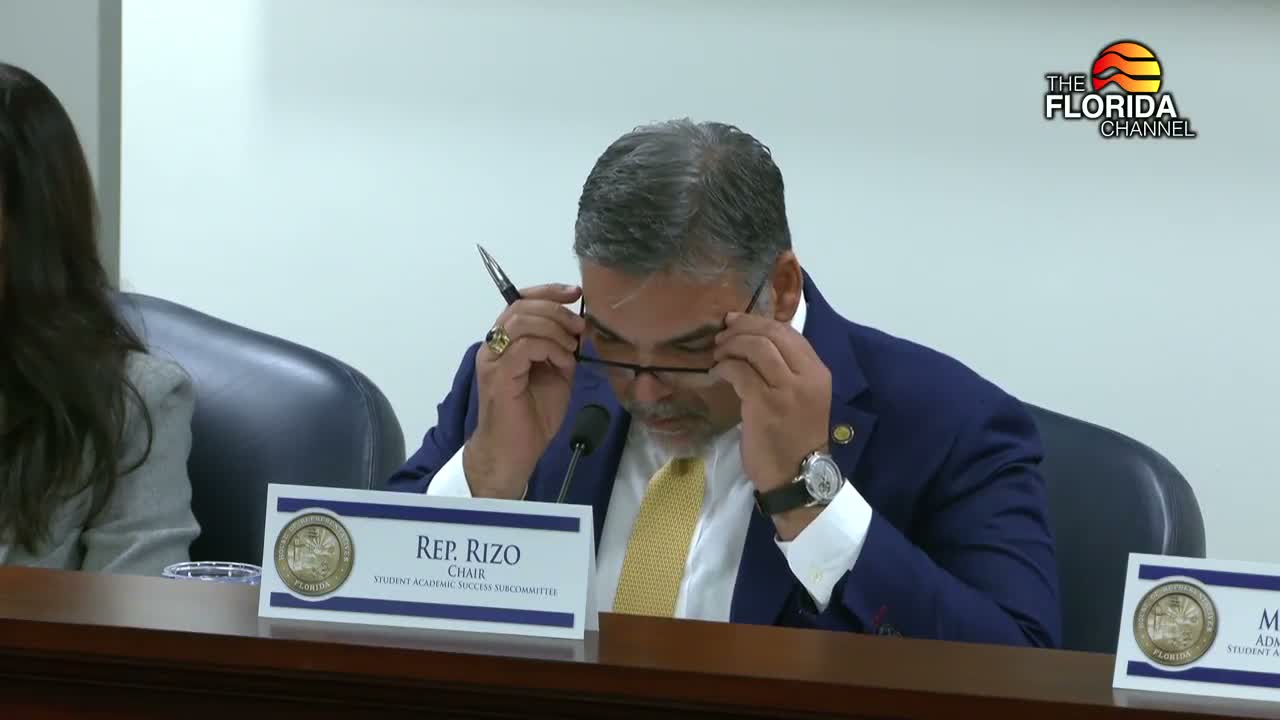
Representative Chambliss presented HB 859 as a tool to help nonverbal students and families seek evidence of alleged abuse or incidents. “What this bill does is it allows for video cameras to be placed in classrooms where there's 50% or more ESE students in those classrooms,” Chambliss said, adding that footage would be produced at a parent’s request and that non‑involved students’ faces would be blurred.
Committee members raised privacy questions and logistical concerns. Vice Chair Bankston and Representative Benaroche asked whether the camera placement is activated by parent request or whether parents must only request footage; Chambliss said cameras are placed when a parent requests them in an eligible classroom and that reviews are closed‑circuit, not public. Representative Michael asked how long footage is retained; sponsor said footage would be stored for three months and custody would be with the principal, who would set disposal procedures.
An amendment (barcode 248507) that removed the bill’s appropriation language was adopted; several members pressed the sponsor on whether removing the appropriation created an unfunded mandate. Marquis Miller of Orange County Public Schools said the bill would be an unfunded mandate for many districts because categorical and safety funds do not fully cover added costs. Heather Felton (Manatee County School Board) urged the committee to consider the costs of face‑blurring technology and teacher privacy during planning periods.
Representative McFarland told members there is a $1,000,000 member appropriation under discussion to support the program, which sponsors described as a preferred path instead of writing an appropriation into the bill text. After debate, the committee recorded 17 yeas and 0 nays and the chair announced HB 859 would be reported favorably.
What’s next: HB 859 will proceed from the subcommittee with questions about funding and implementation likely to follow in later stages.
Committee members raised privacy questions and logistical concerns. Vice Chair Bankston and Representative Benaroche asked whether the camera placement is activated by parent request or whether parents must only request footage; Chambliss said cameras are placed when a parent requests them in an eligible classroom and that reviews are closed‑circuit, not public. Representative Michael asked how long footage is retained; sponsor said footage would be stored for three months and custody would be with the principal, who would set disposal procedures.
An amendment (barcode 248507) that removed the bill’s appropriation language was adopted; several members pressed the sponsor on whether removing the appropriation created an unfunded mandate. Marquis Miller of Orange County Public Schools said the bill would be an unfunded mandate for many districts because categorical and safety funds do not fully cover added costs. Heather Felton (Manatee County School Board) urged the committee to consider the costs of face‑blurring technology and teacher privacy during planning periods.
Representative McFarland told members there is a $1,000,000 member appropriation under discussion to support the program, which sponsors described as a preferred path instead of writing an appropriation into the bill text. After debate, the committee recorded 17 yeas and 0 nays and the chair announced HB 859 would be reported favorably.
What’s next: HB 859 will proceed from the subcommittee with questions about funding and implementation likely to follow in later stages.
Don't Miss a Word: See the Full Meeting!
Go beyond summaries. Unlock every video, transcript, and key insight with a Founder Membership.
✓
Get instant access to full meeting videos
✓
Search and clip any phrase from complete transcripts
✓
Receive AI-powered summaries & custom alerts
✓
Enjoy lifetime, unrestricted access to government data
30-day money-back guarantee
