Florida committee advances bill tightening union certification and dues rules after heated testimony
January 29, 2026 | 2026 Legislature FL, Florida
This article was created by AI summarizing key points discussed. AI makes mistakes, so for full details and context, please refer to the video of the full meeting. Please report any errors so we can fix them. Report an error »
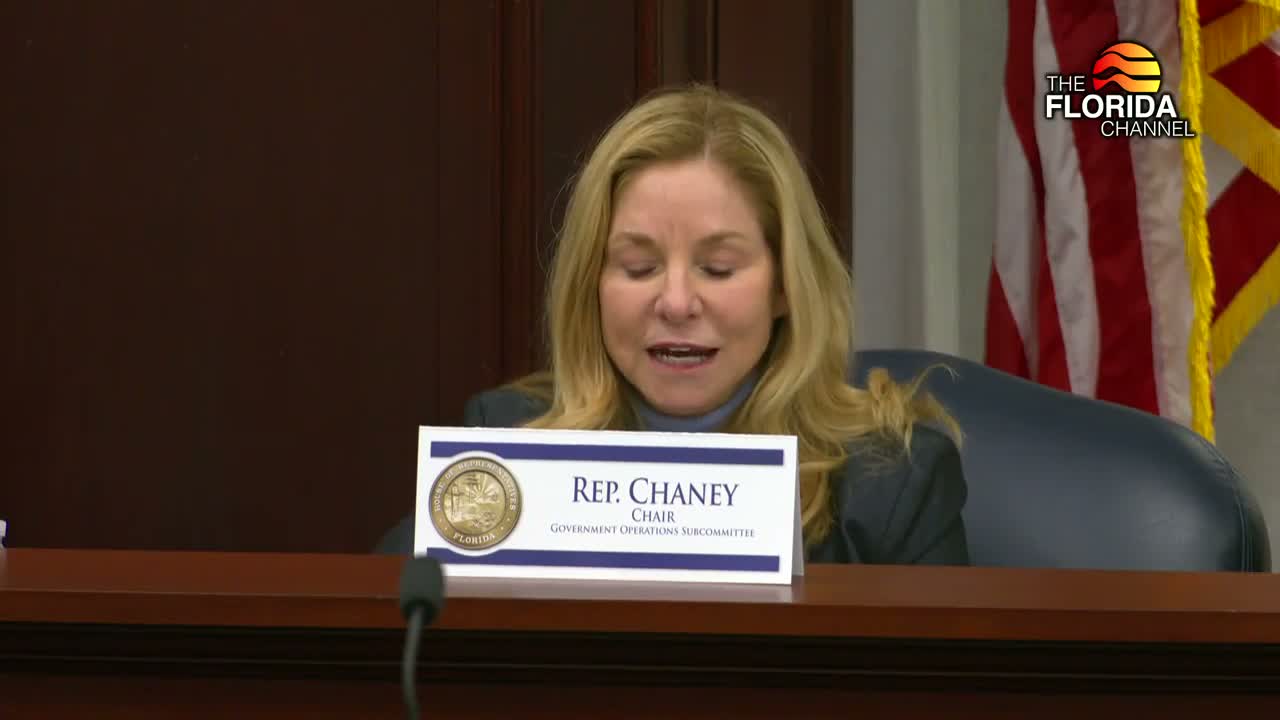
Representative Persons Maluca (presenter) defended HB 995 as an update to an outdated PERC framework and said the bill is “pro-employee,” arguing it restores employees’ voice by ensuring a majority of the entire bargaining unit — not just a majority of votes cast — determines certification, recertification or decertification. She cited multiple low-turnout elections as justification, saying some unions were certified with only a handful of employees voting in favor of representation.
The bill would require unions to provide registration applications to both employers and employees, disclose dues retained or distributed to affiliates or parent organizations, and clarify recertification thresholds. It would also narrow circumstances in which public employers may provide paid leave for employee-organization activities and create an expedited impasse-resolution process when the Legislature appropriates salary increases it describes as a financial urgency.
Opponents, largely teachers and school staff who testified in the committee room, said HB 995 would make it far harder for public employees to maintain collective representation. “This legislation . . . is going to further frustrate our right to assemble,” said Michael Borbina, an IB Spanish teacher from Lee County, who called the proposed thresholds a move to “make democracy difficult.” Emily Goritz, a teacher from Orlando, said the bill “doesn't meet any needs for my kids” and urged members to vote it down.
Several teachers testified about practical voting barriers, including the switch to mailed ballots for PERC elections, which some witnesses said reduced participation. Representative Persons Maluca acknowledged the voting-process concerns and pointed to fixes in the bill addressing election administration and reporting transparency.
Committee debate split largely along policy lines. Ranking Member Campbell described HB 995 as “regulatory overkill” that would place new burdens on working Floridians, while other members, including Representative Stark, said the package responds to patterns of very low participation that led to representation being imposed on large bargaining units.
The committee adopted a clarifying amendment expanding the statute’s language to account for dues paid to parent or affiliate organizations. After closing remarks, the roll call recorded 12 yeas and 5 nays to report the committee substitute favorably.
What’s next: The committee reported CSHB 995 favorably; the measure proceeds to further committee consideration and floor scheduling according to the legislative calendar.
The bill would require unions to provide registration applications to both employers and employees, disclose dues retained or distributed to affiliates or parent organizations, and clarify recertification thresholds. It would also narrow circumstances in which public employers may provide paid leave for employee-organization activities and create an expedited impasse-resolution process when the Legislature appropriates salary increases it describes as a financial urgency.
Opponents, largely teachers and school staff who testified in the committee room, said HB 995 would make it far harder for public employees to maintain collective representation. “This legislation . . . is going to further frustrate our right to assemble,” said Michael Borbina, an IB Spanish teacher from Lee County, who called the proposed thresholds a move to “make democracy difficult.” Emily Goritz, a teacher from Orlando, said the bill “doesn't meet any needs for my kids” and urged members to vote it down.
Several teachers testified about practical voting barriers, including the switch to mailed ballots for PERC elections, which some witnesses said reduced participation. Representative Persons Maluca acknowledged the voting-process concerns and pointed to fixes in the bill addressing election administration and reporting transparency.
Committee debate split largely along policy lines. Ranking Member Campbell described HB 995 as “regulatory overkill” that would place new burdens on working Floridians, while other members, including Representative Stark, said the package responds to patterns of very low participation that led to representation being imposed on large bargaining units.
The committee adopted a clarifying amendment expanding the statute’s language to account for dues paid to parent or affiliate organizations. After closing remarks, the roll call recorded 12 yeas and 5 nays to report the committee substitute favorably.
What’s next: The committee reported CSHB 995 favorably; the measure proceeds to further committee consideration and floor scheduling according to the legislative calendar.
Don't Miss a Word: See the Full Meeting!
Go beyond summaries. Unlock every video, transcript, and key insight with a Founder Membership.
✓
Get instant access to full meeting videos
✓
Search and clip any phrase from complete transcripts
✓
Receive AI-powered summaries & custom alerts
✓
Enjoy lifetime, unrestricted access to government data
30-day money-back guarantee
