Panel advances wide-ranging foreign-influence bill that would ban certain contracts, require registrations and terminate some sister-city ties
January 29, 2026 | 2026 Legislature FL, Florida
This article was created by AI summarizing key points discussed. AI makes mistakes, so for full details and context, please refer to the video of the full meeting. Please report any errors so we can fix them. Report an error »
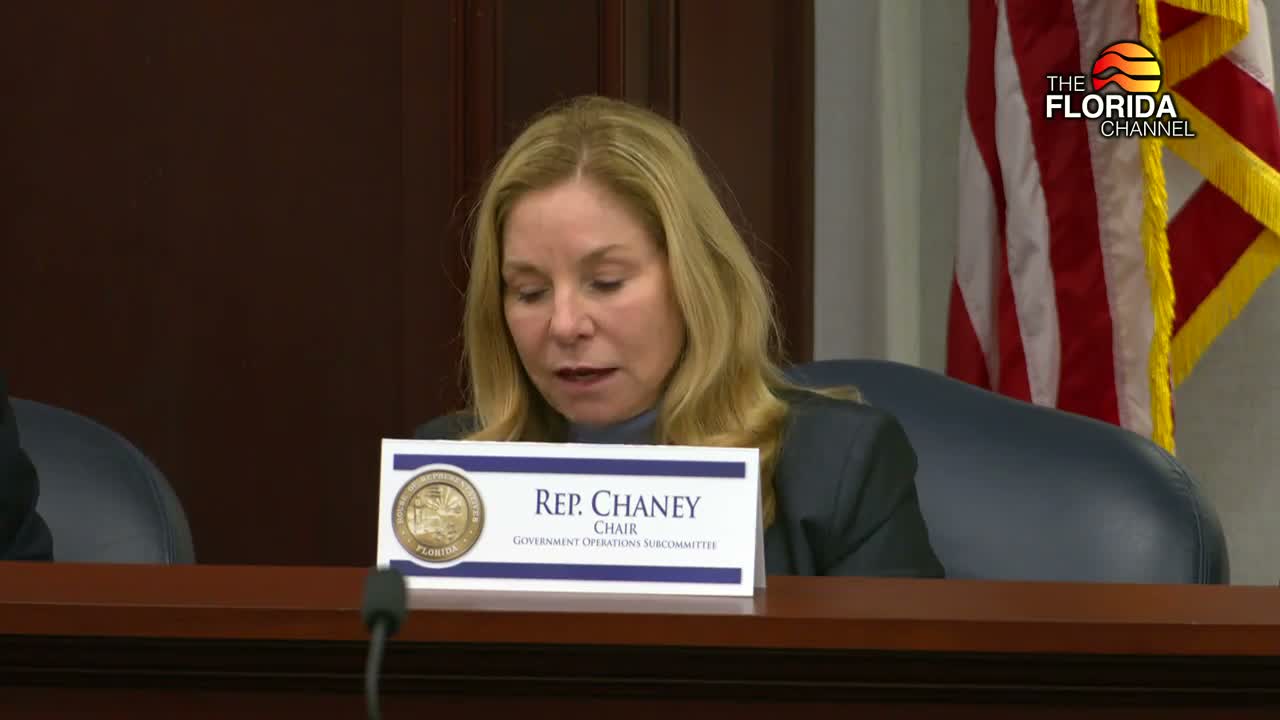
Representative Persons Maluca described HB 905 as the "Foreign Interference Restriction and Enforcement Act" (which she called the FIRE Act), saying it targets influence operations, cybersecurity risks and transnational repression. The bill would require registrations for certain agents of foreign countries of concern, ban gifts from those countries and designated foreign terrorist organizations, and prohibit IT contracts with foreign sources of concern where a foreign entity has controlling interest.
Members asked whether current state or local contracts and voting equipment would be affected. Representative Persons Maluca said she had no comprehensive inventory of every government contract statewide but told the committee she consulted the Department of State, which raised no concerns about existing voting equipment. She said the bill targets contracts where control, ownership or legal vulnerability to a foreign government exists, not simply where parts are manufactured overseas.
Witnesses supporting the bill included national-security and China-policy experts who cited the Chinese Communist Party’s organized "united front" activities, examples of technology that can be repurposed for espionage, and cases of transnational repression. Cheryl Yu of the Jamestown Foundation testified about networks tied to the CCP operating at state and local levels; Michael Lucci and others described procurement and critical-infrastructure vulnerabilities and referenced federal guidance calling for state and local vigilance.
A clarifying staff amendment was adopted; the committee then voted to report HB 905 favorably by a 17–0 margin.
What’s next: HB 905 proceeds to later committees and possible floor consideration; sponsors said the bill would require follow-up inventory work by agencies to identify any affected contracts or systems.
Members asked whether current state or local contracts and voting equipment would be affected. Representative Persons Maluca said she had no comprehensive inventory of every government contract statewide but told the committee she consulted the Department of State, which raised no concerns about existing voting equipment. She said the bill targets contracts where control, ownership or legal vulnerability to a foreign government exists, not simply where parts are manufactured overseas.
Witnesses supporting the bill included national-security and China-policy experts who cited the Chinese Communist Party’s organized "united front" activities, examples of technology that can be repurposed for espionage, and cases of transnational repression. Cheryl Yu of the Jamestown Foundation testified about networks tied to the CCP operating at state and local levels; Michael Lucci and others described procurement and critical-infrastructure vulnerabilities and referenced federal guidance calling for state and local vigilance.
A clarifying staff amendment was adopted; the committee then voted to report HB 905 favorably by a 17–0 margin.
What’s next: HB 905 proceeds to later committees and possible floor consideration; sponsors said the bill would require follow-up inventory work by agencies to identify any affected contracts or systems.
View the Full Meeting & All Its Details
This article offers just a summary. Unlock complete video, transcripts, and insights as a Founder Member.
✓
Watch full, unedited meeting videos
✓
Search every word spoken in unlimited transcripts
✓
AI summaries & real-time alerts (all government levels)
✓
Permanent access to expanding government content
30-day money-back guarantee
