Lawmakers review Vermont Higher Education Endowment Trust Fund statute and oversight questions
January 30, 2026 | Commerce & Economic Development, HOUSE OF REPRESENTATIVES, Committees, Legislative , Vermont
This article was created by AI summarizing key points discussed. AI makes mistakes, so for full details and context, please refer to the video of the full meeting. Please report any errors so we can fix them. Report an error »
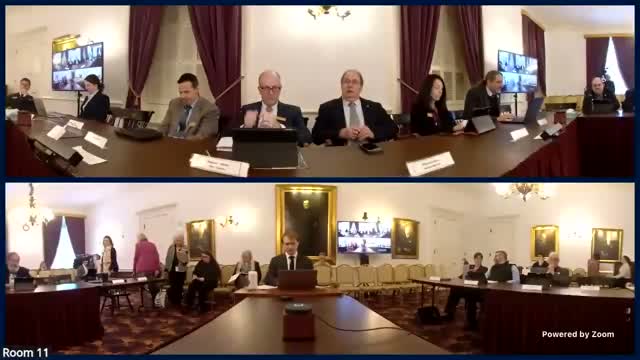
A joint hearing of the House Commerce & Economic Development Committee and the House Education Committee on Jan. 30 reviewed the statute establishing the Vermont Higher Education Endowment Trust Fund and raised questions about how the fund is managed and overseen.
John Gray of the Office of Legislative Council told lawmakers they were “in title 16, and we’re looking at section 28 85, the Vermont Higher Education Endowment Trust Fund.” He summarized the statute’s main elements: the fund is housed in the State Treasurer’s office, is capitalized by legislative appropriations, an estate‑tax overflow trigger, and other contributions, and is managed by the treasurer as trustee.
Under subsection C, Gray said, “in August of each fiscal year, beginning in the year 2000, the state treasurer shall withdraw and divide an amount equal to 5% of the assets” and allocate those funds equally among three beneficiaries: the University of Vermont, the Vermont State Colleges, and the Vermont Student Assistance Corporation. The statute defines “assets” as the average market value at the end of each quarter for the most recent 12 quarters (a three‑year rolling average) and includes a principal‑protection proviso that prevents allocations that would reduce the fund below the initial principal plus contributions.
A separate discretionary provision (subsection D) allows the secretary of administration and a statutory council to authorize the treasurer to make up to 2% of assets available for permanent endowments. Gray described the distribution under that provision as split half to the University of Vermont and half to the Vermont State Colleges and noted an institution may withdraw authorized endowment funds only after certifying that it has received private donations at least double the withdrawal amount.
The statute requires the treasurer to provide an annual financial report on disbursements and earnings on or before Sept. 30. Beneficiaries must submit an annual impact report to the House and Senate education committees each January evaluating how fund expenditures affected higher education in Vermont.
Committee members asked several practical and oversight questions. One lawmaker identified during the hearing as Representative Cooper asked whether the treasurer is compelled to disburse the 5% or has discretion; Gray replied the subsection C language (“shall”) directs the treasurer’s August withdrawal for the 5% allocation, while subsection D depends on authorization by the secretary and the council. Lawmakers also sought clarity on whether the council must set meeting dates, who calls the council, and who enforces beneficiary compliance with permitted uses; Gray said the statute is silent on meeting logistics and recommended consulting the Treasurer’s office for operational practice and recordkeeping.
Gray noted the recent public attention stems from estate‑tax receipts that exceeded forecasts; the statute routes estate‑tax receipts into the trust when certain surplus and forecast thresholds are met. He added that the legislature retains constitutional authority to change statutory language and has, in other budget contexts, used “notwithstanding” language to redirect trust fund flows.
The hearing closed without formal motions or votes. Committee members requested follow‑up information and suggested inviting staff from the State Treasurer’s office for practical implementation details and accounting practices.
John Gray of the Office of Legislative Council told lawmakers they were “in title 16, and we’re looking at section 28 85, the Vermont Higher Education Endowment Trust Fund.” He summarized the statute’s main elements: the fund is housed in the State Treasurer’s office, is capitalized by legislative appropriations, an estate‑tax overflow trigger, and other contributions, and is managed by the treasurer as trustee.
Under subsection C, Gray said, “in August of each fiscal year, beginning in the year 2000, the state treasurer shall withdraw and divide an amount equal to 5% of the assets” and allocate those funds equally among three beneficiaries: the University of Vermont, the Vermont State Colleges, and the Vermont Student Assistance Corporation. The statute defines “assets” as the average market value at the end of each quarter for the most recent 12 quarters (a three‑year rolling average) and includes a principal‑protection proviso that prevents allocations that would reduce the fund below the initial principal plus contributions.
A separate discretionary provision (subsection D) allows the secretary of administration and a statutory council to authorize the treasurer to make up to 2% of assets available for permanent endowments. Gray described the distribution under that provision as split half to the University of Vermont and half to the Vermont State Colleges and noted an institution may withdraw authorized endowment funds only after certifying that it has received private donations at least double the withdrawal amount.
The statute requires the treasurer to provide an annual financial report on disbursements and earnings on or before Sept. 30. Beneficiaries must submit an annual impact report to the House and Senate education committees each January evaluating how fund expenditures affected higher education in Vermont.
Committee members asked several practical and oversight questions. One lawmaker identified during the hearing as Representative Cooper asked whether the treasurer is compelled to disburse the 5% or has discretion; Gray replied the subsection C language (“shall”) directs the treasurer’s August withdrawal for the 5% allocation, while subsection D depends on authorization by the secretary and the council. Lawmakers also sought clarity on whether the council must set meeting dates, who calls the council, and who enforces beneficiary compliance with permitted uses; Gray said the statute is silent on meeting logistics and recommended consulting the Treasurer’s office for operational practice and recordkeeping.
Gray noted the recent public attention stems from estate‑tax receipts that exceeded forecasts; the statute routes estate‑tax receipts into the trust when certain surplus and forecast thresholds are met. He added that the legislature retains constitutional authority to change statutory language and has, in other budget contexts, used “notwithstanding” language to redirect trust fund flows.
The hearing closed without formal motions or votes. Committee members requested follow‑up information and suggested inviting staff from the State Treasurer’s office for practical implementation details and accounting practices.
Don't Miss a Word: See the Full Meeting!
Go beyond summaries. Unlock every video, transcript, and key insight with a Founder Membership.
✓
Get instant access to full meeting videos
✓
Search and clip any phrase from complete transcripts
✓
Receive AI-powered summaries & custom alerts
✓
Enjoy lifetime, unrestricted access to government data
30-day money-back guarantee
