Youth Lobby tells Vermont energy committee: defend Climate Superfund, fund greenhouse-gas reporting
January 30, 2026 | Environment & Energy, HOUSE OF REPRESENTATIVES, Committees, Legislative , Vermont
This article was created by AI summarizing key points discussed. AI makes mistakes, so for full details and context, please refer to the video of the full meeting. Please report any errors so we can fix them. Report an error »
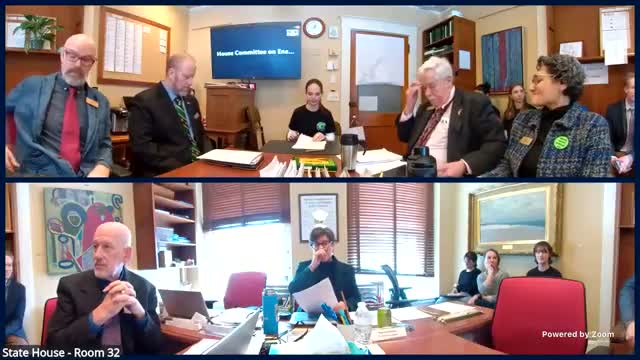
MONTPELIER, Vt. — Students from Youth Lobby told the House Energy and Digital Infrastructure committee on Jan. 29 that Vermont must continue implementing and funding the Climate Superfund Act and expand greenhouse-gas reporting to better prepare for climate-driven disasters.
Representative Kathleen James opened the session and invited the students to introduce themselves and present their requests to the committee. "We are constantly changing and shifting to work towards our climate goals, and we ask the same of you," Jane Schafer, a junior at Harwood Union High School, said in testimony about Youth Lobby's long-running civic efforts.
Astrid Longstreth, a sophomore at Mount Mansfield Union High School, urged lawmakers to defend and fund the Climate Superfund Act and asked state leaders to ensure the Agency of Natural Resources has "enough funds to be able to implement it successfully." She described the Superfund law as a mechanism to make major fossil-fuel producers help pay for climate damages and to fund resilience projects.
"This is why the Climate Superfund Act is so important," Longstreth said, adding that the group supports creating a greenhouse-gas reporting requirement for the transportation and heating sectors, which the students said are the largest contributors to Vermont's emissions but the least documented.
Harmony Bell Devo, a member of the Vermont State Youth Council, recounted local flooding along the Mad River in July 2023 and described damage to farms, homes and businesses. "In 2023 alone, Vermont faced over $2,000,000,000 in climate disaster costs," she said, arguing that Superfund revenues should be directed toward adaptation and recovery.
The students also noted that the state's attorney general and treasurer were defending the Climate Superfund Act against litigation from the American Petroleum Institute, a point Longstreth cited as evidence the law is being contested in court but actively defended by state officials.
Committee members asked the students how they first became involved in youth advocacy and whether they coordinate with national organizations; students said their primary focus is state policy while naming national activists and suggested partners for outreach. Members also discussed youth mental-health supports for climate anxiety and options for pairing youth-led advocacy with adult partner groups.
The committee did not take formal action during the session. Representative James thanked the students and said written testimony would be posted to the committee record; the committee planned to reconvene at 2 p.m.
Why it matters: Vermont's Climate Superfund Act, passed in 2024, is framed by supporters as a model for holding fossil-fuel companies financially responsible for climate damages; students emphasized that funding and implementation capacity at the Agency of Natural Resources are necessary for the law to deliver resilience projects and long-term planning.
What was asked: Students urged (1) continued defense of the Climate Superfund Act in litigation, (2) adequate state funding for implementation, and (3) a greenhouse-gas reporting requirement for transportation and heating sectors so policymakers can better target emission reductions.
Next steps: No votes were recorded; the committee will consider written materials and follow its usual agenda schedule. The students asked the committee to stay in touch as implementation and budget decisions proceed.
Representative Kathleen James opened the session and invited the students to introduce themselves and present their requests to the committee. "We are constantly changing and shifting to work towards our climate goals, and we ask the same of you," Jane Schafer, a junior at Harwood Union High School, said in testimony about Youth Lobby's long-running civic efforts.
Astrid Longstreth, a sophomore at Mount Mansfield Union High School, urged lawmakers to defend and fund the Climate Superfund Act and asked state leaders to ensure the Agency of Natural Resources has "enough funds to be able to implement it successfully." She described the Superfund law as a mechanism to make major fossil-fuel producers help pay for climate damages and to fund resilience projects.
"This is why the Climate Superfund Act is so important," Longstreth said, adding that the group supports creating a greenhouse-gas reporting requirement for the transportation and heating sectors, which the students said are the largest contributors to Vermont's emissions but the least documented.
Harmony Bell Devo, a member of the Vermont State Youth Council, recounted local flooding along the Mad River in July 2023 and described damage to farms, homes and businesses. "In 2023 alone, Vermont faced over $2,000,000,000 in climate disaster costs," she said, arguing that Superfund revenues should be directed toward adaptation and recovery.
The students also noted that the state's attorney general and treasurer were defending the Climate Superfund Act against litigation from the American Petroleum Institute, a point Longstreth cited as evidence the law is being contested in court but actively defended by state officials.
Committee members asked the students how they first became involved in youth advocacy and whether they coordinate with national organizations; students said their primary focus is state policy while naming national activists and suggested partners for outreach. Members also discussed youth mental-health supports for climate anxiety and options for pairing youth-led advocacy with adult partner groups.
The committee did not take formal action during the session. Representative James thanked the students and said written testimony would be posted to the committee record; the committee planned to reconvene at 2 p.m.
Why it matters: Vermont's Climate Superfund Act, passed in 2024, is framed by supporters as a model for holding fossil-fuel companies financially responsible for climate damages; students emphasized that funding and implementation capacity at the Agency of Natural Resources are necessary for the law to deliver resilience projects and long-term planning.
What was asked: Students urged (1) continued defense of the Climate Superfund Act in litigation, (2) adequate state funding for implementation, and (3) a greenhouse-gas reporting requirement for transportation and heating sectors so policymakers can better target emission reductions.
Next steps: No votes were recorded; the committee will consider written materials and follow its usual agenda schedule. The students asked the committee to stay in touch as implementation and budget decisions proceed.
Don't Miss a Word: See the Full Meeting!
Go beyond summaries. Unlock every video, transcript, and key insight with a Founder Membership.
✓
Get instant access to full meeting videos
✓
Search and clip any phrase from complete transcripts
✓
Receive AI-powered summaries & custom alerts
✓
Enjoy lifetime, unrestricted access to government data
30-day money-back guarantee
