KDOT outlines Drive to 0 plan after five-year crash totals show nearly 1,920 deaths
January 23, 2026 | Committee on Transportation , Standing, HOUSE OF REPRESENTATIVES, Committees, Legislative, Kansas
This article was created by AI summarizing key points discussed. AI makes mistakes, so for full details and context, please refer to the video of the full meeting. Please report any errors so we can fix them. Report an error »
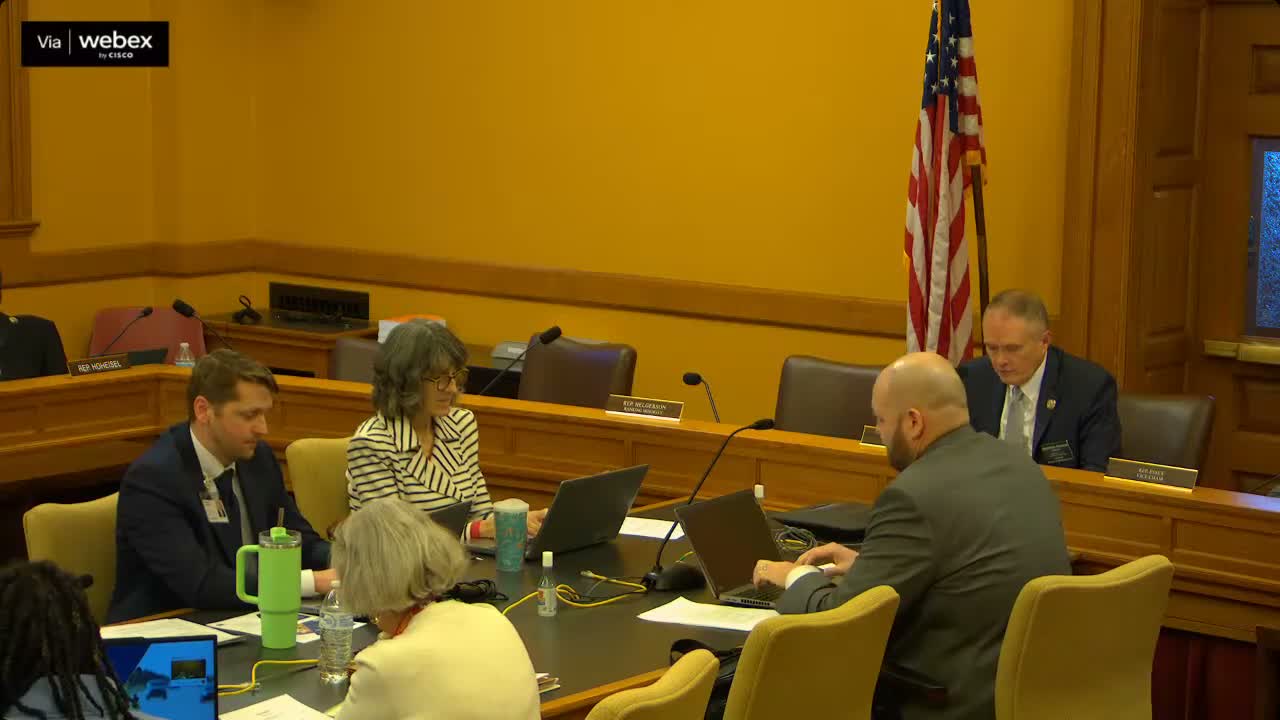
Vanessa Sparner, chief of transportation safety at the Kansas Department of Transportation, told the Committee on Transportation that "Over the last 5 years, 1,920 people lost their lives on Kansas roads," and that more than 7,500 people were seriously injured in that period.
Sparner said Kansas has trended downward in fatalities over the past five years and recorded its lowest-ever fatality total in state-recorded history, which she noted goes back to 1947. She cautioned, however, that serious-injury crashes have risen in urban and local roads and that anomalous multi-fatality crashes early in 2025 (two eight-fatality crashes) temporarily inflated that year’s totals.
The Drive to 0 strategic plan is a living, 30-page document with a two-page executive summary that the coalition approved last May and that received subsequent review by the KDOT secretary and the Federal Highway Administration, Sparner said. Appendix A lists discrete implementation steps, lead and support organizations, expected outputs, funding sources where applicable, and target timelines; KDOT plans an annual review to update priorities.
Sparner described the plan’s safe-system approach — combining safer people, safer vehicles, safer roads and improved post-crash care — as the organizing framework. She identified the coalition’s prioritized work across several teams and their top initiatives: a safety-corridor pilot and public education on proven infrastructure countermeasures (Safer People); incentives and infrastructure to support vehicle safety features (Safer Vehicles); a high‑risk urban roads program to assist local agencies with safety plans (Safer Roads); an excessive‑speed initiative and a safety‑camera pilot (Safer Speeds); and efforts to link crash, EMS and trauma data to improve post-crash outcomes.
Sparner listed recent progress already underway: installation of speed‑feedback signs on safety corridors, a county-level post‑crash care dashboard, millions in federal discretionary grants for local safety improvements, acquisition of telematics data to study risky driving, and launch of the high‑risk urban roads program. She said KDOT will host a Drive to 0 Day at the Capitol (March 11, backup March 13) and a transportation safety conference in April in Manhattan with roughly 400 registrants, 15 concurrent sessions and three plenary sessions.
In question-and-answer, legislators pressed Sparner on the highest‑impact interventions. She pointed to four top risky behaviors in fatal and serious‑injury crashes: lack of seat‑belt use (she said roughly "1 in 2" fatalities involve unbelted occupants and that Kansas belt use is about 7 percent below the national average), impaired driving (including drugs), distracted driving (about 1 in 5), and speeding (about 1 in 5). Sparner described a mix of education, enforcement and engineering measures — and, where supported by research, changes to fine structures and enforcement capacity — as complementary tools to raise belt use and reduce impairment and speeding.
Sparner named Secretary Calvin Reed as the Drive to 0 Coalition chair and listed policy support leads Joel Skelly, Catherine Magana and Lt. Roy Wise. She provided KDOT contact information (drive to 0@ks.gov) and the coalition website (ksdot.gov/driveto0) for members and stakeholders interested in engagement.
The committee did not take action on any specific legislation during the presentation; Sparner and staff indicated they are tracking several legislative items this session related to impaired driving, hands‑free laws, excessive speeding, work‑zone lighting and school‑bus stop‑arm violations.
Sparner said Kansas has trended downward in fatalities over the past five years and recorded its lowest-ever fatality total in state-recorded history, which she noted goes back to 1947. She cautioned, however, that serious-injury crashes have risen in urban and local roads and that anomalous multi-fatality crashes early in 2025 (two eight-fatality crashes) temporarily inflated that year’s totals.
The Drive to 0 strategic plan is a living, 30-page document with a two-page executive summary that the coalition approved last May and that received subsequent review by the KDOT secretary and the Federal Highway Administration, Sparner said. Appendix A lists discrete implementation steps, lead and support organizations, expected outputs, funding sources where applicable, and target timelines; KDOT plans an annual review to update priorities.
Sparner described the plan’s safe-system approach — combining safer people, safer vehicles, safer roads and improved post-crash care — as the organizing framework. She identified the coalition’s prioritized work across several teams and their top initiatives: a safety-corridor pilot and public education on proven infrastructure countermeasures (Safer People); incentives and infrastructure to support vehicle safety features (Safer Vehicles); a high‑risk urban roads program to assist local agencies with safety plans (Safer Roads); an excessive‑speed initiative and a safety‑camera pilot (Safer Speeds); and efforts to link crash, EMS and trauma data to improve post-crash outcomes.
Sparner listed recent progress already underway: installation of speed‑feedback signs on safety corridors, a county-level post‑crash care dashboard, millions in federal discretionary grants for local safety improvements, acquisition of telematics data to study risky driving, and launch of the high‑risk urban roads program. She said KDOT will host a Drive to 0 Day at the Capitol (March 11, backup March 13) and a transportation safety conference in April in Manhattan with roughly 400 registrants, 15 concurrent sessions and three plenary sessions.
In question-and-answer, legislators pressed Sparner on the highest‑impact interventions. She pointed to four top risky behaviors in fatal and serious‑injury crashes: lack of seat‑belt use (she said roughly "1 in 2" fatalities involve unbelted occupants and that Kansas belt use is about 7 percent below the national average), impaired driving (including drugs), distracted driving (about 1 in 5), and speeding (about 1 in 5). Sparner described a mix of education, enforcement and engineering measures — and, where supported by research, changes to fine structures and enforcement capacity — as complementary tools to raise belt use and reduce impairment and speeding.
Sparner named Secretary Calvin Reed as the Drive to 0 Coalition chair and listed policy support leads Joel Skelly, Catherine Magana and Lt. Roy Wise. She provided KDOT contact information (drive to 0@ks.gov) and the coalition website (ksdot.gov/driveto0) for members and stakeholders interested in engagement.
The committee did not take action on any specific legislation during the presentation; Sparner and staff indicated they are tracking several legislative items this session related to impaired driving, hands‑free laws, excessive speeding, work‑zone lighting and school‑bus stop‑arm violations.
Don't Miss a Word: See the Full Meeting!
Go beyond summaries. Unlock every video, transcript, and key insight with a Founder Membership.
✓
Get instant access to full meeting videos
✓
Search and clip any phrase from complete transcripts
✓
Receive AI-powered summaries & custom alerts
✓
Enjoy lifetime, unrestricted access to government data
30-day money-back guarantee
