Committee hears House Bill 2416 to shield longstanding racetracks from nuisance suits; members press for clearer definitions
January 23, 2026 | Committee on Transportation , Standing, HOUSE OF REPRESENTATIVES, Committees, Legislative, Kansas
This article was created by AI summarizing key points discussed. AI makes mistakes, so for full details and context, please refer to the video of the full meeting. Please report any errors so we can fix them. Report an error »
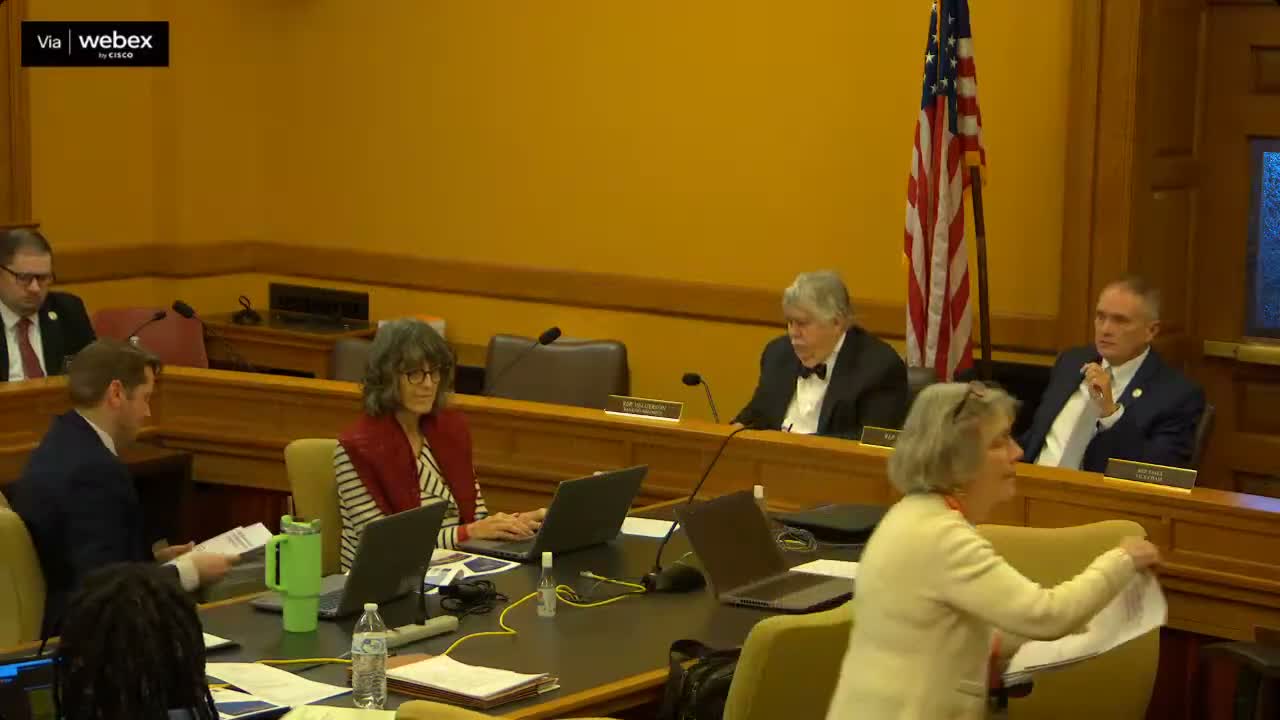
The Committee on Transportation held a hearing on House Bill 2416, the Kansas Motorsports Venue Protection Act, which would create a limited immunity from nuisance-based civil actions for racetracks and motorsports venues that were lawfully located and operating in Kansas before surrounding property owners acquired or improved adjacent land.
"House Bill 24 16 creates the Kansas Motorsports Venue Protection Act," the committee’s reviser, identified as Chris, told members. He explained the bill’s principal provision: a racetrack or racing facility would be immune in civil actions based on nuisance, takings or similar legal theories if the facility was established in Kansas before the surrounding property owner purchased or made improvements to the property; the immunity would not apply to material violations of state or local law or to conditions expressly prohibited by a facility’s permit. The bill includes definitions, a standard severability clause and an effective date of July 1, 2026, if enacted.
Sponsor Representative Delperdin described the bill as narrowly targeted to existing racetracks, saying it was modeled in part on statutes in other states and intended to protect businesses that have long operated legally prior to residential development.
Multiple members pressed staff and witnesses on two central drafting questions: what counts as a "constructed improvement" (for example, whether adding a fence, building an addition or subdividing land counts), and whether a racetrack that ceased operations for a period should lose its protective status. Chris said the bill’s current test hinges on who was there first and acknowledged the committee could tighten phrasing; several members suggested clarifying language or an explicit dormancy period to avoid unintended outcomes. Representative Hall Heisel and others asked whether expansion or increased frequency of events would be covered; reviser staff said operating outside permit limits could remove immunity.
A string of proponent witnesses described economic, cultural and safety rationales for the bill. Cindy Bell, operations manager of Kansas International Dragway (a track founded in 1963), told the committee that tracks generate tourism and local spending, support community organizations and partner with law enforcement on programs to divert illegal street racing. She argued that "it's not right, fair, or just for a business to be put out of business after operating for 63 years for somebody that's coming in and building themselves a house right next to it" and supported amendments to clarify dormancy language (she suggested continual improvements or a 24‑month cessation as a possible threshold).
Victor Munoz, senior manager for state governmental affairs with the trade groups Performance Racing Industry and the Specialty Equipment Market Association (SEMA/CEMA/PRI), presented industry figures and emphasized that racetracks support jobs and local taxes; he told the committee the industry would work with legislators on technical fixes, including consideration of a geographic radius (Munoz mentioned a 5‑mile radius as a discussion point) and dormancy thresholds.
John Allen, general manager of 81 Speedway and Humboldt Speedway, and other track operators described decades of continuous family operation and asked the committee to adopt protections while they and industry partners continue to work on clarifying amendments.
No opponents appeared and the committee closed the hearing without a vote. The reviser and proponents said they would return with suggested language to better define "surrounding property" and "constructed improvements," and to consider a dormancy or transfer timeframe that would restart the legal test for immunity.
"House Bill 24 16 creates the Kansas Motorsports Venue Protection Act," the committee’s reviser, identified as Chris, told members. He explained the bill’s principal provision: a racetrack or racing facility would be immune in civil actions based on nuisance, takings or similar legal theories if the facility was established in Kansas before the surrounding property owner purchased or made improvements to the property; the immunity would not apply to material violations of state or local law or to conditions expressly prohibited by a facility’s permit. The bill includes definitions, a standard severability clause and an effective date of July 1, 2026, if enacted.
Sponsor Representative Delperdin described the bill as narrowly targeted to existing racetracks, saying it was modeled in part on statutes in other states and intended to protect businesses that have long operated legally prior to residential development.
Multiple members pressed staff and witnesses on two central drafting questions: what counts as a "constructed improvement" (for example, whether adding a fence, building an addition or subdividing land counts), and whether a racetrack that ceased operations for a period should lose its protective status. Chris said the bill’s current test hinges on who was there first and acknowledged the committee could tighten phrasing; several members suggested clarifying language or an explicit dormancy period to avoid unintended outcomes. Representative Hall Heisel and others asked whether expansion or increased frequency of events would be covered; reviser staff said operating outside permit limits could remove immunity.
A string of proponent witnesses described economic, cultural and safety rationales for the bill. Cindy Bell, operations manager of Kansas International Dragway (a track founded in 1963), told the committee that tracks generate tourism and local spending, support community organizations and partner with law enforcement on programs to divert illegal street racing. She argued that "it's not right, fair, or just for a business to be put out of business after operating for 63 years for somebody that's coming in and building themselves a house right next to it" and supported amendments to clarify dormancy language (she suggested continual improvements or a 24‑month cessation as a possible threshold).
Victor Munoz, senior manager for state governmental affairs with the trade groups Performance Racing Industry and the Specialty Equipment Market Association (SEMA/CEMA/PRI), presented industry figures and emphasized that racetracks support jobs and local taxes; he told the committee the industry would work with legislators on technical fixes, including consideration of a geographic radius (Munoz mentioned a 5‑mile radius as a discussion point) and dormancy thresholds.
John Allen, general manager of 81 Speedway and Humboldt Speedway, and other track operators described decades of continuous family operation and asked the committee to adopt protections while they and industry partners continue to work on clarifying amendments.
No opponents appeared and the committee closed the hearing without a vote. The reviser and proponents said they would return with suggested language to better define "surrounding property" and "constructed improvements," and to consider a dormancy or transfer timeframe that would restart the legal test for immunity.
Don't Miss a Word: See the Full Meeting!
Go beyond summaries. Unlock every video, transcript, and key insight with a Founder Membership.
✓
Get instant access to full meeting videos
✓
Search and clip any phrase from complete transcripts
✓
Receive AI-powered summaries & custom alerts
✓
Enjoy lifetime, unrestricted access to government data
30-day money-back guarantee
