DOHMH says Healthy NYC met life‑expectancy goal early but warns racial gaps, federal policy risks remain
December 13, 2025 | New York City Council, New York City, New York County, New York
This article was created by AI summarizing key points discussed. AI makes mistakes, so for full details and context, please refer to the video of the full meeting. Please report any errors so we can fix them. Report an error »
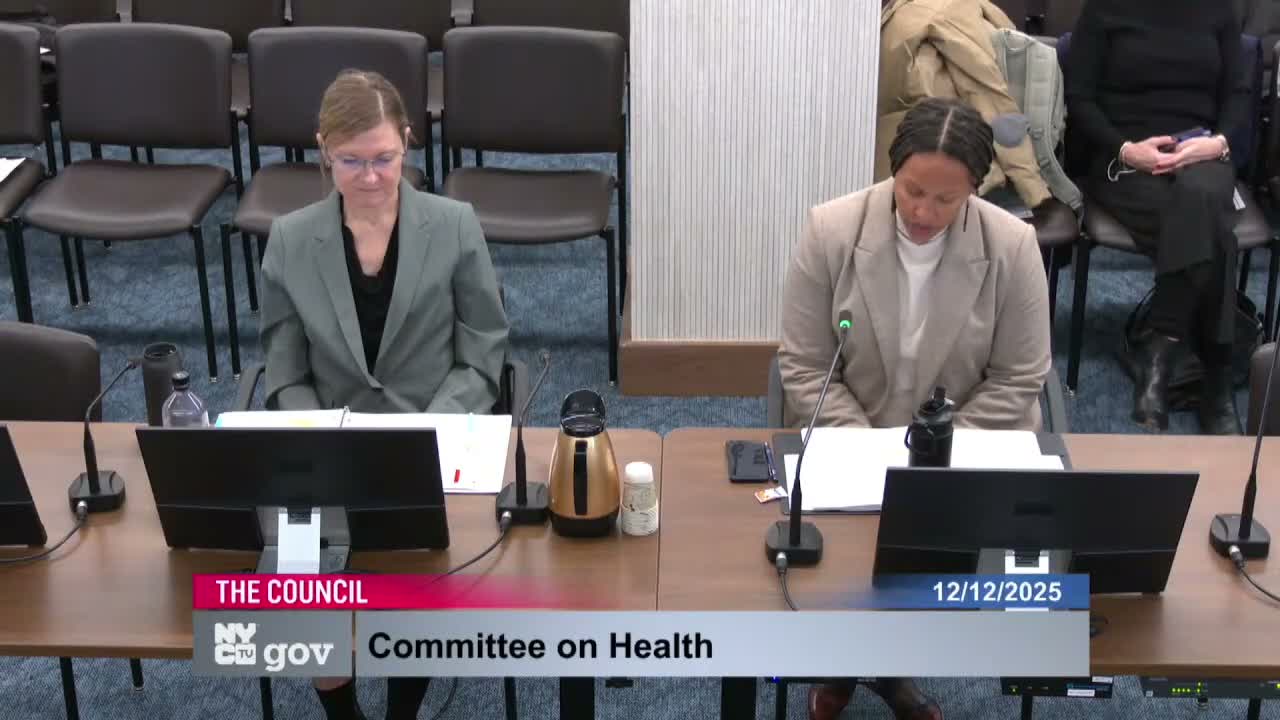
Acting Health Commissioner Dr. Michelle Morse told the New York City Council that provisional 2024 data show New Yorkers’ life expectancy rose to 83.2, surpassing the city’s Healthy NYC 2030 target ahead of schedule.
“We've met our goal well ahead of schedule,” Dr. Morse said, noting the provisional figure follows a rebound from a 2021 low of 80.7. She attributed much of the gain to the city’s COVID‑19 response: targeted vaccination campaigns and a whole‑of‑government approach that yielded a “93 percent decrease in COVID‑19 deaths” from 2021 to 2024.
The Department of Health and Mental Hygiene (DOHMH) emphasized that progress has not been uniform. Morse and DOHMH epidemiologists warned that longstanding racial and neighborhood disparities persist, with Black New Yorkers continuing to experience substantially lower life expectancy. “Black New Yorkers were dying 5 years younger than white New Yorkers,” Dr. Morse said while stressing the city can and should change that baseline.
DOHMH highlighted several programmatic achievements that supported the rebound: community health workers reached more than 350,000 residents in 2024 and distributed over 300,000 naloxone kits and more than 54,000 fentanyl test strips. The department also cited reductions in homicide deaths (reported as a 26.4% drop) and overdose deaths (an 18.2% decline since 2021) as contributors to improved population health.
At the same time, DOHMH expressed concern about federal policy changes that could undercut local gains. Morse criticized recent federal moves to review childhood vaccine schedules and warned of risks to programs such as Vaccines for Children and broader immunization efforts. “I am extremely concerned” about federal reviews and funding shifts, she said, urging partnership with the Council and the incoming mayoral administration.
DOHMH described place‑based strategies to target inequities — health action centers in Tremont, East Harlem and Brownsville, maternal medical homes, a neighborhood “stress‑free zone” pilot for pregnant and postpartum people, and an expansion of community health worker capacity. The agency estimated that scaling community health workers to 10,000 by 2030 could serve 1.5 million residents, save about $2 billion annually and prevent more than 1,000 deaths.
Council members pressed DOHMH on next steps: whether new life‑expectancy targets will be set before 2030, how the department will prioritize racial equity, and how it will prepare for potential increases in uninsured New Yorkers if enhanced federal subsidy programs lapse. Dr. Morse said the city reevaluates goals every five years and expressed a desire to set stronger racial equity targets with Council and the next administration.
The hearing also included discussion of DOHMH’s chronic disease strategy (including a proposed guaranteed‑income pilot for 250 Bronx residents with uncontrolled diabetes), maternal health initiatives, and surveillance plans to monitor vaccine uptake and other drivers of premature death. The department committed to follow up with additional data requested by Council members.
The Committee closed without votes; Council staff invited written testimony to be submitted to the record within 72 hours. The department’s testimony and Committee discussion set the stage for follow‑up oversight on equity indicators, program funding needs and the department’s next population‑health agenda.
“We've met our goal well ahead of schedule,” Dr. Morse said, noting the provisional figure follows a rebound from a 2021 low of 80.7. She attributed much of the gain to the city’s COVID‑19 response: targeted vaccination campaigns and a whole‑of‑government approach that yielded a “93 percent decrease in COVID‑19 deaths” from 2021 to 2024.
The Department of Health and Mental Hygiene (DOHMH) emphasized that progress has not been uniform. Morse and DOHMH epidemiologists warned that longstanding racial and neighborhood disparities persist, with Black New Yorkers continuing to experience substantially lower life expectancy. “Black New Yorkers were dying 5 years younger than white New Yorkers,” Dr. Morse said while stressing the city can and should change that baseline.
DOHMH highlighted several programmatic achievements that supported the rebound: community health workers reached more than 350,000 residents in 2024 and distributed over 300,000 naloxone kits and more than 54,000 fentanyl test strips. The department also cited reductions in homicide deaths (reported as a 26.4% drop) and overdose deaths (an 18.2% decline since 2021) as contributors to improved population health.
At the same time, DOHMH expressed concern about federal policy changes that could undercut local gains. Morse criticized recent federal moves to review childhood vaccine schedules and warned of risks to programs such as Vaccines for Children and broader immunization efforts. “I am extremely concerned” about federal reviews and funding shifts, she said, urging partnership with the Council and the incoming mayoral administration.
DOHMH described place‑based strategies to target inequities — health action centers in Tremont, East Harlem and Brownsville, maternal medical homes, a neighborhood “stress‑free zone” pilot for pregnant and postpartum people, and an expansion of community health worker capacity. The agency estimated that scaling community health workers to 10,000 by 2030 could serve 1.5 million residents, save about $2 billion annually and prevent more than 1,000 deaths.
Council members pressed DOHMH on next steps: whether new life‑expectancy targets will be set before 2030, how the department will prioritize racial equity, and how it will prepare for potential increases in uninsured New Yorkers if enhanced federal subsidy programs lapse. Dr. Morse said the city reevaluates goals every five years and expressed a desire to set stronger racial equity targets with Council and the next administration.
The hearing also included discussion of DOHMH’s chronic disease strategy (including a proposed guaranteed‑income pilot for 250 Bronx residents with uncontrolled diabetes), maternal health initiatives, and surveillance plans to monitor vaccine uptake and other drivers of premature death. The department committed to follow up with additional data requested by Council members.
The Committee closed without votes; Council staff invited written testimony to be submitted to the record within 72 hours. The department’s testimony and Committee discussion set the stage for follow‑up oversight on equity indicators, program funding needs and the department’s next population‑health agenda.
Don't Miss a Word: See the Full Meeting!
Go beyond summaries. Unlock every video, transcript, and key insight with a Founder Membership.
✓
Get instant access to full meeting videos
✓
Search and clip any phrase from complete transcripts
✓
Receive AI-powered summaries & custom alerts
✓
Enjoy lifetime, unrestricted access to government data
30-day money-back guarantee
