Committee reviews wide-ranging H.578 strike-all amendment on animal cruelty; debate centers on definitions, forfeiture mechanics and caregiver protections
January 30, 2026 | Judiciary, HOUSE OF REPRESENTATIVES, Committees, Legislative , Vermont
This article was created by AI summarizing key points discussed. AI makes mistakes, so for full details and context, please refer to the video of the full meeting. Please report any errors so we can fix them. Report an error »
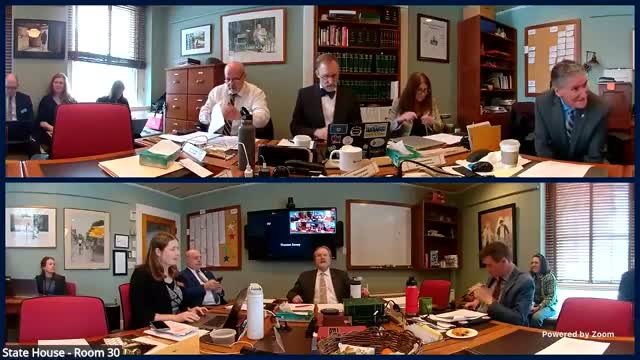
A legislative committee on Thursday reviewed a strike-all amendment to H.578 that would broaden the statute on animal cruelty and create new procedures to seize animals and recover care costs.
Eric Fitzpatrick of the Office of Legislative Council told the Judiciary Committee the draft is a comprehensive overhaul. “This is a strike all amendment to H.578, enacting penalties and procedures for animal cruelty offenses,” he said, and framed the proposal in three buckets: expanded definitions of abusive conduct; a bifurcated list of sanctions that will be mandatory in some circumstances and discretionary in others; and an expedited civil forfeiture process with a security requirement to offset care costs. (Eric Fitzpatrick)
Why it matters
The draft would add conduct (including possession, distribution and certain visual depictions) to the statutory definition of criminal animal cruelty, make some offenses felonies when a minor is involved, and change how courts may or must restrict a person’s present and future rights to own, possess or work with animals. It also replaces much of the existing forfeiture timeline with a faster civil procedure that requires a person to post security to request a hearing; if the state prevails, the posted security can be applied to reimburse custodial caregivers for food and veterinary care.
Key points of debate
First Amendment risk: A committee member warned that adding depictions of animal cruelty to the statute could raise constitutional issues, citing State v. Van Buren and a related opinion in Stevens; the committee asked Legislative Council to research potential free-speech limits before proceeding. (Chair)
Scope of possession and custody: Members pressed drafters to ensure the bill captures temporary custodial situations (for example, watching a friend’s dog) and to use language that covers both possession and caring for an animal. Fitzpatrick said the draft can track existing statutory phrasing to avoid accidental exemptions. (Eric Fitzpatrick)
Discretionary and mandatory sanctions: The amendment separates sanctions into what the court may impose for a first offense and what it shall impose for second or subsequent offenses. For example, courts could ban a person from possessing animals for up to five years after a misdemeanor conviction and up to 10 years after a felony; second or subsequent convictions impose minimum prohibitions (five years for misdemeanors, 10 years for felonies). The draft also would allow courts to bar convicted persons from working in positions that require animal contact — language members discussed expanding to explicitly include independent contractors and gig-economy services like dog-walking platforms. (Eric Fitzpatrick)
Expedited civil forfeiture and security requirements: The amendment replaces much of the current civil-forfeiture process with a streamlined timeline. When a humane officer seizes an animal, the owner would have (the draft proposes) a short period to request a forfeiture hearing and to post security intended to cover food and necessary veterinary care for an initial 40-day period and subsequent 30-day periods. Fitzpatrick described a constitutional concern if inability to pay the security functionally prevents access to a hearing and pointed to draft language allowing courts to reduce or waive security based on financial hardship. “The security required by this section may be reduced or waived by the court on the basis of financial hardship to the defendant,” Fitzpatrick said. (Eric Fitzpatrick)
Evidence standard and venue: The draft moves forfeiture hearings to civil division and lowers the state’s burden of proof in those civil proceedings from clear-and-convincing evidence to a preponderance of the evidence ("more likely than not"). Fitzpatrick said the civil venue will help courts meet expedited timeframes. Members debated the trade-offs of reduced burdens and faster timelines.
Protections and process for petitioning to restore rights: The amendment creates a petition process modeled on statutes used for firearms-restoration petitions. A person subject to an ownership ban can petition the court to restore their rights; the draft lists nonexclusive factors the court may consider (subsequent offenses, completion of probation conditions, participation in educational or treatment programs). The committee asked drafters to clarify whether probation-related factors reference probation tied to the animal-cruelty case specifically. (Eric Fitzpatrick)
Caregiver reimbursement and fund mechanics: The draft would require posted security to be transferred to the Division of Animal Welfare and deposited into the existing animal-welfare fund; that fund would be authorized to reimburse custodial caretakers who incur food and veterinary costs while the animal is held. If security is insufficient, the draft relies on existing restitution mechanisms to recover remaining costs. Fitzpatrick said the exact security schedule will be set by the Director of Animal Welfare by rule and therefore subject to the Administrative Procedure Act and later legislative review of rules. (Eric Fitzpatrick)
Witness testimony and caregiver concerns
Wyndham County State’s Attorney Steven Brown told the committee he generally supports the drafting approach and highlighted several practical concerns. He urged the panel to add enforcement mechanisms for post-restoration inspections and to clarify how unannounced inspections would be authorized and executed in practice. Brown emphasized operational challenges in seizing and housing large animals and urged statutory language granting limited immunity for humane societies and other custodial caregivers who assist law enforcement and provide care pending forfeiture, saying exposure to litigation and insurance hurdles can deter nonprofits from assisting. “If we could have some language that provides some limited immunity to humane societies and other custodial caregivers who are taking in the animals ... that'd be hugely helpful,” he said. (Steven Brown)
Brown also recommended permitting caregivers to pursue independent collection proceedings to recover sizable cost-of-care judgments in addition to restitution-unit enforcement, and he urged clarity about consultation requirements when livestock or poultry are involved, noting Vermont Supreme Court precedent interpreting those consultation mandates as advisory. (Steven Brown)
What the committee decided (so far)
There was no final vote. Committee members instructed Legislative Council to research the flagged First Amendment risk for the depiction language, to clarify drafting choices (possession/care terminology, when the notice clock starts for service vs. seizure, and whether probation references should be limited to the underlying cruelty case), and to consider adding explicit notice content about financial-hardship procedures. The committee scheduled follow-up testimony and another Legislative Council walkthrough.
Next steps
Legislative Council will return with revised draft language addressing the committee’s drafting and constitutional concerns; witnesses (including enforcement and caregiver organizations) are expected back for further testimony. The committee did not adopt final statutory language and will meet again to consider a subsequent version.
Eric Fitzpatrick of the Office of Legislative Council told the Judiciary Committee the draft is a comprehensive overhaul. “This is a strike all amendment to H.578, enacting penalties and procedures for animal cruelty offenses,” he said, and framed the proposal in three buckets: expanded definitions of abusive conduct; a bifurcated list of sanctions that will be mandatory in some circumstances and discretionary in others; and an expedited civil forfeiture process with a security requirement to offset care costs. (Eric Fitzpatrick)
Why it matters
The draft would add conduct (including possession, distribution and certain visual depictions) to the statutory definition of criminal animal cruelty, make some offenses felonies when a minor is involved, and change how courts may or must restrict a person’s present and future rights to own, possess or work with animals. It also replaces much of the existing forfeiture timeline with a faster civil procedure that requires a person to post security to request a hearing; if the state prevails, the posted security can be applied to reimburse custodial caregivers for food and veterinary care.
Key points of debate
First Amendment risk: A committee member warned that adding depictions of animal cruelty to the statute could raise constitutional issues, citing State v. Van Buren and a related opinion in Stevens; the committee asked Legislative Council to research potential free-speech limits before proceeding. (Chair)
Scope of possession and custody: Members pressed drafters to ensure the bill captures temporary custodial situations (for example, watching a friend’s dog) and to use language that covers both possession and caring for an animal. Fitzpatrick said the draft can track existing statutory phrasing to avoid accidental exemptions. (Eric Fitzpatrick)
Discretionary and mandatory sanctions: The amendment separates sanctions into what the court may impose for a first offense and what it shall impose for second or subsequent offenses. For example, courts could ban a person from possessing animals for up to five years after a misdemeanor conviction and up to 10 years after a felony; second or subsequent convictions impose minimum prohibitions (five years for misdemeanors, 10 years for felonies). The draft also would allow courts to bar convicted persons from working in positions that require animal contact — language members discussed expanding to explicitly include independent contractors and gig-economy services like dog-walking platforms. (Eric Fitzpatrick)
Expedited civil forfeiture and security requirements: The amendment replaces much of the current civil-forfeiture process with a streamlined timeline. When a humane officer seizes an animal, the owner would have (the draft proposes) a short period to request a forfeiture hearing and to post security intended to cover food and necessary veterinary care for an initial 40-day period and subsequent 30-day periods. Fitzpatrick described a constitutional concern if inability to pay the security functionally prevents access to a hearing and pointed to draft language allowing courts to reduce or waive security based on financial hardship. “The security required by this section may be reduced or waived by the court on the basis of financial hardship to the defendant,” Fitzpatrick said. (Eric Fitzpatrick)
Evidence standard and venue: The draft moves forfeiture hearings to civil division and lowers the state’s burden of proof in those civil proceedings from clear-and-convincing evidence to a preponderance of the evidence ("more likely than not"). Fitzpatrick said the civil venue will help courts meet expedited timeframes. Members debated the trade-offs of reduced burdens and faster timelines.
Protections and process for petitioning to restore rights: The amendment creates a petition process modeled on statutes used for firearms-restoration petitions. A person subject to an ownership ban can petition the court to restore their rights; the draft lists nonexclusive factors the court may consider (subsequent offenses, completion of probation conditions, participation in educational or treatment programs). The committee asked drafters to clarify whether probation-related factors reference probation tied to the animal-cruelty case specifically. (Eric Fitzpatrick)
Caregiver reimbursement and fund mechanics: The draft would require posted security to be transferred to the Division of Animal Welfare and deposited into the existing animal-welfare fund; that fund would be authorized to reimburse custodial caretakers who incur food and veterinary costs while the animal is held. If security is insufficient, the draft relies on existing restitution mechanisms to recover remaining costs. Fitzpatrick said the exact security schedule will be set by the Director of Animal Welfare by rule and therefore subject to the Administrative Procedure Act and later legislative review of rules. (Eric Fitzpatrick)
Witness testimony and caregiver concerns
Wyndham County State’s Attorney Steven Brown told the committee he generally supports the drafting approach and highlighted several practical concerns. He urged the panel to add enforcement mechanisms for post-restoration inspections and to clarify how unannounced inspections would be authorized and executed in practice. Brown emphasized operational challenges in seizing and housing large animals and urged statutory language granting limited immunity for humane societies and other custodial caregivers who assist law enforcement and provide care pending forfeiture, saying exposure to litigation and insurance hurdles can deter nonprofits from assisting. “If we could have some language that provides some limited immunity to humane societies and other custodial caregivers who are taking in the animals ... that'd be hugely helpful,” he said. (Steven Brown)
Brown also recommended permitting caregivers to pursue independent collection proceedings to recover sizable cost-of-care judgments in addition to restitution-unit enforcement, and he urged clarity about consultation requirements when livestock or poultry are involved, noting Vermont Supreme Court precedent interpreting those consultation mandates as advisory. (Steven Brown)
What the committee decided (so far)
There was no final vote. Committee members instructed Legislative Council to research the flagged First Amendment risk for the depiction language, to clarify drafting choices (possession/care terminology, when the notice clock starts for service vs. seizure, and whether probation references should be limited to the underlying cruelty case), and to consider adding explicit notice content about financial-hardship procedures. The committee scheduled follow-up testimony and another Legislative Council walkthrough.
Next steps
Legislative Council will return with revised draft language addressing the committee’s drafting and constitutional concerns; witnesses (including enforcement and caregiver organizations) are expected back for further testimony. The committee did not adopt final statutory language and will meet again to consider a subsequent version.
View the Full Meeting & All Its Details
This article offers just a summary. Unlock complete video, transcripts, and insights as a Founder Member.
✓
Watch full, unedited meeting videos
✓
Search every word spoken in unlimited transcripts
✓
AI summaries & real-time alerts (all government levels)
✓
Permanent access to expanding government content
30-day money-back guarantee
