Committee reviews H540 to consolidate post-adjudication restorative-justice rules
January 30, 2026 | Judiciary, HOUSE OF REPRESENTATIVES, Committees, Legislative , Vermont
This article was created by AI summarizing key points discussed. AI makes mistakes, so for full details and context, please refer to the video of the full meeting. Please report any errors so we can fix them. Report an error »
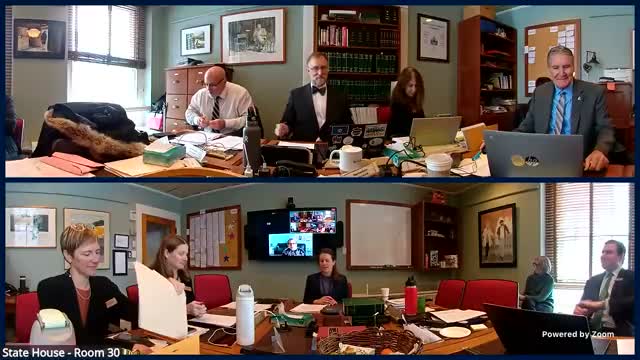
On Jan. 29 the Corrections and Institutions committee reviewed H540, a bill that reorganizes and clarifies statutory provisions governing post-adjudication restorative-justice programs, legislative counsel said.
Hillary Cheddar Raines, legislative counsel, told the committee the bill implements recommendations from the post-adjudication reparative program working group convened after 2024 Act 180 and largely moves existing statutory language into a single "one-stop" section in Title 28 while making drafting clarifications. "This bill makes a few changes that were specific statutory language recommendations from the post adjudicative, post adjudication reparative program working group," Raines said.
The bill’s central changes include moving sentencing references (now scattered in Title 13) into a consolidated Title 28 section that explains how restorative-justice referrals work; clarifying that referral may be either a standalone sentence or a condition of probation; and removing a provision that allowed referral to restorative programs for civil contempt of child-support orders. Raines said the working group recommended removing the civil-contempt referral because the practice has not been observed and does not resemble typical post-adjudication criminal referrals.
H540 also adds a subsection listing factors a court should consider when deciding whether to sentence an offender to a restorative-justice program. The six factors enumerated in the draft are: (1) agreement between the parties; (2) the views of any victim; (3) the impact on the community; (4) the offender’s willingness to participate; (5) the offender’s capacity to meaningfully participate; and (6) whether orders of protection are in effect or previously were in effect between the offender and any victim. Raines described the factors as guidance to promote more uniform outcomes across jurisdictions.
The draft requires the court administrator to create standard referral forms to be used statewide and authorizes the Supreme Court to adopt uniform procedural rules for program processes. Raines said those changes are intended to produce consistent practices for referrals and administratie procedures.
Community justice centers that participated in the working group told the committee they welcome the clarity but raised terminology concerns. Jeanne McLeod, director of the Berry Community Justice Center and a working-group participant, said centers refer to "panels," not "boards," and that panels are typically not open to the public: "We do not call them boards, and we haven't since about 2013. We call them panels," McLeod said, arguing that the terminology matters because panels enable private restorative processes.
Committee members pressed witnesses on practical issues: whether repeated referrals are permitted, how protective orders affect eligibility, and what happens to a defendant’s record. McLeod said a center may decline repeat referrals and return the case to court for further sentencing; she also said that post-adjudication restorative sentences are not expunged and remain on a person’s record. "They're on their record," McLeod said, noting these sentences often involve more serious offenses than pre-charge diversion.
Kim McManus of the Department of State's Attorneys and Sheriffs testified that the department sees the draft as primarily clarifying statutory placement and wording rather than changing existing law, but she emphasized the six factors are new statutory provisions and said the department must retain discretion over referrals. "None of these changes are changing existing law…The only thing that is new are the factors," McManus said.
No formal committee vote on H540 occurred during the session. Raines listed the bill’s effective date as July 1, 2026. Committee members said they may seek further drafting cleanups—particularly to resolve 'board' vs. 'panel' terminology in corrections-related titles—and indicated they would consult the working-group final report and other witnesses before taking further action.
The committee moved on to other agenda items and noted scheduled votes and public testimony later in the day.
Hillary Cheddar Raines, legislative counsel, told the committee the bill implements recommendations from the post-adjudication reparative program working group convened after 2024 Act 180 and largely moves existing statutory language into a single "one-stop" section in Title 28 while making drafting clarifications. "This bill makes a few changes that were specific statutory language recommendations from the post adjudicative, post adjudication reparative program working group," Raines said.
The bill’s central changes include moving sentencing references (now scattered in Title 13) into a consolidated Title 28 section that explains how restorative-justice referrals work; clarifying that referral may be either a standalone sentence or a condition of probation; and removing a provision that allowed referral to restorative programs for civil contempt of child-support orders. Raines said the working group recommended removing the civil-contempt referral because the practice has not been observed and does not resemble typical post-adjudication criminal referrals.
H540 also adds a subsection listing factors a court should consider when deciding whether to sentence an offender to a restorative-justice program. The six factors enumerated in the draft are: (1) agreement between the parties; (2) the views of any victim; (3) the impact on the community; (4) the offender’s willingness to participate; (5) the offender’s capacity to meaningfully participate; and (6) whether orders of protection are in effect or previously were in effect between the offender and any victim. Raines described the factors as guidance to promote more uniform outcomes across jurisdictions.
The draft requires the court administrator to create standard referral forms to be used statewide and authorizes the Supreme Court to adopt uniform procedural rules for program processes. Raines said those changes are intended to produce consistent practices for referrals and administratie procedures.
Community justice centers that participated in the working group told the committee they welcome the clarity but raised terminology concerns. Jeanne McLeod, director of the Berry Community Justice Center and a working-group participant, said centers refer to "panels," not "boards," and that panels are typically not open to the public: "We do not call them boards, and we haven't since about 2013. We call them panels," McLeod said, arguing that the terminology matters because panels enable private restorative processes.
Committee members pressed witnesses on practical issues: whether repeated referrals are permitted, how protective orders affect eligibility, and what happens to a defendant’s record. McLeod said a center may decline repeat referrals and return the case to court for further sentencing; she also said that post-adjudication restorative sentences are not expunged and remain on a person’s record. "They're on their record," McLeod said, noting these sentences often involve more serious offenses than pre-charge diversion.
Kim McManus of the Department of State's Attorneys and Sheriffs testified that the department sees the draft as primarily clarifying statutory placement and wording rather than changing existing law, but she emphasized the six factors are new statutory provisions and said the department must retain discretion over referrals. "None of these changes are changing existing law…The only thing that is new are the factors," McManus said.
No formal committee vote on H540 occurred during the session. Raines listed the bill’s effective date as July 1, 2026. Committee members said they may seek further drafting cleanups—particularly to resolve 'board' vs. 'panel' terminology in corrections-related titles—and indicated they would consult the working-group final report and other witnesses before taking further action.
The committee moved on to other agenda items and noted scheduled votes and public testimony later in the day.
View the Full Meeting & All Its Details
This article offers just a summary. Unlock complete video, transcripts, and insights as a Founder Member.
✓
Watch full, unedited meeting videos
✓
Search every word spoken in unlimited transcripts
✓
AI summaries & real-time alerts (all government levels)
✓
Permanent access to expanding government content
30-day money-back guarantee
