Vermont State Police urge ability to prosecute sextortion threats, call for juvenile enhancements
January 29, 2026 | Judiciary, HOUSE OF REPRESENTATIVES, Committees, Legislative , Vermont
This article was created by AI summarizing key points discussed. AI makes mistakes, so for full details and context, please refer to the video of the full meeting. Please report any errors so we can fix them. Report an error »
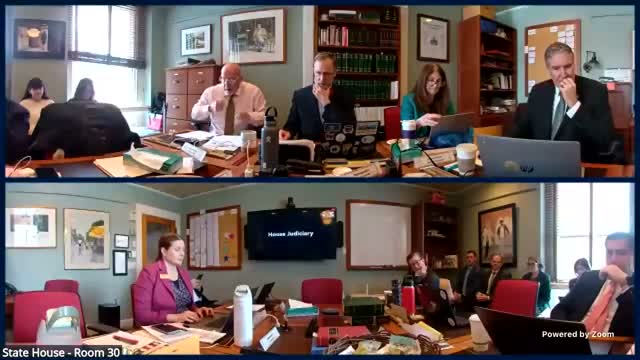
The House Judiciary Committee continued consideration of H.6 on online sexual extortion as Lieutenant Michael Studi of the Vermont State Police testified the department supports the bill and urged lawmakers to strengthen protections for young people.
"Sextortion is definitely, an avenue that traffickers use to lure, especially our vulnerable juvenile population into trafficking," Lieutenant Michael Studi said, arguing the prevalence of digital evidence and online targeting makes the legislation timely. Studi said Vermont investigators are seeing a mixture of perpetrators, including in-state residents and overseas actors, and that cases often involve people who already know each other when the offender is local.
Studi told the committee prosecuting "just based upon the threat would be extremely helpful," saying current standards for search warrants and digital-evidence collection often require probable cause of an underlying crime beyond a threat. He recommended a juvenile enhancement to H.6 that would make targeting a juvenile an automatic felony and said such a change would help in cases where extradition for a misdemeanor is not available.
The lieutenant also urged an educational component aimed at teenagers and additional funding for child advocacy centers and prevention programs. He cited organizations such as the Vermont Child Alliance and recommended that, if the law is enacted, lawmakers pair it with outreach so victims know legal options for responding to threats and harassment.
Committee members asked whether domestic perpetrators are common; Representative Gartner asked whether investigators were seeing more Vermont-based offenders, and Studi replied there is a "healthy mixture" with relationship-based extortion more often domestic and stranger-based schemes more often foreign-based. On whether to add an enhancement where death or serious bodily harm results, Studi said the committee's proposed recklessness standard would have police support.
The committee did not take a vote on H.6 during the session. Lawmakers signaled interest in language changes and in adding juvenile-focused penalties and prevention funding as they scheduled further consideration and additional witness testimony later in the day.
The committee paused to reconvene at the posted 11:00 a.m. time for a revised draft presentation by Michelle Childs.
"Sextortion is definitely, an avenue that traffickers use to lure, especially our vulnerable juvenile population into trafficking," Lieutenant Michael Studi said, arguing the prevalence of digital evidence and online targeting makes the legislation timely. Studi said Vermont investigators are seeing a mixture of perpetrators, including in-state residents and overseas actors, and that cases often involve people who already know each other when the offender is local.
Studi told the committee prosecuting "just based upon the threat would be extremely helpful," saying current standards for search warrants and digital-evidence collection often require probable cause of an underlying crime beyond a threat. He recommended a juvenile enhancement to H.6 that would make targeting a juvenile an automatic felony and said such a change would help in cases where extradition for a misdemeanor is not available.
The lieutenant also urged an educational component aimed at teenagers and additional funding for child advocacy centers and prevention programs. He cited organizations such as the Vermont Child Alliance and recommended that, if the law is enacted, lawmakers pair it with outreach so victims know legal options for responding to threats and harassment.
Committee members asked whether domestic perpetrators are common; Representative Gartner asked whether investigators were seeing more Vermont-based offenders, and Studi replied there is a "healthy mixture" with relationship-based extortion more often domestic and stranger-based schemes more often foreign-based. On whether to add an enhancement where death or serious bodily harm results, Studi said the committee's proposed recklessness standard would have police support.
The committee did not take a vote on H.6 during the session. Lawmakers signaled interest in language changes and in adding juvenile-focused penalties and prevention funding as they scheduled further consideration and additional witness testimony later in the day.
The committee paused to reconvene at the posted 11:00 a.m. time for a revised draft presentation by Michelle Childs.
View the Full Meeting & All Its Details
This article offers just a summary. Unlock complete video, transcripts, and insights as a Founder Member.
✓
Watch full, unedited meeting videos
✓
Search every word spoken in unlimited transcripts
✓
AI summaries & real-time alerts (all government levels)
✓
Permanent access to expanding government content
30-day money-back guarantee
