Survivor and retired Burlington detective urge changes to statute of limitations in House Judiciary hearing on HB 626
January 29, 2026 | Judiciary, HOUSE OF REPRESENTATIVES, Committees, Legislative , Vermont
This article was created by AI summarizing key points discussed. AI makes mistakes, so for full details and context, please refer to the video of the full meeting. Please report any errors so we can fix them. Report an error »
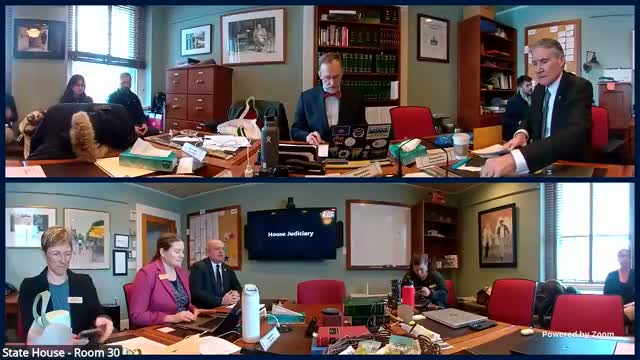
The House Judiciary Committee heard emotional testimony on HB 626 on January 28, when survivor Kira Kilburn recounted discovering years after the fact that a video of her and her sister filmed without consent had been posted to a pornographic website, and a retired Burlington detective described investigative barriers that kept prosecutors from bringing criminal charges.
Kilburn told the committee she was 19 when a college professor invited her and her underage sister to participate in a class video and later "uploaded it to the Internet." She said discovery of the footage "was life shattering," that she feared losing her career in homeless and domestic-violence services, and that she later was diagnosed with post-traumatic stress disorder. "Knowing that they would be knowing this would be incredibly meaningful to me," she said, urging lawmakers that changes could help future victims even if they cannot help her now.
Tom Shanats, a retired Burlington police detective who said he worked with the Internet Crimes Against Children Task Force, described the investigation that followed Kilburn's report. Shanats said the alleged conduct dated to 2012 but the report arrived in 2018; at the time voyeurism carried a three-year statute of limitations and disclosure-of-images claims were also time‑barred, so detectives could not seize the suspect's personal devices or pursue criminal charges in many instances. "It was beyond the statute of limitations," Shanats said, describing how that legal limit prevented standard investigative steps.
Shanats recounted that an IT employee at the subject's employer, identified in testimony as Matt Gaudi, discovered a hard drive containing "hundreds of images of child [victims]" and later deleted material; investigators also found a GoPro-style flash drive with video showing a camera hidden in a bathroom and multiple victims. Shanats said some evidence — including terabytes of files held by Burlington Police Department — remains in evidence and that, with a longer limitations period, investigators could seek additional warrants and pursue additional action.
Witnesses and committee members discussed policy options in the bill. The draft under consideration included a discovery-based six-year element; members floated longer windows, including proposals of 7 to 40 years or keeping discovery-based rules that would extend time after a victim learns of the material. Committee members also clarified that civil-side removal of a limitations period can be applied retroactively to allow older civil suits, while criminal statute changes generally operate prospectively and would not permit new prosecutions for long-past conduct.
Shanats urged that the bill explicitly address power dynamics — for example, professor–student or employer–employee relationships — to capture cases where authority or trust facilitated the abuse. Committee questioning covered evidentiary avenues such as subpoenas and search warrants, tracing of online distribution (including uploads that can be reposted from accounts overseas), and the practical limits investigators face when content is older or has been deleted.
The hearing paused pending further witnesses; committee members said Michelle Charles was scheduled to testify later in the day on a subsequent draft of the bill and that another scheduled witness, Ken McManus, might appear at 10:00 a.m. The committee did not take a vote during this session.
The record for this hearing contains the survivors' testimony, the detective's investigatory account, and committee discussion of statute-of-limitations reform and possible statutory language expansions to address power imbalances and discovery rules.
Kilburn told the committee she was 19 when a college professor invited her and her underage sister to participate in a class video and later "uploaded it to the Internet." She said discovery of the footage "was life shattering," that she feared losing her career in homeless and domestic-violence services, and that she later was diagnosed with post-traumatic stress disorder. "Knowing that they would be knowing this would be incredibly meaningful to me," she said, urging lawmakers that changes could help future victims even if they cannot help her now.
Tom Shanats, a retired Burlington police detective who said he worked with the Internet Crimes Against Children Task Force, described the investigation that followed Kilburn's report. Shanats said the alleged conduct dated to 2012 but the report arrived in 2018; at the time voyeurism carried a three-year statute of limitations and disclosure-of-images claims were also time‑barred, so detectives could not seize the suspect's personal devices or pursue criminal charges in many instances. "It was beyond the statute of limitations," Shanats said, describing how that legal limit prevented standard investigative steps.
Shanats recounted that an IT employee at the subject's employer, identified in testimony as Matt Gaudi, discovered a hard drive containing "hundreds of images of child [victims]" and later deleted material; investigators also found a GoPro-style flash drive with video showing a camera hidden in a bathroom and multiple victims. Shanats said some evidence — including terabytes of files held by Burlington Police Department — remains in evidence and that, with a longer limitations period, investigators could seek additional warrants and pursue additional action.
Witnesses and committee members discussed policy options in the bill. The draft under consideration included a discovery-based six-year element; members floated longer windows, including proposals of 7 to 40 years or keeping discovery-based rules that would extend time after a victim learns of the material. Committee members also clarified that civil-side removal of a limitations period can be applied retroactively to allow older civil suits, while criminal statute changes generally operate prospectively and would not permit new prosecutions for long-past conduct.
Shanats urged that the bill explicitly address power dynamics — for example, professor–student or employer–employee relationships — to capture cases where authority or trust facilitated the abuse. Committee questioning covered evidentiary avenues such as subpoenas and search warrants, tracing of online distribution (including uploads that can be reposted from accounts overseas), and the practical limits investigators face when content is older or has been deleted.
The hearing paused pending further witnesses; committee members said Michelle Charles was scheduled to testify later in the day on a subsequent draft of the bill and that another scheduled witness, Ken McManus, might appear at 10:00 a.m. The committee did not take a vote during this session.
The record for this hearing contains the survivors' testimony, the detective's investigatory account, and committee discussion of statute-of-limitations reform and possible statutory language expansions to address power imbalances and discovery rules.
Don't Miss a Word: See the Full Meeting!
Go beyond summaries. Unlock every video, transcript, and key insight with a Founder Membership.
✓
Get instant access to full meeting videos
✓
Search and clip any phrase from complete transcripts
✓
Receive AI-powered summaries & custom alerts
✓
Enjoy lifetime, unrestricted access to government data
30-day money-back guarantee
