Senator introduces S.277 to ban mandatory nurse overtime, counsel outlines exceptions and reporting
January 30, 2026 | Economic Development, Housing & General Affairs, SENATE, Committees, Legislative , Vermont
This article was created by AI summarizing key points discussed. AI makes mistakes, so for full details and context, please refer to the video of the full meeting. Please report any errors so we can fix them. Report an error »
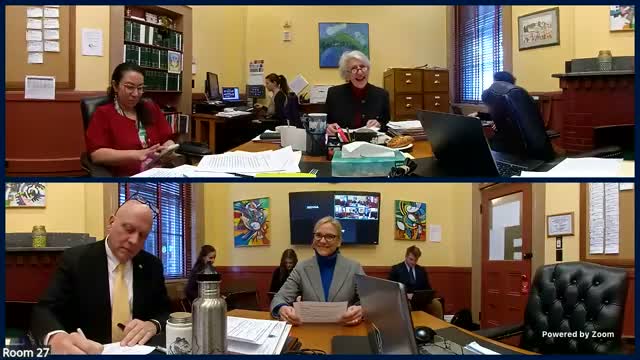
Sen. Martin Nora Bueller introduced S.277 on Tuesday to prohibit hospitals and long-term care facilities from requiring registered nurses or licensed practical nurses to work mandatory overtime except in limited, specified emergencies. "Safe hours for safe care" is the sponsor's preferred name for the proposal, which the sponsor said grew out of constituent concerns about nurses working 12‑hour shifts with short breaks.
Sophie of the Office of Legislative Counsel told the Senate Economic Development, Housing and General Affairs Committee the bill would place the prohibition under Vermont's labor statutes and use existing statutory definitions for hospitals and long‑term care facilities. Sophie summarized the core definitions: mandatory overtime is work required in excess of an agreed-upon, predetermined scheduled shift, capped at 12 hours in any 24‑hour period and 48 hours in any work week, and the bill covers registered nurses and licensed practical nurses as defined in Title 26 (excluding advanced practice registered nurses).
Sophie said subsection C would prohibit mandatory overtime and protect nurses from discipline for refusing such assignments, but she flagged drafting clarity in the disciplinary language: the bill currently says a nurse "may not be disciplined" for refusing mandatory overtime, language she suggested the committee might want to strengthen. Sophie also detailed standard exceptions that would allow mandatory overtime in narrow circumstances: a declared federal, state or local emergency; the nurse's continued presence being necessary to complete an ongoing medical or surgical procedure; or an unforeseen disaster or catastrophic event that materially increases the need for care and could not have been prudently anticipated. She emphasized the bill would not permit employers to invoke those exceptions to excuse predictable staffing shortfalls.
The bill would require employers to make a good‑faith effort to meet staffing needs through voluntary overtime, per‑diem hires and agency nurses before imposing mandatory overtime, and it clarifies that paid on‑call time does not count toward the 12‑hour cap. Sophie said a nurse who works more than 12 hours must have at least 10 consecutive hours off afterward under the draft's rest‑period language; she also noted states vary in how they structure rest periods.
Sophie described reporting and enforcement provisions: employers would report instances of mandatory overtime and the circumstances requiring it to the Department of Health; those reports would be available for inspection with personally identifiable information redacted. The Commissioner of Labor would have authority to investigate complaints, and the draft establishes a sliding fine scale (examples given in committee: $1,000 for a first violation up to $2,000 for a third and subsequent violation, with a $500 fine for failure to report), though Sophie noted penalties differ widely among states. She said the draft lists an effective date of July 1, 2026.
Committee members asked for more information before progressing. They requested a matrix of the 18 states cited by the sponsor showing how each addresses mandatory overtime and rest periods, and asked JFO for a short fiscal summary of potential impacts. Several members said they wanted to hear balanced testimony from nurses, unions and hospitals and discussed whether rules for nurses should be aligned with those that apply to doctors and firefighters. No committee vote or formal motion on S.277 occurred; members agreed to schedule testimony and follow‑up research.
The committee paused for a 15‑minute break and planned to take up federal issues and testimony on a separate agenda item afterward.
Sophie of the Office of Legislative Counsel told the Senate Economic Development, Housing and General Affairs Committee the bill would place the prohibition under Vermont's labor statutes and use existing statutory definitions for hospitals and long‑term care facilities. Sophie summarized the core definitions: mandatory overtime is work required in excess of an agreed-upon, predetermined scheduled shift, capped at 12 hours in any 24‑hour period and 48 hours in any work week, and the bill covers registered nurses and licensed practical nurses as defined in Title 26 (excluding advanced practice registered nurses).
Sophie said subsection C would prohibit mandatory overtime and protect nurses from discipline for refusing such assignments, but she flagged drafting clarity in the disciplinary language: the bill currently says a nurse "may not be disciplined" for refusing mandatory overtime, language she suggested the committee might want to strengthen. Sophie also detailed standard exceptions that would allow mandatory overtime in narrow circumstances: a declared federal, state or local emergency; the nurse's continued presence being necessary to complete an ongoing medical or surgical procedure; or an unforeseen disaster or catastrophic event that materially increases the need for care and could not have been prudently anticipated. She emphasized the bill would not permit employers to invoke those exceptions to excuse predictable staffing shortfalls.
The bill would require employers to make a good‑faith effort to meet staffing needs through voluntary overtime, per‑diem hires and agency nurses before imposing mandatory overtime, and it clarifies that paid on‑call time does not count toward the 12‑hour cap. Sophie said a nurse who works more than 12 hours must have at least 10 consecutive hours off afterward under the draft's rest‑period language; she also noted states vary in how they structure rest periods.
Sophie described reporting and enforcement provisions: employers would report instances of mandatory overtime and the circumstances requiring it to the Department of Health; those reports would be available for inspection with personally identifiable information redacted. The Commissioner of Labor would have authority to investigate complaints, and the draft establishes a sliding fine scale (examples given in committee: $1,000 for a first violation up to $2,000 for a third and subsequent violation, with a $500 fine for failure to report), though Sophie noted penalties differ widely among states. She said the draft lists an effective date of July 1, 2026.
Committee members asked for more information before progressing. They requested a matrix of the 18 states cited by the sponsor showing how each addresses mandatory overtime and rest periods, and asked JFO for a short fiscal summary of potential impacts. Several members said they wanted to hear balanced testimony from nurses, unions and hospitals and discussed whether rules for nurses should be aligned with those that apply to doctors and firefighters. No committee vote or formal motion on S.277 occurred; members agreed to schedule testimony and follow‑up research.
The committee paused for a 15‑minute break and planned to take up federal issues and testimony on a separate agenda item afterward.
Don't Miss a Word: See the Full Meeting!
Go beyond summaries. Unlock every video, transcript, and key insight with a Founder Membership.
✓
Get instant access to full meeting videos
✓
Search and clip any phrase from complete transcripts
✓
Receive AI-powered summaries & custom alerts
✓
Enjoy lifetime, unrestricted access to government data
30-day money-back guarantee
