Public forum draws strong opposition and defense of proposed school immigration-reporting language
January 30, 2026 | Knox County, Tennessee
This article was created by AI summarizing key points discussed. AI makes mistakes, so for full details and context, please refer to the video of the full meeting. Please report any errors so we can fix them. Report an error »
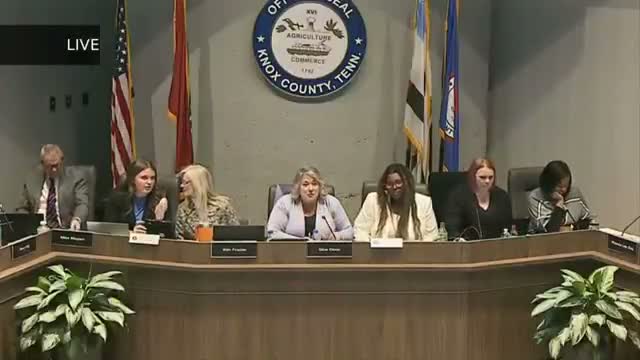
A proposed county resolution related to the Knox County Board of Education’s legislative priorities — including language about reporting or tracking student immigration status — prompted sustained public comment at the Jan. 29 commission meeting.
Multiple speakers from the community urged the commission not to adopt language that would require or encourage schools to collect or report student immigration status. Michael O’Malley and Lindsey Barrows argued the measure could target immigrant students, contravene constitutional protections, and divert teachers from classroom duties into enforcement‑adjacent roles. O’Malley said the logic of a policy that ties educational access to immigration status risks treating students as a financial burden rather than as children deserving education.
Others defended the school board and urged respect for local control. Paul De Leon and other speakers invoked historical and moral frames supporting the board’s independence and the need not to politicize education policy. Commissioner Durrett, among others, said the proposed resolution would undermine the school board’s discretion and said it was outside the proper role of the county commission.
Commissioner Fox and supporters framed the resolution as accountability and transparency for taxpayer dollars and said compliance with federal law is required; he also signaled he would present additional material in a workshop. Commissioners said the item was postponed (it was already deferred) and that discussion would continue at a later meeting.
The public comment period featured a range of perspectives: calls for action on trafficking and survivor services, accusations that local law enforcement or federal agents were complicit in mistreatment (charged by one speaker), and repeated requests that the commission respect the school board’s authority while addressing transparency and fiscal oversight. The commission did not adopt the contested resolution on Jan. 29.
Multiple speakers from the community urged the commission not to adopt language that would require or encourage schools to collect or report student immigration status. Michael O’Malley and Lindsey Barrows argued the measure could target immigrant students, contravene constitutional protections, and divert teachers from classroom duties into enforcement‑adjacent roles. O’Malley said the logic of a policy that ties educational access to immigration status risks treating students as a financial burden rather than as children deserving education.
Others defended the school board and urged respect for local control. Paul De Leon and other speakers invoked historical and moral frames supporting the board’s independence and the need not to politicize education policy. Commissioner Durrett, among others, said the proposed resolution would undermine the school board’s discretion and said it was outside the proper role of the county commission.
Commissioner Fox and supporters framed the resolution as accountability and transparency for taxpayer dollars and said compliance with federal law is required; he also signaled he would present additional material in a workshop. Commissioners said the item was postponed (it was already deferred) and that discussion would continue at a later meeting.
The public comment period featured a range of perspectives: calls for action on trafficking and survivor services, accusations that local law enforcement or federal agents were complicit in mistreatment (charged by one speaker), and repeated requests that the commission respect the school board’s authority while addressing transparency and fiscal oversight. The commission did not adopt the contested resolution on Jan. 29.
View the Full Meeting & All Its Details
This article offers just a summary. Unlock complete video, transcripts, and insights as a Founder Member.
✓
Watch full, unedited meeting videos
✓
Search every word spoken in unlimited transcripts
✓
AI summaries & real-time alerts (all government levels)
✓
Permanent access to expanding government content
30-day money-back guarantee
