Recorder outlines IT modernization, defends signature‑verification changes amid heated board exchange
January 29, 2026 | Maricopa County, Arizona
This article was created by AI summarizing key points discussed. AI makes mistakes, so for full details and context, please refer to the video of the full meeting. Please report any errors so we can fix them. Report an error »
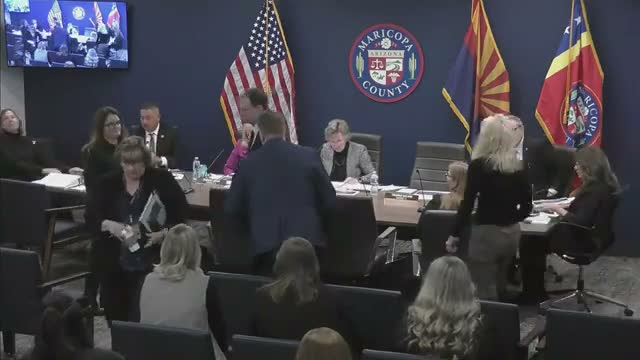
Justin Heap, Maricopa County Recorder, presented his office’s FY27 above‑baseline requests and defended changes to election processing that have drawn board scrutiny.
Heap described a plan to modernize a 20‑year‑old recordation system (DART) funded by a $4 per‑document statutory surcharge; he said the surcharge fund is projected to generate about $2.9 million and that most planned IT hires would be funded from that account. He outlined staffing needs in recordation and voter registration tied to 19–20% increases in workloads and asked for enhanced site‑book functionality to surface voter statuses and reduce provisional ballots.
Heap defended a new signature‑verification workflow that produced a large increase in rejections in a recent all‑mail election — a figure Chair Brophy McGee described as "almost 6,000 ballots rejected." Heap said rejections were reviewed and that the new process is markedly faster than prior methods, which he said should give more time to cure mismatched signatures.
Heap also asked for an Agilis ballot‑sorting machine (cost including 5‑year maintenance estimated around $595,000) to automate separation of adjudicated provisionals; he told the board Runbeck/Bluecrest leased machines could not satisfy the need to integrate sorting with the county voter database.
Board members pressed whether the recorder had previously presented the Agilis request and whether earlier denial caused voter harm; county budget staff said the prior HAVA request was declined because of space and maintenance concerns. Tensions rose when Supervisor Gallardo accused members of the recorder's leadership staff of partisan social posts; Heap denied having seen the posts and said his office includes both Democratic and Republican staff.
The board asked the recorder to provide more detail on the rejected ballots, the curing process and any statutory limits on post‑election outreach. Heap offered to return materials and to work with legal counsel to explore whether targeted follow‑up outreach to voters whose ballots went to curing would be allowable under statute.
Next steps: the board directed budget staff and the recorder to provide more documentation, including prior requests for the Agilis machine and the detailed rejected‑ballot audit that Heap said his office had completed.
Heap described a plan to modernize a 20‑year‑old recordation system (DART) funded by a $4 per‑document statutory surcharge; he said the surcharge fund is projected to generate about $2.9 million and that most planned IT hires would be funded from that account. He outlined staffing needs in recordation and voter registration tied to 19–20% increases in workloads and asked for enhanced site‑book functionality to surface voter statuses and reduce provisional ballots.
Heap defended a new signature‑verification workflow that produced a large increase in rejections in a recent all‑mail election — a figure Chair Brophy McGee described as "almost 6,000 ballots rejected." Heap said rejections were reviewed and that the new process is markedly faster than prior methods, which he said should give more time to cure mismatched signatures.
Heap also asked for an Agilis ballot‑sorting machine (cost including 5‑year maintenance estimated around $595,000) to automate separation of adjudicated provisionals; he told the board Runbeck/Bluecrest leased machines could not satisfy the need to integrate sorting with the county voter database.
Board members pressed whether the recorder had previously presented the Agilis request and whether earlier denial caused voter harm; county budget staff said the prior HAVA request was declined because of space and maintenance concerns. Tensions rose when Supervisor Gallardo accused members of the recorder's leadership staff of partisan social posts; Heap denied having seen the posts and said his office includes both Democratic and Republican staff.
The board asked the recorder to provide more detail on the rejected ballots, the curing process and any statutory limits on post‑election outreach. Heap offered to return materials and to work with legal counsel to explore whether targeted follow‑up outreach to voters whose ballots went to curing would be allowable under statute.
Next steps: the board directed budget staff and the recorder to provide more documentation, including prior requests for the Agilis machine and the detailed rejected‑ballot audit that Heap said his office had completed.
Don't Miss a Word: See the Full Meeting!
Go beyond summaries. Unlock every video, transcript, and key insight with a Founder Membership.
✓
Get instant access to full meeting videos
✓
Search and clip any phrase from complete transcripts
✓
Receive AI-powered summaries & custom alerts
✓
Enjoy lifetime, unrestricted access to government data
30-day money-back guarantee
