Kansas committee hears push for state oversight of Medicare Advantage marketing
January 26, 2026 | Financial Institutions and Insurance, Standing, Senate, Committees, Legislative, Kansas
This article was created by AI summarizing key points discussed. AI makes mistakes, so for full details and context, please refer to the video of the full meeting. Please report any errors so we can fix them. Report an error »
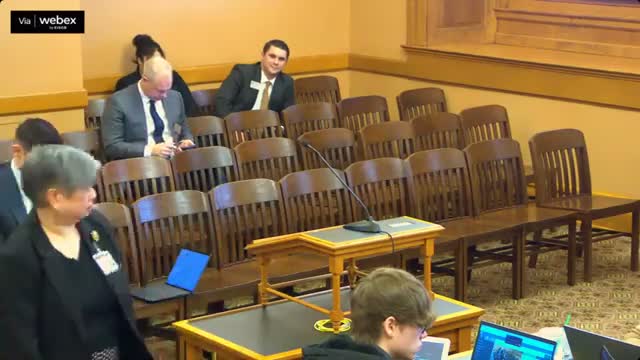
A Kansas Senate committee heard detailed proponent testimony on Monday for a resolution urging Congress to give state insurance regulators a role in policing Medicare Advantage marketing and consumer disclosures.
Eric Turek of the Kansas Department of Insurance told the committee that the department fields complaints across all lines of insurance and has recovered more than $200 million for Kansans in recent years, but that it lacks authority over Medicare Advantage products because the Centers for Medicare and Medicare Services (CMS) has primary regulatory authority. "When we do receive complaints from the public about Medicare Advantage, we let them know that we don't have the authority," Turek said.
The resolution — House Concurrent Resolution 5013 — "urges Congress to give state regulators authority over Medicare Advantage plans," Eileen, a legislative staff member who briefed the committee, said. The resolution focuses on permitting states to enforce marketing and consumer disclosure laws and to investigate misleading advertising or deceptive sales tactics.
Supporters said the proposal is narrowly aimed at marketing and consumer protections rather than a full transfer of oversight of plan benefits or payment rules. "If we have some authority to at minimum look into or investigate the marketing tactics, the advertising, put the products aside," Turek said, "we think we can better protect consumers."
Committee members pressed supporters on practical limits and risks. Senators and witnesses described the intense federal oversight CMS applies to Medicare Advantage — including training and strict rules for agents, carrier form approval and star ratings — and warned that diverging state rules could create confusion. "Medicare Advantage is very much a specialty that CMS has great expertise on and the state insurance department does not," one senator said.
Several senators emphasized that the immediate, practical problem facing Kansas seniors is not plan design but bad actors in call centers and nonresident agents who allegedly exploit marketing gaps. Senator Rose described seniors receiving multiple unsolicited calls daily, sometimes using AI voices, and urged the committee to consider tools such as do‑not‑call enforcement and suspending nonresident licenses tied to illegal enrollments.
Monica Rich Meyer, Director of Licensing for the Kansas Department of Insurance, said state law (chapter 40 of the insurance code) and unfair trade practice statutes give the department tools to act against misleading conduct by producers, but added that CMS rules are sometimes different and can be more restrictive for Medicare Advantage specifically.
Supporters acknowledged uncertainty about cross‑jurisdiction enforcement for call centers operating out of state or overseas and said they would check with the attorney general's office and reviser's office about enforcement mechanics. Senator Fagg asked about the practical effect of a concurrent resolution; supporters said its effectiveness varies but noted commissioners across states frequently raise the issue with federal delegations.
The committee received no opponent or neutral testimony and closed the hearing. The resolution already passed the Kansas House 116‑2, according to the Department of Insurance's testimony.
Next steps: The committee did not vote during the hearing; staff indicated they would verify jurisdictional questions and enforcement options before taking further action.
Eric Turek of the Kansas Department of Insurance told the committee that the department fields complaints across all lines of insurance and has recovered more than $200 million for Kansans in recent years, but that it lacks authority over Medicare Advantage products because the Centers for Medicare and Medicare Services (CMS) has primary regulatory authority. "When we do receive complaints from the public about Medicare Advantage, we let them know that we don't have the authority," Turek said.
The resolution — House Concurrent Resolution 5013 — "urges Congress to give state regulators authority over Medicare Advantage plans," Eileen, a legislative staff member who briefed the committee, said. The resolution focuses on permitting states to enforce marketing and consumer disclosure laws and to investigate misleading advertising or deceptive sales tactics.
Supporters said the proposal is narrowly aimed at marketing and consumer protections rather than a full transfer of oversight of plan benefits or payment rules. "If we have some authority to at minimum look into or investigate the marketing tactics, the advertising, put the products aside," Turek said, "we think we can better protect consumers."
Committee members pressed supporters on practical limits and risks. Senators and witnesses described the intense federal oversight CMS applies to Medicare Advantage — including training and strict rules for agents, carrier form approval and star ratings — and warned that diverging state rules could create confusion. "Medicare Advantage is very much a specialty that CMS has great expertise on and the state insurance department does not," one senator said.
Several senators emphasized that the immediate, practical problem facing Kansas seniors is not plan design but bad actors in call centers and nonresident agents who allegedly exploit marketing gaps. Senator Rose described seniors receiving multiple unsolicited calls daily, sometimes using AI voices, and urged the committee to consider tools such as do‑not‑call enforcement and suspending nonresident licenses tied to illegal enrollments.
Monica Rich Meyer, Director of Licensing for the Kansas Department of Insurance, said state law (chapter 40 of the insurance code) and unfair trade practice statutes give the department tools to act against misleading conduct by producers, but added that CMS rules are sometimes different and can be more restrictive for Medicare Advantage specifically.
Supporters acknowledged uncertainty about cross‑jurisdiction enforcement for call centers operating out of state or overseas and said they would check with the attorney general's office and reviser's office about enforcement mechanics. Senator Fagg asked about the practical effect of a concurrent resolution; supporters said its effectiveness varies but noted commissioners across states frequently raise the issue with federal delegations.
The committee received no opponent or neutral testimony and closed the hearing. The resolution already passed the Kansas House 116‑2, according to the Department of Insurance's testimony.
Next steps: The committee did not vote during the hearing; staff indicated they would verify jurisdictional questions and enforcement options before taking further action.
View the Full Meeting & All Its Details
This article offers just a summary. Unlock complete video, transcripts, and insights as a Founder Member.
✓
Watch full, unedited meeting videos
✓
Search every word spoken in unlimited transcripts
✓
AI summaries & real-time alerts (all government levels)
✓
Permanent access to expanding government content
30-day money-back guarantee
