Panel considers bill barring state agencies from acting as receiver for TEFIs
January 26, 2026 | Financial Institutions and Insurance, Standing, Senate, Committees, Legislative, Kansas
This article was created by AI summarizing key points discussed. AI makes mistakes, so for full details and context, please refer to the video of the full meeting. Please report any errors so we can fix them. Report an error »
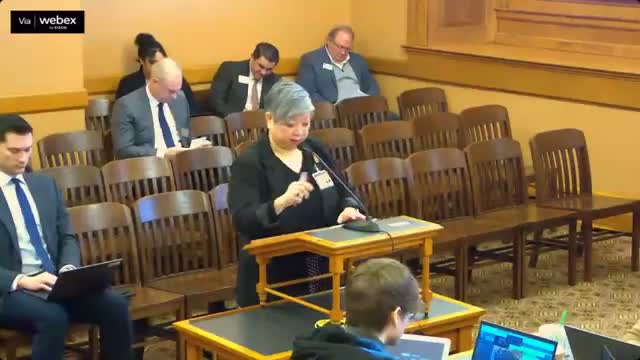
The Kansas Senate committee heard testimony on Senate Bill 300, which would add a section to the Technology Enabled Fiduciary Financial Institutions Act (KSA 9‑2,301) prohibiting the Office of the State Bank Commissioner or any other state agency from acting as receiver for an insolvent technology‑enabled fiduciary financial institution (TEFI).
Eileen, a legislative staff member, summarized the bill's text and said it defines insolvency for TEFIs by two conditions: (1) the institution's actual cash market value of assets is insufficient to pay creditor liabilities; or (2) the institution cannot meet creditor demands in its usual and customary manner. The new section would be supplemental to the TEFI Act and would take effect on publication in the statute book.
Brock Railer, General Counsel for the Office of the State Bank Commissioner, testified that the bill arose from the joint committee on fiduciary financial institutions oversight and reflected concern about the unique nature of TEFIs. "We are aware in New Mexico, the Desert State Life Management Trust Company, failed in 2017," he said, noting that New Mexico regulators are still winding down that trust company and that a similar failure here could demand significant state resources.
Committee members asked whether there is a current bankruptcy; Railer said there is not, though accountants have noted going‑concern risk for the single licensed TEFI referenced. He contrasted bank failures — where the FDIC typically serves as receiver — with trust companies, which are often wound down by a bank commissioner or a bankruptcy receiver, and said the bill is intended to prevent state agencies from being appointed to an unfamiliar, resource‑intensive receivership.
There was no opponent or neutral testimony. A fiscal note was in the packet but contained no dollar amounts, and the chair said it did not appear the bill would cause fiscal issues. The committee closed the SB300 hearing and set the folder aside.
Eileen, a legislative staff member, summarized the bill's text and said it defines insolvency for TEFIs by two conditions: (1) the institution's actual cash market value of assets is insufficient to pay creditor liabilities; or (2) the institution cannot meet creditor demands in its usual and customary manner. The new section would be supplemental to the TEFI Act and would take effect on publication in the statute book.
Brock Railer, General Counsel for the Office of the State Bank Commissioner, testified that the bill arose from the joint committee on fiduciary financial institutions oversight and reflected concern about the unique nature of TEFIs. "We are aware in New Mexico, the Desert State Life Management Trust Company, failed in 2017," he said, noting that New Mexico regulators are still winding down that trust company and that a similar failure here could demand significant state resources.
Committee members asked whether there is a current bankruptcy; Railer said there is not, though accountants have noted going‑concern risk for the single licensed TEFI referenced. He contrasted bank failures — where the FDIC typically serves as receiver — with trust companies, which are often wound down by a bank commissioner or a bankruptcy receiver, and said the bill is intended to prevent state agencies from being appointed to an unfamiliar, resource‑intensive receivership.
There was no opponent or neutral testimony. A fiscal note was in the packet but contained no dollar amounts, and the chair said it did not appear the bill would cause fiscal issues. The committee closed the SB300 hearing and set the folder aside.
View the Full Meeting & All Its Details
This article offers just a summary. Unlock complete video, transcripts, and insights as a Founder Member.
✓
Watch full, unedited meeting videos
✓
Search every word spoken in unlimited transcripts
✓
AI summaries & real-time alerts (all government levels)
✓
Permanent access to expanding government content
30-day money-back guarantee
