Committee recommends Board of Cosmetology budget after FTE cuts, fee increases
January 22, 2026 | Transparency and Ethics, Standing, Senate, Committees, Legislative, Kansas
This article was created by AI summarizing key points discussed. AI makes mistakes, so for full details and context, please refer to the video of the full meeting. Please report any errors so we can fix them. Report an error »
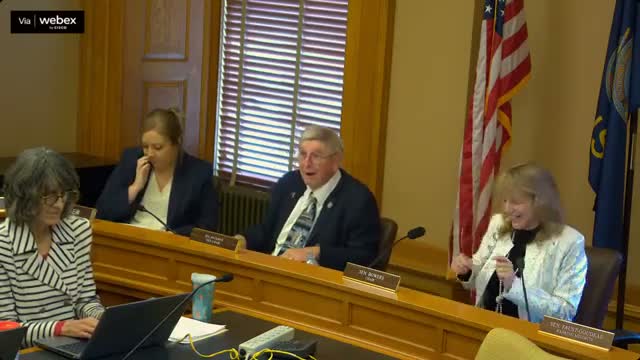
The Senate committee recommended the Kansas Board of Cosmetology’s FY2026 and FY2027 budget after a presentation from KLRD staff and the board’s recently appointed executive director.
KLRD presenter Joe Adams told the committee that the Board of Cosmetology is a fee‑funded regulatory agency and that the only change between the two fiscal years is the legislative pay plan previously approved by the legislature. Adams said the agency’s general fund expenditures show ‘‘a 0 all the way through because this is a fee funded regulatory board.’’ He identified an $18,472 legislative pay plan adjustment carried into the budget and noted planned reductions in personnel costs tied to a deliberate reduction of two full‑time equivalent positions.
The presentation included several line‑item details: Adams highlighted a reported shrinkage in salaries and wages of roughly $120,000 for FY2026 (and about $100,000 in a subsequent year) tied to reducing two FTEs, and he identified a data‑entry error—a negative $189,827 figure placed under the wrong row—that analysts will correct. Adams also said the board expects licensed personal services revenue to rise to about $975,000 in FY2027 after an anticipated practitioner licensing fee increase that would boost fund revenue by around 16 percent.
Adams detailed contractual costs auditors flagged, including a recurring $120,000 item for computer programming services for the agency’s hosting/portal (referred to in the presentation as the Big Picture service). He said the agency also carried a prior‑year balance related to attorney general fees (about $65,000) and included a reduced request for attorney’s fees support in future years (a $92,000 request in FY2027, down from $119,000 previously).
Brianna Bell, the Board’s new executive director, described enforcement priorities and how fines arise. When asked for examples of violations that generate fines, Bell said sanitation and reuse of single‑use items are typical public‑health concerns: ‘‘If it’s used again on someone else, then you’re exposing that next person to that.’’ She explained that inspectors recommend corrective actions and that repeated or intentional unsafe practices can lead to assessments and referral to the board for review.
Committee members pressed the board on staffing and debt. Bell said no one was fired; rather, turnover and a deliberate decision not to refill some positions led to the lower FTE count while the agency reorganizes duties to be “self‑sufficient” and pay down accrued debts. Adams clarified that the statutorily approved FTE count does not always reflect the number of positions the agency actually fills in a given year.
The committee recorded a motion from Senator Reichman, seconded by Senator Fasko, to recommend the FY2026 and FY2027 Board of Cosmetology budget as presented. The committee voice vote was taken and the motion passed.
The committee did not adopt additional legislative language at the hearing; members encouraged staff and the director to continue communicating with lawmakers about proposed licensure changes.
The committee will have the budget recommendation and the agency’s data in hand as it continues other pending budget hearings.
KLRD presenter Joe Adams told the committee that the Board of Cosmetology is a fee‑funded regulatory agency and that the only change between the two fiscal years is the legislative pay plan previously approved by the legislature. Adams said the agency’s general fund expenditures show ‘‘a 0 all the way through because this is a fee funded regulatory board.’’ He identified an $18,472 legislative pay plan adjustment carried into the budget and noted planned reductions in personnel costs tied to a deliberate reduction of two full‑time equivalent positions.
The presentation included several line‑item details: Adams highlighted a reported shrinkage in salaries and wages of roughly $120,000 for FY2026 (and about $100,000 in a subsequent year) tied to reducing two FTEs, and he identified a data‑entry error—a negative $189,827 figure placed under the wrong row—that analysts will correct. Adams also said the board expects licensed personal services revenue to rise to about $975,000 in FY2027 after an anticipated practitioner licensing fee increase that would boost fund revenue by around 16 percent.
Adams detailed contractual costs auditors flagged, including a recurring $120,000 item for computer programming services for the agency’s hosting/portal (referred to in the presentation as the Big Picture service). He said the agency also carried a prior‑year balance related to attorney general fees (about $65,000) and included a reduced request for attorney’s fees support in future years (a $92,000 request in FY2027, down from $119,000 previously).
Brianna Bell, the Board’s new executive director, described enforcement priorities and how fines arise. When asked for examples of violations that generate fines, Bell said sanitation and reuse of single‑use items are typical public‑health concerns: ‘‘If it’s used again on someone else, then you’re exposing that next person to that.’’ She explained that inspectors recommend corrective actions and that repeated or intentional unsafe practices can lead to assessments and referral to the board for review.
Committee members pressed the board on staffing and debt. Bell said no one was fired; rather, turnover and a deliberate decision not to refill some positions led to the lower FTE count while the agency reorganizes duties to be “self‑sufficient” and pay down accrued debts. Adams clarified that the statutorily approved FTE count does not always reflect the number of positions the agency actually fills in a given year.
The committee recorded a motion from Senator Reichman, seconded by Senator Fasko, to recommend the FY2026 and FY2027 Board of Cosmetology budget as presented. The committee voice vote was taken and the motion passed.
The committee did not adopt additional legislative language at the hearing; members encouraged staff and the director to continue communicating with lawmakers about proposed licensure changes.
The committee will have the budget recommendation and the agency’s data in hand as it continues other pending budget hearings.
Don't Miss a Word: See the Full Meeting!
Go beyond summaries. Unlock every video, transcript, and key insight with a Founder Membership.
✓
Get instant access to full meeting videos
✓
Search and clip any phrase from complete transcripts
✓
Receive AI-powered summaries & custom alerts
✓
Enjoy lifetime, unrestricted access to government data
30-day money-back guarantee
