Committee hears plan to scale PCB testing in schools, but funding gap leaves many tests unpaid
January 29, 2026 | Education, HOUSE OF REPRESENTATIVES, Committees, Legislative , Vermont
This article was created by AI summarizing key points discussed. AI makes mistakes, so for full details and context, please refer to the video of the full meeting. Please report any errors so we can fix them. Report an error »
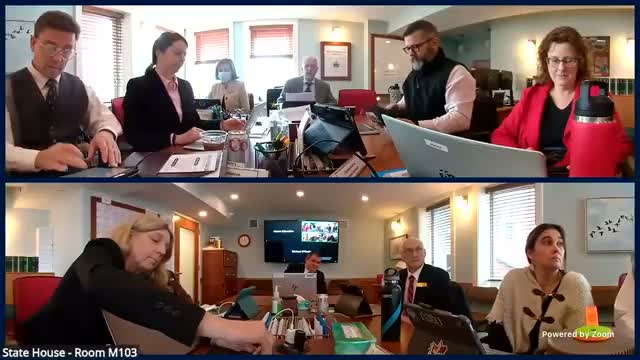
The Education committee heard testimony on H.542 and the state budget’s treatment of polychlorinated biphenyls (PCBs) in school buildings, as Department of Environmental Conservation officials proposed narrowing a mandate for universal testing and creating a special fund to prioritize limited resources.
“For the record, my name is Matt Chapman. I am the Director of Waste Management Prevention with the Department of Environmental Conservation,” Chapman told the committee, and he said “there is not any funding in the governor’s 2027 budget for PCBs and schools.” He described $9.5 million in prior appropriations still in play and said about $4,000,000 remains available, largely earmarked for work at Green Mountain Union School.
Chapman outlined draft changes to H.542 that would remove the statutory 2027 deadline for universal testing, require testing when a school seeks state construction aid, and permit schools to test voluntarily under state supervision and potential reimbursement depending on future funding. He said the agency would encourage voluntary testing and provide guidance so testing done outside a state-funded program could still be eligible for reimbursement if funds become available.
For schools with known PCB exceedances, Chapman said the bill would require a PCB management plan emphasizing cleaning, HVAC updates and other housekeeping measures to reduce dust and exposure. More intrusive removals would be expected when mitigation efforts cannot bring concentrations below established action levels. He added that the secretary would generally require implementation of cleanup when a school is undertaking concurrent construction or renovation, with exceptions where immediate-action-level exceedances cannot be mitigated.
Trish Cappellino of the sites management section explained how federal oversight typically unfolds and how state and EPA responsibilities intersect. “Assuming indoor air is tested at the same time, the state would be also requiring the same work for most of it,” she said, describing recent projects in which the EPA was notified and state staff were copied on cleanup plans.
Lawmakers pressed agency witnesses on draft language that would require schools to ‘investigate’ PCBs during facilities master planning. One committee member worried that master planning processes—often a paper exercise occurring on a five- or ten-year cycle—could trigger airborne testing for buildings not scheduled for renovation and leave districts without funding to pay for mitigation if exceedances were found. Chapman said he intended the draft to coordinate testing with capital construction planning and welcomed redrafting to clarify that intrusive sampling should generally occur when an actual construction proposal exists.
The draft also would create a special fund to receive any future litigation recoveries or state appropriations and set a prioritization scheme for distributing limited dollars. Chapman said previously adopted reimbursement and cost-recovery provisions would continue to apply and that recovered funds could be returned to the Education Fund or placed into the new special fund depending on policy choices.
Committee members asked for clarity on who would pay for immediate mitigations. Chapman confirmed the agency’s intent that, when there is an immediate-action-level exceedance that cannot be mitigated by operational measures, the state would facilitate and pay for mitigation work—consistent with prior practice for schools the state has supported.
Witnesses and legislators discussed several dollar figures in the draft and testimony: about $9.5 million in earlier appropriations, roughly $4,000,000 remaining and largely earmarked for Green Mountain Union, and draft language referencing up to $4,500,000 for continued air quality testing in certain sections. No formal vote was taken on H.542 during the session.
The committee concluded testimony and moved to other floor business; staff said they would continue to refine statutory language, coordinate with EPA where required, and consider whether an annual report (subsection E) is useful given existing agency data collection.
What’s next: The committee did not record a vote on H.542 at the hearing. Staff said they would continue drafting amendments to clarify applicability, testing triggers tied to construction aid, the details of a new special fund, and the procedures for state-led mitigation when exceedances occur.
“For the record, my name is Matt Chapman. I am the Director of Waste Management Prevention with the Department of Environmental Conservation,” Chapman told the committee, and he said “there is not any funding in the governor’s 2027 budget for PCBs and schools.” He described $9.5 million in prior appropriations still in play and said about $4,000,000 remains available, largely earmarked for work at Green Mountain Union School.
Chapman outlined draft changes to H.542 that would remove the statutory 2027 deadline for universal testing, require testing when a school seeks state construction aid, and permit schools to test voluntarily under state supervision and potential reimbursement depending on future funding. He said the agency would encourage voluntary testing and provide guidance so testing done outside a state-funded program could still be eligible for reimbursement if funds become available.
For schools with known PCB exceedances, Chapman said the bill would require a PCB management plan emphasizing cleaning, HVAC updates and other housekeeping measures to reduce dust and exposure. More intrusive removals would be expected when mitigation efforts cannot bring concentrations below established action levels. He added that the secretary would generally require implementation of cleanup when a school is undertaking concurrent construction or renovation, with exceptions where immediate-action-level exceedances cannot be mitigated.
Trish Cappellino of the sites management section explained how federal oversight typically unfolds and how state and EPA responsibilities intersect. “Assuming indoor air is tested at the same time, the state would be also requiring the same work for most of it,” she said, describing recent projects in which the EPA was notified and state staff were copied on cleanup plans.
Lawmakers pressed agency witnesses on draft language that would require schools to ‘investigate’ PCBs during facilities master planning. One committee member worried that master planning processes—often a paper exercise occurring on a five- or ten-year cycle—could trigger airborne testing for buildings not scheduled for renovation and leave districts without funding to pay for mitigation if exceedances were found. Chapman said he intended the draft to coordinate testing with capital construction planning and welcomed redrafting to clarify that intrusive sampling should generally occur when an actual construction proposal exists.
The draft also would create a special fund to receive any future litigation recoveries or state appropriations and set a prioritization scheme for distributing limited dollars. Chapman said previously adopted reimbursement and cost-recovery provisions would continue to apply and that recovered funds could be returned to the Education Fund or placed into the new special fund depending on policy choices.
Committee members asked for clarity on who would pay for immediate mitigations. Chapman confirmed the agency’s intent that, when there is an immediate-action-level exceedance that cannot be mitigated by operational measures, the state would facilitate and pay for mitigation work—consistent with prior practice for schools the state has supported.
Witnesses and legislators discussed several dollar figures in the draft and testimony: about $9.5 million in earlier appropriations, roughly $4,000,000 remaining and largely earmarked for Green Mountain Union, and draft language referencing up to $4,500,000 for continued air quality testing in certain sections. No formal vote was taken on H.542 during the session.
The committee concluded testimony and moved to other floor business; staff said they would continue to refine statutory language, coordinate with EPA where required, and consider whether an annual report (subsection E) is useful given existing agency data collection.
What’s next: The committee did not record a vote on H.542 at the hearing. Staff said they would continue drafting amendments to clarify applicability, testing triggers tied to construction aid, the details of a new special fund, and the procedures for state-led mitigation when exceedances occur.
View the Full Meeting & All Its Details
This article offers just a summary. Unlock complete video, transcripts, and insights as a Founder Member.
✓
Watch full, unedited meeting videos
✓
Search every word spoken in unlimited transcripts
✓
AI summaries & real-time alerts (all government levels)
✓
Permanent access to expanding government content
30-day money-back guarantee
