Fayetteville council discusses $76,715.87 per-capita jail fee as chiefs warn daily rates would be costlier
December 30, 2025 | Fayetteville City, Washington County, Arkansas
This article was created by AI summarizing key points discussed. AI makes mistakes, so for full details and context, please refer to the video of the full meeting. Please report any errors so we can fix them. Report an error »
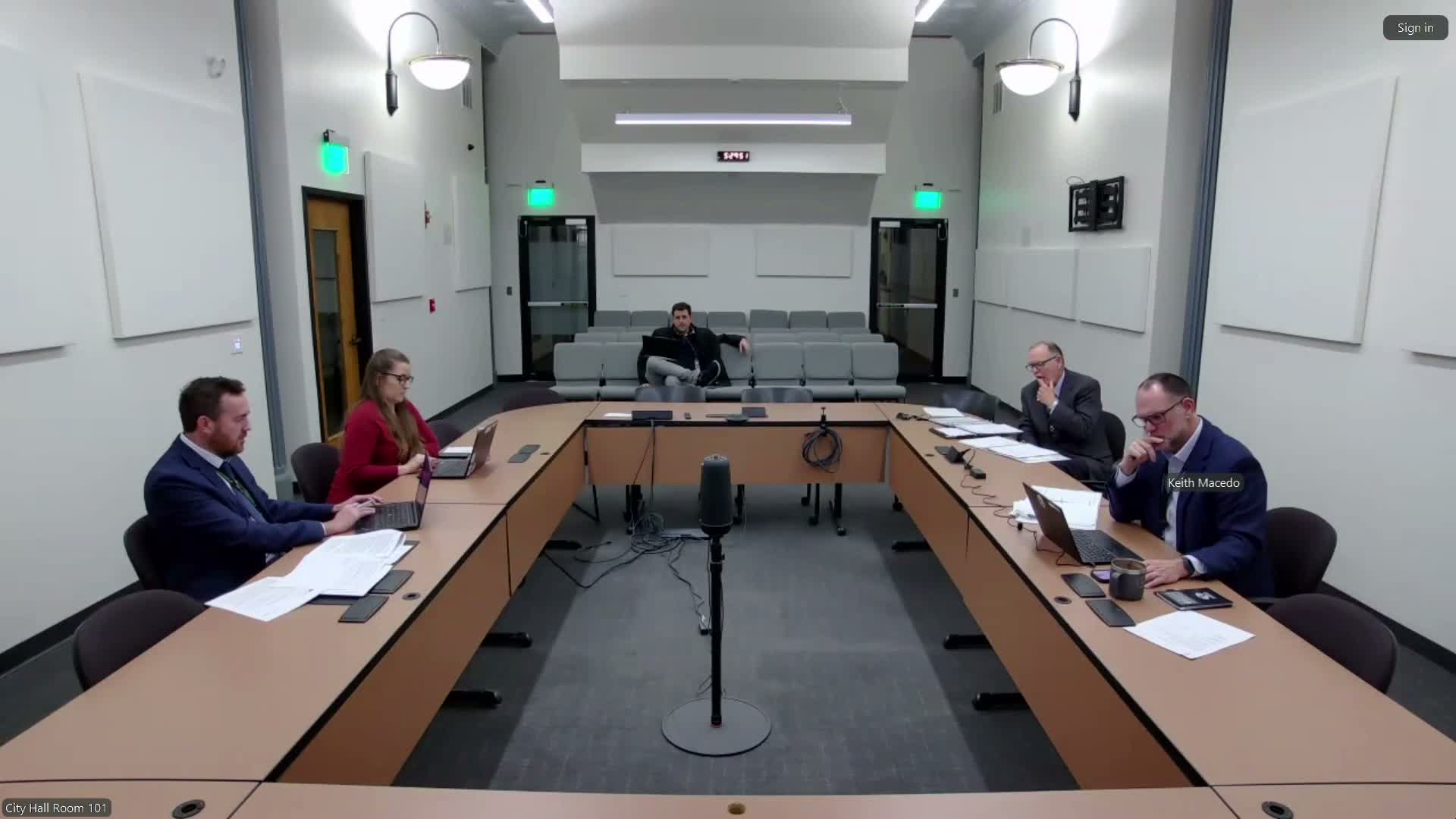
Councilors debated the city’s annual per-capita jail fee with Washington County, an item in the consent/resolution packet that would set Fayetteville’s share at $76,715.87 for 2026.
Vice Mayor Sarah Bunch (referred to in the transcript as Council Member Sarah Moore and others in discussion) questioned whether the city is getting credit for reduced arrests, citing countywide bookings versus the city’s arrests: “for year to date 2025, they had 10,487 bookings. The city of Fayetteville, we reduced our arrest to 2,357,” she said, noting Fayetteville’s arrests represented about 22% of bookings while the city bears about 38% of county population for the per-capita calculation.
Chief Reynolds (speaking as the Police Department/liaison) provided historical context and the county’s justification for the per-capita approach. He traced the change from a one-time booking fee to a daily jail fee in 2019, and said Washington County later proposed a per-capita formula tied to the county’s budget shortfall and municipal populations. “What’s in front of you today is, for 2026… Fayetteville’s portion… is $76,715.87,” he said. The chief warned that if the city declined the per-capita agreement, the county ordinance would require charging municipalities the higher daily rate, which his estimate placed at roughly $800,000 for Fayetteville.
Council members also raised concerns about conditions inside the county facility and the effect of bed sales to other jurisdictions on local capacity and on Fayetteville residents being housed in crowded conditions. Staff and other mayors previously advocated at the Quorum Court against a move to daily billing; the proposal to move to an $80.52 daily rate was tabled after mayoral pushback. Staff noted the item had already been approved in the city’s 2026 operating budget and that the per-capita fee reflects the county’s estimated shortfall allocated by municipal population.
Next steps: The item is on the consent list for the council meeting. Councilors suggested exploring intergovernmental discussions with county officials and commissioners to address perceived inequities and capacity issues.
Vice Mayor Sarah Bunch (referred to in the transcript as Council Member Sarah Moore and others in discussion) questioned whether the city is getting credit for reduced arrests, citing countywide bookings versus the city’s arrests: “for year to date 2025, they had 10,487 bookings. The city of Fayetteville, we reduced our arrest to 2,357,” she said, noting Fayetteville’s arrests represented about 22% of bookings while the city bears about 38% of county population for the per-capita calculation.
Chief Reynolds (speaking as the Police Department/liaison) provided historical context and the county’s justification for the per-capita approach. He traced the change from a one-time booking fee to a daily jail fee in 2019, and said Washington County later proposed a per-capita formula tied to the county’s budget shortfall and municipal populations. “What’s in front of you today is, for 2026… Fayetteville’s portion… is $76,715.87,” he said. The chief warned that if the city declined the per-capita agreement, the county ordinance would require charging municipalities the higher daily rate, which his estimate placed at roughly $800,000 for Fayetteville.
Council members also raised concerns about conditions inside the county facility and the effect of bed sales to other jurisdictions on local capacity and on Fayetteville residents being housed in crowded conditions. Staff and other mayors previously advocated at the Quorum Court against a move to daily billing; the proposal to move to an $80.52 daily rate was tabled after mayoral pushback. Staff noted the item had already been approved in the city’s 2026 operating budget and that the per-capita fee reflects the county’s estimated shortfall allocated by municipal population.
Next steps: The item is on the consent list for the council meeting. Councilors suggested exploring intergovernmental discussions with county officials and commissioners to address perceived inequities and capacity issues.
View the Full Meeting & All Its Details
This article offers just a summary. Unlock complete video, transcripts, and insights as a Founder Member.
✓
Watch full, unedited meeting videos
✓
Search every word spoken in unlimited transcripts
✓
AI summaries & real-time alerts (all government levels)
✓
Permanent access to expanding government content
30-day money-back guarantee
