Douglas County VHR board rescinds $2,500 noise fine after debate over renter vs. guest
January 29, 2026 | Douglas County, Nevada
This article was created by AI summarizing key points discussed. AI makes mistakes, so for full details and context, please refer to the video of the full meeting. Please report any errors so we can fix them. Report an error »
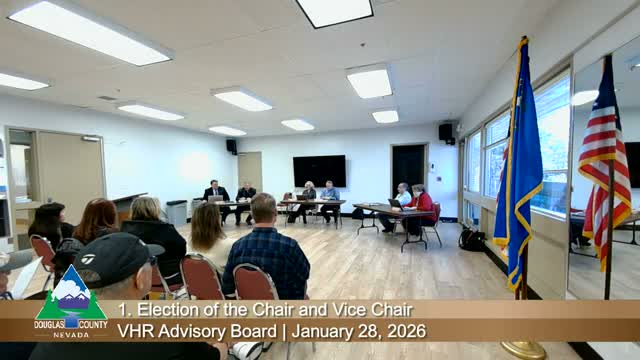
The Douglas County Vacation Home Rental Advisory Board voted to rescind a $2,500 fine against IMI Paiute LLC after hearing testimony and legal advice about whether the county’s vacation home rental (VHR) code covers nonpaying guests.
The fine stemmed from a sheriff’s response to a noise complaint on Oct. 17 at about 11:33 p.m. Deputies reported loud music and multiple voices and contacted occupants; the sheriff’s report and a body-cam transcript in the board packet indicated that one occupant identified herself as the signed renter, the staff summary said.
Michelle Scala, who identified herself as the property manager for the owner, Nancy Labowitz, told the board the person at the residence, Gina Capela, was a family friend who had stayed at the property for several years without payment. “I’m here not to argue that there was a noise violation … but it shouldn’t have run through the VHR ordinance because it wasn’t a vacation rental at the time,” Scala said.
Gina Capela, sworn under oath, testified she received no monetary or other compensation for the stay. “No,” she answered when asked whether there had been compensation for that period.
Ernie Streler, the county staff member who presented the case, said staff reviewed the body-cam video, the sheriff’s report and other documentary evidence and concluded the preponderance of the evidence indicated the incident occurred while the property was operating as a VHR and therefore was subject to VHR rules. He noted the packet contained the DCSO report, a video transcript and communications between code enforcement and the property manager.
Doug Ritchie, speaking for the District Attorney’s Office, advised the board in its appellate role to apply the code (Douglas County Code 20.622.040(c)) to the facts before them. “A VHR permit is a privileged license,” Ritchie said, and the board must determine whether the privilege carries obligations that apply when a property is occupied even if no payment changed hands.
Board members and members of the public debated two issues: whether available evidence raised the occupant to the level of a paying renter and whether the VHR code applies to nonpaying guests while a VHR permit exists. Neighbors told the board they have repeatedly called about noise from VHRs and emphasized enforcement gaps.
After public comment and discussion, a motion to rescind the fine and return the $2,500 was approved; one board member abstained. The board also directed staff to record the decision and continue compiling evidence-collection practices and clarifications for future cases.
The board’s action resolves the appeal for IMI Paiute LLC; the packet shows the contested items included VHR permit DSTR077P and code enforcement case 25-CEDashCaseDashVHR-0011. The board did not change the underlying accounting of what occurred that night but determined the preponderance and legal application of the ordinance did not support upholding the fine in this instance.
The board said it will consider clarifying code language and enforcement protocols in future meetings to reduce similar disputes about whether VHR rules apply when owners host nonpaying guests.
The fine stemmed from a sheriff’s response to a noise complaint on Oct. 17 at about 11:33 p.m. Deputies reported loud music and multiple voices and contacted occupants; the sheriff’s report and a body-cam transcript in the board packet indicated that one occupant identified herself as the signed renter, the staff summary said.
Michelle Scala, who identified herself as the property manager for the owner, Nancy Labowitz, told the board the person at the residence, Gina Capela, was a family friend who had stayed at the property for several years without payment. “I’m here not to argue that there was a noise violation … but it shouldn’t have run through the VHR ordinance because it wasn’t a vacation rental at the time,” Scala said.
Gina Capela, sworn under oath, testified she received no monetary or other compensation for the stay. “No,” she answered when asked whether there had been compensation for that period.
Ernie Streler, the county staff member who presented the case, said staff reviewed the body-cam video, the sheriff’s report and other documentary evidence and concluded the preponderance of the evidence indicated the incident occurred while the property was operating as a VHR and therefore was subject to VHR rules. He noted the packet contained the DCSO report, a video transcript and communications between code enforcement and the property manager.
Doug Ritchie, speaking for the District Attorney’s Office, advised the board in its appellate role to apply the code (Douglas County Code 20.622.040(c)) to the facts before them. “A VHR permit is a privileged license,” Ritchie said, and the board must determine whether the privilege carries obligations that apply when a property is occupied even if no payment changed hands.
Board members and members of the public debated two issues: whether available evidence raised the occupant to the level of a paying renter and whether the VHR code applies to nonpaying guests while a VHR permit exists. Neighbors told the board they have repeatedly called about noise from VHRs and emphasized enforcement gaps.
After public comment and discussion, a motion to rescind the fine and return the $2,500 was approved; one board member abstained. The board also directed staff to record the decision and continue compiling evidence-collection practices and clarifications for future cases.
The board’s action resolves the appeal for IMI Paiute LLC; the packet shows the contested items included VHR permit DSTR077P and code enforcement case 25-CEDashCaseDashVHR-0011. The board did not change the underlying accounting of what occurred that night but determined the preponderance and legal application of the ordinance did not support upholding the fine in this instance.
The board said it will consider clarifying code language and enforcement protocols in future meetings to reduce similar disputes about whether VHR rules apply when owners host nonpaying guests.
Don't Miss a Word: See the Full Meeting!
Go beyond summaries. Unlock every video, transcript, and key insight with a Founder Membership.
✓
Get instant access to full meeting videos
✓
Search and clip any phrase from complete transcripts
✓
Receive AI-powered summaries & custom alerts
✓
Enjoy lifetime, unrestricted access to government data
30-day money-back guarantee
