Bristol council approves state‑police ALPR memorandum with conditions after extensive public debate
January 29, 2026 | Town of Bristol, Bristol County, Rhode Island
This article was created by AI summarizing key points discussed. AI makes mistakes, so for full details and context, please refer to the video of the full meeting. Please report any errors so we can fix them. Report an error »
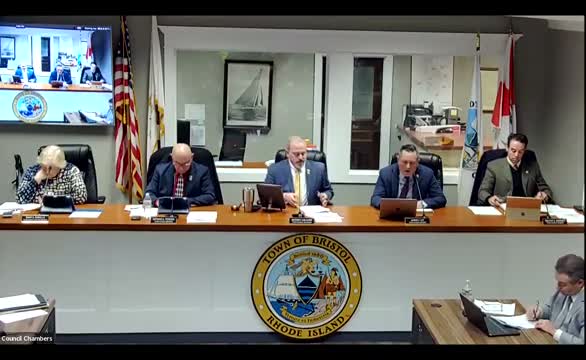
The Bristol Town Council on Jan. 28 approved a memorandum of understanding with the Rhode Island State Police to permit use of a license‑plate reader (ALPR, commonly called "Flock") camera in town, subject to a set of conditions and a 12‑month review by the council.
The vote followed a multi‑hour, heavily attended discussion that included a technical briefing from law enforcement and more than two dozen residents who opposed the technology. Chief Lynch of the Bristol Police Department and visiting police officials from Cranston and Providence outlined how ALPR systems work, how data are encrypted and audited, and examples where plate readers aided investigations, including missing persons and cross‑jurisdictional theft cases. Colonel Michael Winquist of the Cranston Police Department described his city's deployment and said data are transmitted in encrypted cloud storage and checked against NCIC hot lists.
Opponents argued the system poses risks to privacy, could be accessed by federal immigration authorities through indirect channels, and creates potential civil‑liability exposure for the town. Multiple residents submitted testimony citing audits, reported backdoor access in other states, and recent legal challenges to ALPR deployments.
The council's approval was conditional. The motion requires: written certification by the town solicitor that the executed MOU and related policies comply with applicable law; quarterly audits and routine public reporting of aggregated audit results; a requirement that any changes to the technology, sharing arrangements or policies return to the council for approval; and a formal 12‑month program review to assess effectiveness and compliance.
Chief Lynch told the council he would administer the program with the goal of high safeguards and restricted access. "I have a duty ... to find a missing or abducted child," he said, arguing ALPR is an investigative tool that can speed response in urgent situations. Colonel Winquist and Providence officials described internal audit trails, two‑factor authentication, and administrative controls that they said limit misuse.
Residents and privacy advocates pressed other options: strengthening state law, limiting retention windows, independent audits, and prohibiting sharing with federal immigration agencies. Several speakers asked the council to delay action until the General Assembly adopts statewide guardrails; others urged the council to approve the MOU with the added local oversight requirements.
The council’s action directs the chief and solicitor to finalize the executed MOU and internal procedures consistent with the stated conditions before the camera is activated. The council also directed a report back in 12 months with audit results, evidence of public‑safety benefit, and any recommended updates to the town’s governing language.
The vote followed a multi‑hour, heavily attended discussion that included a technical briefing from law enforcement and more than two dozen residents who opposed the technology. Chief Lynch of the Bristol Police Department and visiting police officials from Cranston and Providence outlined how ALPR systems work, how data are encrypted and audited, and examples where plate readers aided investigations, including missing persons and cross‑jurisdictional theft cases. Colonel Michael Winquist of the Cranston Police Department described his city's deployment and said data are transmitted in encrypted cloud storage and checked against NCIC hot lists.
Opponents argued the system poses risks to privacy, could be accessed by federal immigration authorities through indirect channels, and creates potential civil‑liability exposure for the town. Multiple residents submitted testimony citing audits, reported backdoor access in other states, and recent legal challenges to ALPR deployments.
The council's approval was conditional. The motion requires: written certification by the town solicitor that the executed MOU and related policies comply with applicable law; quarterly audits and routine public reporting of aggregated audit results; a requirement that any changes to the technology, sharing arrangements or policies return to the council for approval; and a formal 12‑month program review to assess effectiveness and compliance.
Chief Lynch told the council he would administer the program with the goal of high safeguards and restricted access. "I have a duty ... to find a missing or abducted child," he said, arguing ALPR is an investigative tool that can speed response in urgent situations. Colonel Winquist and Providence officials described internal audit trails, two‑factor authentication, and administrative controls that they said limit misuse.
Residents and privacy advocates pressed other options: strengthening state law, limiting retention windows, independent audits, and prohibiting sharing with federal immigration agencies. Several speakers asked the council to delay action until the General Assembly adopts statewide guardrails; others urged the council to approve the MOU with the added local oversight requirements.
The council’s action directs the chief and solicitor to finalize the executed MOU and internal procedures consistent with the stated conditions before the camera is activated. The council also directed a report back in 12 months with audit results, evidence of public‑safety benefit, and any recommended updates to the town’s governing language.
View the Full Meeting & All Its Details
This article offers just a summary. Unlock complete video, transcripts, and insights as a Founder Member.
✓
Watch full, unedited meeting videos
✓
Search every word spoken in unlimited transcripts
✓
AI summaries & real-time alerts (all government levels)
✓
Permanent access to expanding government content
30-day money-back guarantee
