Grand Isle mother urges Vermont to expand long-term addiction treatment after son's out-of-state stay
January 29, 2026 | Health & Welfare, SENATE, Committees, Legislative , Vermont
This article was created by AI summarizing key points discussed. AI makes mistakes, so for full details and context, please refer to the video of the full meeting. Please report any errors so we can fix them. Report an error »
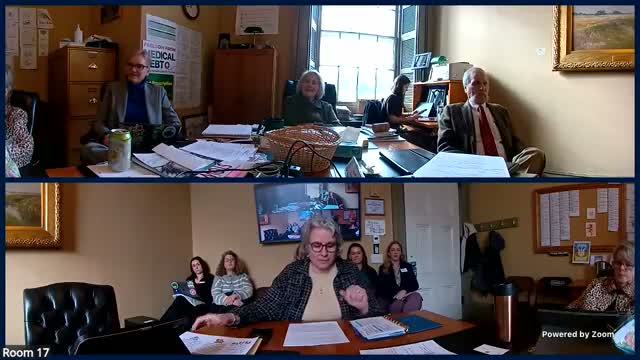
Carrie Kelly, a Grand Isle resident and mental-health advocate, told the Health & Welfare committee that gaps in Vermont's continuum of care forced her family to send her son to a long-term recovery program out of state and personally shoulder most of the cost.
"Mental health care is certainly health care," Kelly told the committee, describing parallel experiences raising twins: one received expected medical supports, while the other faced escalating mental-health and substance-use problems that schools and short-term crisis services could not resolve.
Kelly recounted that her son, after years of school-based struggles and repeated crisis responses, eventually found a nine-month program, Mountain Valley Recovery in Holden, Utah. She said Vermont Medicaid initially "approved... $23,000 in coverage," but the residential provider billed roughly $7,500 a month and would not accept the $23,000 as payment in full. Kelly said the mismatch left the family unable to use the Medicaid offer and ultimately paying about $110,000 out of pocket after tapping retirement accounts and taking a second mortgage.
"Two weeks is really detox. It's not recovery," Kelly said, arguing that many available programs in-state were short-term and not designed for sustained recovery. She praised peer recovery coaches and a recently opened mental-health urgent care as effective crisis tools but said they do not replace longer-term residential support.
Kelly asked the committee and lawmakers to consider shifting resources toward longer-term treatment options so young people can stay in Vermont rather than requiring expensive out-of-state placements or paying the fiscal and human costs associated with incarceration. She noted that incarceration can cost "$100,000 plus a year" and said repurposing such expenditures toward treatment could yield better outcomes.
Kelly concluded with a report of progress: her son has been sober for 18 months, is employed as a tow-truck driver in Wisconsin and is interested in becoming a peer advocate. She offered to provide further details to staff and committee members.
The Health & Welfare committee did not take immediate action during the session; members thanked Kelly for her testimony and indicated they would continue to consider needs for expanded treatment capacity in Vermont.
"Mental health care is certainly health care," Kelly told the committee, describing parallel experiences raising twins: one received expected medical supports, while the other faced escalating mental-health and substance-use problems that schools and short-term crisis services could not resolve.
Kelly recounted that her son, after years of school-based struggles and repeated crisis responses, eventually found a nine-month program, Mountain Valley Recovery in Holden, Utah. She said Vermont Medicaid initially "approved... $23,000 in coverage," but the residential provider billed roughly $7,500 a month and would not accept the $23,000 as payment in full. Kelly said the mismatch left the family unable to use the Medicaid offer and ultimately paying about $110,000 out of pocket after tapping retirement accounts and taking a second mortgage.
"Two weeks is really detox. It's not recovery," Kelly said, arguing that many available programs in-state were short-term and not designed for sustained recovery. She praised peer recovery coaches and a recently opened mental-health urgent care as effective crisis tools but said they do not replace longer-term residential support.
Kelly asked the committee and lawmakers to consider shifting resources toward longer-term treatment options so young people can stay in Vermont rather than requiring expensive out-of-state placements or paying the fiscal and human costs associated with incarceration. She noted that incarceration can cost "$100,000 plus a year" and said repurposing such expenditures toward treatment could yield better outcomes.
Kelly concluded with a report of progress: her son has been sober for 18 months, is employed as a tow-truck driver in Wisconsin and is interested in becoming a peer advocate. She offered to provide further details to staff and committee members.
The Health & Welfare committee did not take immediate action during the session; members thanked Kelly for her testimony and indicated they would continue to consider needs for expanded treatment capacity in Vermont.
View the Full Meeting & All Its Details
This article offers just a summary. Unlock complete video, transcripts, and insights as a Founder Member.
✓
Watch full, unedited meeting videos
✓
Search every word spoken in unlimited transcripts
✓
AI summaries & real-time alerts (all government levels)
✓
Permanent access to expanding government content
30-day money-back guarantee
