Howard County students and advocates urge law to keep school restroom dispensers stocked and expand coverage to colleges
January 29, 2026 | Howard, Delegation Committees, HOUSE OF REPRESENTATIVES, Committees, Legislative, Maryland
This article was created by AI summarizing key points discussed. AI makes mistakes, so for full details and context, please refer to the video of the full meeting. Please report any errors so we can fix them. Report an error »
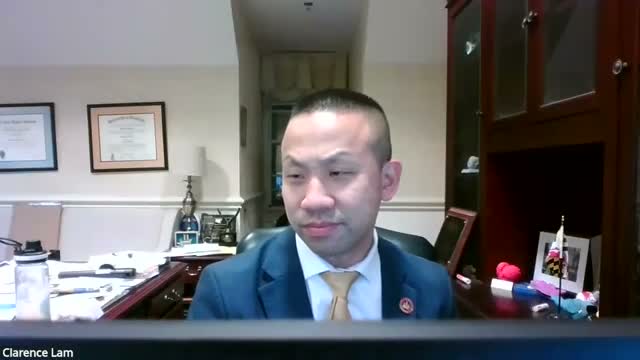
Allison Nichols, a Howard County High School student and an intern with the Women's Giving Circle, told the delegation that empty dispensers force some students to miss class or manage periods in embarrassment, and said she "respectfully urge[s] strong support" for bills that would ensure dispensers are installed and consistently restocked.
"When students don't have access to menstrual products, they can feel stressed, embarrassed, or distracted," Nichols said, describing national survey figures she cited on affordability and access. Isha Ande, a county high school senior, echoed that point and urged passage of HB457 to require restocking and HB541 to require institutions of higher education to provide free products, saying students should not have to "tie a sweatshirt around their waist" to get by in class.
Supporters framed the bills as measures to protect student dignity and educational participation. Testimony cited that inconsistent stock renders a prior 2021 expansion of access (House Bill 205) incomplete unless restocking and college coverage are mandated. Proponents asked delegates to treat menstrual products as basic necessities in educational settings and to include an implementation timeline for higher-education coverage (testimony cited a target date of 08/01/2028).
Delegates did not take formal action during the hearing. This public comment will be entered into the record for the delegation's consideration as the legislature moves forward. The hearing closed without a vote on these measures.
"When students don't have access to menstrual products, they can feel stressed, embarrassed, or distracted," Nichols said, describing national survey figures she cited on affordability and access. Isha Ande, a county high school senior, echoed that point and urged passage of HB457 to require restocking and HB541 to require institutions of higher education to provide free products, saying students should not have to "tie a sweatshirt around their waist" to get by in class.
Supporters framed the bills as measures to protect student dignity and educational participation. Testimony cited that inconsistent stock renders a prior 2021 expansion of access (House Bill 205) incomplete unless restocking and college coverage are mandated. Proponents asked delegates to treat menstrual products as basic necessities in educational settings and to include an implementation timeline for higher-education coverage (testimony cited a target date of 08/01/2028).
Delegates did not take formal action during the hearing. This public comment will be entered into the record for the delegation's consideration as the legislature moves forward. The hearing closed without a vote on these measures.
View the Full Meeting & All Its Details
This article offers just a summary. Unlock complete video, transcripts, and insights as a Founder Member.
✓
Watch full, unedited meeting videos
✓
Search every word spoken in unlimited transcripts
✓
AI summaries & real-time alerts (all government levels)
✓
Permanent access to expanding government content
30-day money-back guarantee
