Subcommittee narrowly advances by‑right faith-and-nonprofit housing bill after sustained debate
January 30, 2026 | 2026 Legislature VA, Virginia
This article was created by AI summarizing key points discussed. AI makes mistakes, so for full details and context, please refer to the video of the full meeting. Please report any errors so we can fix them. Report an error »
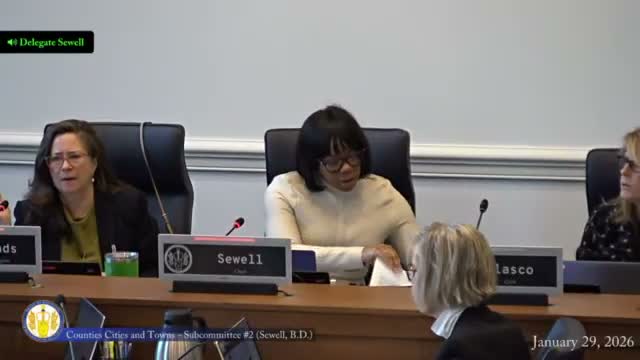
Richmond — After more than an hour of testimony from faith leaders, housing advocates and local governments, the House subcommittee voted to report HB 12‑79, a bill creating a by‑right approval path for affordable housing built on land owned by religious organizations, certain nonprofits and other property‑tax‑exempt entities.
Delegate Cole, the bill’s sponsor, said the legislation is designed to speed construction of affordable units on mission‑aligned land and eliminate lengthy rezoning or special‑use processes. "If communities want to build affordable housing, churches and non‑profits who want to put people in houses should not have to spend years begging permission to do the right thing," Cole said. The bill requires 60 percent of units to be affordable for 50 years and takes effect Sept. 1, 2026, unless locally exempted; the sponsor noted completed projects would be taxable unless a locality chose an exemption.
Supporters — including the Commonwealth Housing Coalition, the Virginia Catholic Conference, the Virginia Housing Alliance, Legal Aid Justice Center and multiple congregations — said the bill would unlock land that could be used immediately for housing and cited dozens of existing faith‑based projects that faced long delays under local zoning. Barrett Hardeman of the Commonwealth Housing Coalition said the approach is intended to put high‑value community land to use as housing quickly.
Local governments, planning professionals and county associations urged caution. Joe Lurch of the Virginia Association of Counties, the Virginia Municipal League and the American Planning Association argued the bill imposes a uniform, state‑level mandate that could outpace local infrastructure capacity — water, sewer and roads — and remove locally appropriate safeguards. Several opponents described it as a "one‑size‑fits‑all" simplification that would not suit small towns or places where churches are the dominant local building.
The subcommittee adopted an amendment adding a reenactment clause to allow further negotiation with the Senate and then reported the bill on a 5–3 vote. The transcript records the roll-call result.
What’s next: The reenactment amendment points toward continued negotiations in conference or between chambers; the bill’s sponsor and stakeholders indicated they expect to continue refining guardrails as it moves through the process.
Delegate Cole, the bill’s sponsor, said the legislation is designed to speed construction of affordable units on mission‑aligned land and eliminate lengthy rezoning or special‑use processes. "If communities want to build affordable housing, churches and non‑profits who want to put people in houses should not have to spend years begging permission to do the right thing," Cole said. The bill requires 60 percent of units to be affordable for 50 years and takes effect Sept. 1, 2026, unless locally exempted; the sponsor noted completed projects would be taxable unless a locality chose an exemption.
Supporters — including the Commonwealth Housing Coalition, the Virginia Catholic Conference, the Virginia Housing Alliance, Legal Aid Justice Center and multiple congregations — said the bill would unlock land that could be used immediately for housing and cited dozens of existing faith‑based projects that faced long delays under local zoning. Barrett Hardeman of the Commonwealth Housing Coalition said the approach is intended to put high‑value community land to use as housing quickly.
Local governments, planning professionals and county associations urged caution. Joe Lurch of the Virginia Association of Counties, the Virginia Municipal League and the American Planning Association argued the bill imposes a uniform, state‑level mandate that could outpace local infrastructure capacity — water, sewer and roads — and remove locally appropriate safeguards. Several opponents described it as a "one‑size‑fits‑all" simplification that would not suit small towns or places where churches are the dominant local building.
The subcommittee adopted an amendment adding a reenactment clause to allow further negotiation with the Senate and then reported the bill on a 5–3 vote. The transcript records the roll-call result.
What’s next: The reenactment amendment points toward continued negotiations in conference or between chambers; the bill’s sponsor and stakeholders indicated they expect to continue refining guardrails as it moves through the process.
View the Full Meeting & All Its Details
This article offers just a summary. Unlock complete video, transcripts, and insights as a Founder Member.
✓
Watch full, unedited meeting videos
✓
Search every word spoken in unlimited transcripts
✓
AI summaries & real-time alerts (all government levels)
✓
Permanent access to expanding government content
30-day money-back guarantee
