House committee advances wide slate of bills; prescription drug affordability board moves on after close vote
January 30, 2026 | 2026 Legislature VA, Virginia
This article was created by AI summarizing key points discussed. AI makes mistakes, so for full details and context, please refer to the video of the full meeting. Please report any errors so we can fix them. Report an error »
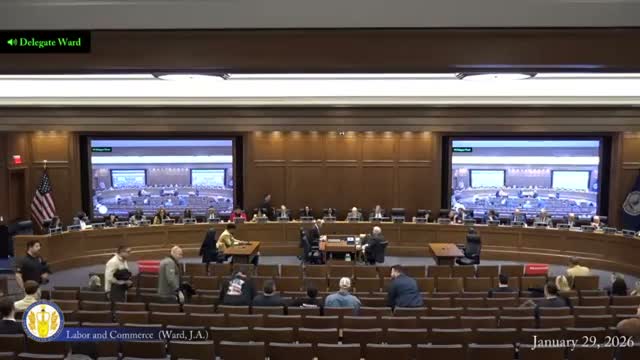
The House committee advanced a broad package of legislation in a brisk session that emphasized the limited time left in the legislative calendar and sent several health, insurance and energy bills to the next stage.
Unidentified Speaker opened the session by noting the volume of business: “There’s been 207 bills filed,” and warned members that many subcommittees have only two meetings left, urging sponsors to move bills quickly.
The committee approved procedural referrals and reports from three subcommittees. Early administrative action referred House Bill 1262 (patron: Delegate Glass), a consumer protection measure on advertising for immigration assistance services, to the public safety committee by voice vote.
Several bills reported out of Subcommittee 1 were approved without recorded opposition. Notable approvals included HB 184 (Helmer), reported with a substitute and passed 22–0; HB 304 (Sullivan), adding mortgage-assumption provisions for certain conventional loans effective for loans secured on or after July 1, 2026, passed 22–0; and HB 316 (Hope), a substitute updating the Virginia Stock Corporation Act, passed 22–0.
The committee also moved a series of health-insurance related bills. HB 328 (Sullivan), a substitute directing the Bureau of Insurance to select a new essential health benefits benchmark plan for the 2029 plan year and to add benefits such as doula care, fertility-treatment limits, hearing aids for all ages and donor human breast milk, was reported with amendments by the subcommittee and passed the full committee 14–7; it was referred to appropriations.
A contested recommendation from Subcommittee 1 concerned HB 483 (Delaney), which would establish a Prescription Drug Affordability Board to review high drug costs and make recommendations. The subcommittee recommended reporting with amendments and referral to appropriations on a 5–4 vote; the full committee approved reporting and referral to appropriations by a 13–8 vote.
Energy and utility measures were broadly approved. HB 395 (Krizek), permitting customers to install small portable solar generation devices without utility approval and prohibiting local bans while allowing notice requirements, passed 21–0 after a substitute that incorporated related bills. HB 628 (Carlson) revised renewable portfolio requirements for Dominion Energy and passed 21–0. HB 633 (Kilgore) renamed the Commission on Electric Utility Regulation to the Energy Commission of Virginia and passed 19–1. Shared-solar expansion bills for Dominion and Appalachian Power (HB 807 and HB 809) and HB 828 (Herring), requiring utilities to report residential disconnections monthly to the State Corporation Commission and for the SCC to publish the data and provide an annual executive summary by Sept. 1, 2026, all passed unanimously where recorded.
Other measures reported and approved included HB 357 (Colson) on benefits-consortium nonprofit status (21–0), HB 358 (Helmer) establishing a Medicare-supplement work group and standards (21–0), HB 424 (Lavere Bolling) limiting in-network referral restrictions (21–0), HB 437 (Lavere Bolling) tightening public-adjuster licensing rules (21–0), and HB 481 (Hope) requiring physician review for adverse prior-authorization decisions (21–0). The committee also carried an administrative motion to incorporate HB 289 (Anderson) and HB 928 (Lopez) into HB 395.
Votes at a glance (measure, patron, outcome): HB 1262 (Glass) — referred to Public Safety (voice vote); HB 184 (Helmer) — reported with substitute (22–0); HB 304 (Sullivan) — reported with amendments (22–0); HB 316 (Hope) — reported with substitute (22–0); HB 327 (Sullivan) — reported with amendments (22–0); HB 328 (Sullivan) — reported with amendments and referred to Appropriations (14–7); HB 357 (Colson) — reported (21–0); HB 358 (Helmer) — reported and referred to Appropriations (21–0); HB 424 (Lavere Bolling) — reported with substitute (21–0); HB 437 (Lavere Bolling) — reported with amendments (21–0); HB 439 (Hope) — reported with substitute (21–0); HB 479 (Helmer) — reported (21–0); HB 481 (Hope) — reported with substitute (21–0); HB 483 (Delaney) — reported with amendments and referred to Appropriations (13–8); HB 323 (Kilgore) — reported with substitute (21–0); HB 395 (Krizek) — reported with substitute (21–0); HB 420 (Nicole Cole) — carried over to 2027 (voice vote); HB 422 (Nicole Cole) — reported with substitute (14–7); HB 466 (Cohen) — reported with amendments (14–7); HB 628 (Carlson) — reported with amendments (21–0); HB 633 (Kilgore) — reported with substitute (19–1); HB 807 (Kilgore) — reported with substitute (21–0); HB 809 (Kilgore) — reported with substitute (21–0); HB 828 (Herring) — reported with amendment (21–0).
Why it matters: the committee moved a large volume of legislation across health care, utility regulation and energy policy, setting several measures up for funding and rule‑making decisions in appropriations and regulatory agencies. The close votes on HB 328 and HB 483 signal areas where the measures may face further scrutiny in appropriations or subsequent floor action.
Next steps: bills referred to appropriations will be evaluated for fiscal impact and possible funding; agencies such as the Bureau of Insurance and the State Corporation Commission were directed by several measures to undertake rulemaking, reporting or work groups with deadlines noted within individual bills. The committee adjourned after about 30 minutes, leaving follow-up to subcommittees.
Unidentified Speaker opened the session by noting the volume of business: “There’s been 207 bills filed,” and warned members that many subcommittees have only two meetings left, urging sponsors to move bills quickly.
The committee approved procedural referrals and reports from three subcommittees. Early administrative action referred House Bill 1262 (patron: Delegate Glass), a consumer protection measure on advertising for immigration assistance services, to the public safety committee by voice vote.
Several bills reported out of Subcommittee 1 were approved without recorded opposition. Notable approvals included HB 184 (Helmer), reported with a substitute and passed 22–0; HB 304 (Sullivan), adding mortgage-assumption provisions for certain conventional loans effective for loans secured on or after July 1, 2026, passed 22–0; and HB 316 (Hope), a substitute updating the Virginia Stock Corporation Act, passed 22–0.
The committee also moved a series of health-insurance related bills. HB 328 (Sullivan), a substitute directing the Bureau of Insurance to select a new essential health benefits benchmark plan for the 2029 plan year and to add benefits such as doula care, fertility-treatment limits, hearing aids for all ages and donor human breast milk, was reported with amendments by the subcommittee and passed the full committee 14–7; it was referred to appropriations.
A contested recommendation from Subcommittee 1 concerned HB 483 (Delaney), which would establish a Prescription Drug Affordability Board to review high drug costs and make recommendations. The subcommittee recommended reporting with amendments and referral to appropriations on a 5–4 vote; the full committee approved reporting and referral to appropriations by a 13–8 vote.
Energy and utility measures were broadly approved. HB 395 (Krizek), permitting customers to install small portable solar generation devices without utility approval and prohibiting local bans while allowing notice requirements, passed 21–0 after a substitute that incorporated related bills. HB 628 (Carlson) revised renewable portfolio requirements for Dominion Energy and passed 21–0. HB 633 (Kilgore) renamed the Commission on Electric Utility Regulation to the Energy Commission of Virginia and passed 19–1. Shared-solar expansion bills for Dominion and Appalachian Power (HB 807 and HB 809) and HB 828 (Herring), requiring utilities to report residential disconnections monthly to the State Corporation Commission and for the SCC to publish the data and provide an annual executive summary by Sept. 1, 2026, all passed unanimously where recorded.
Other measures reported and approved included HB 357 (Colson) on benefits-consortium nonprofit status (21–0), HB 358 (Helmer) establishing a Medicare-supplement work group and standards (21–0), HB 424 (Lavere Bolling) limiting in-network referral restrictions (21–0), HB 437 (Lavere Bolling) tightening public-adjuster licensing rules (21–0), and HB 481 (Hope) requiring physician review for adverse prior-authorization decisions (21–0). The committee also carried an administrative motion to incorporate HB 289 (Anderson) and HB 928 (Lopez) into HB 395.
Votes at a glance (measure, patron, outcome): HB 1262 (Glass) — referred to Public Safety (voice vote); HB 184 (Helmer) — reported with substitute (22–0); HB 304 (Sullivan) — reported with amendments (22–0); HB 316 (Hope) — reported with substitute (22–0); HB 327 (Sullivan) — reported with amendments (22–0); HB 328 (Sullivan) — reported with amendments and referred to Appropriations (14–7); HB 357 (Colson) — reported (21–0); HB 358 (Helmer) — reported and referred to Appropriations (21–0); HB 424 (Lavere Bolling) — reported with substitute (21–0); HB 437 (Lavere Bolling) — reported with amendments (21–0); HB 439 (Hope) — reported with substitute (21–0); HB 479 (Helmer) — reported (21–0); HB 481 (Hope) — reported with substitute (21–0); HB 483 (Delaney) — reported with amendments and referred to Appropriations (13–8); HB 323 (Kilgore) — reported with substitute (21–0); HB 395 (Krizek) — reported with substitute (21–0); HB 420 (Nicole Cole) — carried over to 2027 (voice vote); HB 422 (Nicole Cole) — reported with substitute (14–7); HB 466 (Cohen) — reported with amendments (14–7); HB 628 (Carlson) — reported with amendments (21–0); HB 633 (Kilgore) — reported with substitute (19–1); HB 807 (Kilgore) — reported with substitute (21–0); HB 809 (Kilgore) — reported with substitute (21–0); HB 828 (Herring) — reported with amendment (21–0).
Why it matters: the committee moved a large volume of legislation across health care, utility regulation and energy policy, setting several measures up for funding and rule‑making decisions in appropriations and regulatory agencies. The close votes on HB 328 and HB 483 signal areas where the measures may face further scrutiny in appropriations or subsequent floor action.
Next steps: bills referred to appropriations will be evaluated for fiscal impact and possible funding; agencies such as the Bureau of Insurance and the State Corporation Commission were directed by several measures to undertake rulemaking, reporting or work groups with deadlines noted within individual bills. The committee adjourned after about 30 minutes, leaving follow-up to subcommittees.
Don't Miss a Word: See the Full Meeting!
Go beyond summaries. Unlock every video, transcript, and key insight with a Founder Membership.
✓
Get instant access to full meeting videos
✓
Search and clip any phrase from complete transcripts
✓
Receive AI-powered summaries & custom alerts
✓
Enjoy lifetime, unrestricted access to government data
30-day money-back guarantee
