Work session frames Alamance County priorities: education, public safety and economic development; board approves corrected pay‑study totals
January 22, 2026 | Alamance County, North Carolina
This article was created by AI summarizing key points discussed. AI makes mistakes, so for full details and context, please refer to the video of the full meeting. Please report any errors so we can fix them. Report an error »
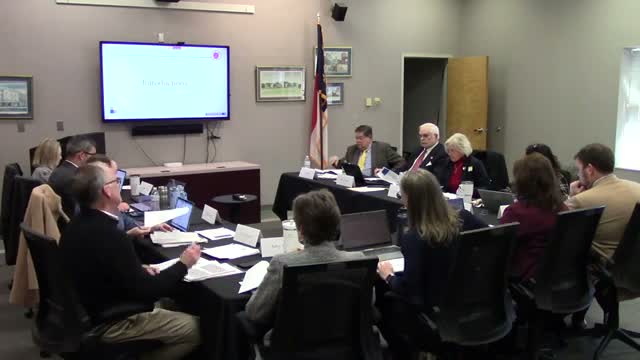
Alamance County commissioners used their winter work session to set budget priorities for the coming year and to hear lessons on board governance from facilitators with the North Carolina Association of County Commissioners (NCACC).
Staff introduced facilitators Amy Cannon and Neil Emery, who led modules on board relations, respect for differing viewpoints, the manager‑board role split, and the budget process. “Good government is dependent upon relationships that respect opposing viewpoints during policy development and at the same time promote teamwork during implementation,” Neil Emery said during his remarks.
Commissioners identified short‑term priorities including school support, public safety and maintaining fund balance; facilitators and staff emphasized use of five‑year projections and GFOA best practices for a structurally balanced budget. Several commissioners raised a longstanding concern that residential growth is not covering the county’s per‑resident service costs and urged attention to commercial tax base strategies.
Economic development was a point of debate. Commissioners questioned the county’s $125,000 annual contract with the Chamber of Commerce to administer economic development and asked whether an in‑house model would be more cost‑effective; staff explained the contract is the county’s chosen model and noted municipalities and the Chamber are partners for water/sewer and site‑capacity coordination.
On compensation, staff corrected earlier figures for the multi‑phase pay study after discovering numbers were taken from an older pay‑plan tab. The chair moved to approve the adjusted numbers; a second was recorded and the motion passed with recorded ayes and at least one opposing vote. (Motion text in the county record: approve adjusted compensation‑study numbers; mover and second recorded in the meeting minutes.)
Other highlights: staff previewed a design‑build conversion of the old services building into a one‑stop Development Center (target delivery March 2026) and introduced a new format of short departmental presentations to inform the upcoming budget process.
Why it matters: The work‑session framing (priorities and pay‑study correction) and the facilitators’ emphasis on communication will guide staff recommendations for the recommended budget. The Chamber contract and approach to economic development are policy choices with ongoing fiscal and strategic implications.
Next steps: Staff will incorporate the board’s priorities into recommended‑budget materials, return with details about the compensation‑study adjustments, and provide follow‑up on the Chamber contract and the Development Center timeline.
Staff introduced facilitators Amy Cannon and Neil Emery, who led modules on board relations, respect for differing viewpoints, the manager‑board role split, and the budget process. “Good government is dependent upon relationships that respect opposing viewpoints during policy development and at the same time promote teamwork during implementation,” Neil Emery said during his remarks.
Commissioners identified short‑term priorities including school support, public safety and maintaining fund balance; facilitators and staff emphasized use of five‑year projections and GFOA best practices for a structurally balanced budget. Several commissioners raised a longstanding concern that residential growth is not covering the county’s per‑resident service costs and urged attention to commercial tax base strategies.
Economic development was a point of debate. Commissioners questioned the county’s $125,000 annual contract with the Chamber of Commerce to administer economic development and asked whether an in‑house model would be more cost‑effective; staff explained the contract is the county’s chosen model and noted municipalities and the Chamber are partners for water/sewer and site‑capacity coordination.
On compensation, staff corrected earlier figures for the multi‑phase pay study after discovering numbers were taken from an older pay‑plan tab. The chair moved to approve the adjusted numbers; a second was recorded and the motion passed with recorded ayes and at least one opposing vote. (Motion text in the county record: approve adjusted compensation‑study numbers; mover and second recorded in the meeting minutes.)
Other highlights: staff previewed a design‑build conversion of the old services building into a one‑stop Development Center (target delivery March 2026) and introduced a new format of short departmental presentations to inform the upcoming budget process.
Why it matters: The work‑session framing (priorities and pay‑study correction) and the facilitators’ emphasis on communication will guide staff recommendations for the recommended budget. The Chamber contract and approach to economic development are policy choices with ongoing fiscal and strategic implications.
Next steps: Staff will incorporate the board’s priorities into recommended‑budget materials, return with details about the compensation‑study adjustments, and provide follow‑up on the Chamber contract and the Development Center timeline.
View the Full Meeting & All Its Details
This article offers just a summary. Unlock complete video, transcripts, and insights as a Founder Member.
✓
Watch full, unedited meeting videos
✓
Search every word spoken in unlimited transcripts
✓
AI summaries & real-time alerts (all government levels)
✓
Permanent access to expanding government content
30-day money-back guarantee
