Assembly approves bill easing leases for school‑based health centers after heated parental‑consent debate
December 22, 2025 | 2025 House Legislative Sessions, 2025 Legislative Sessions, New Jersey
This article was created by AI summarizing key points discussed. AI makes mistakes, so for full details and context, please refer to the video of the full meeting. Please report any errors so we can fix them. Report an error »
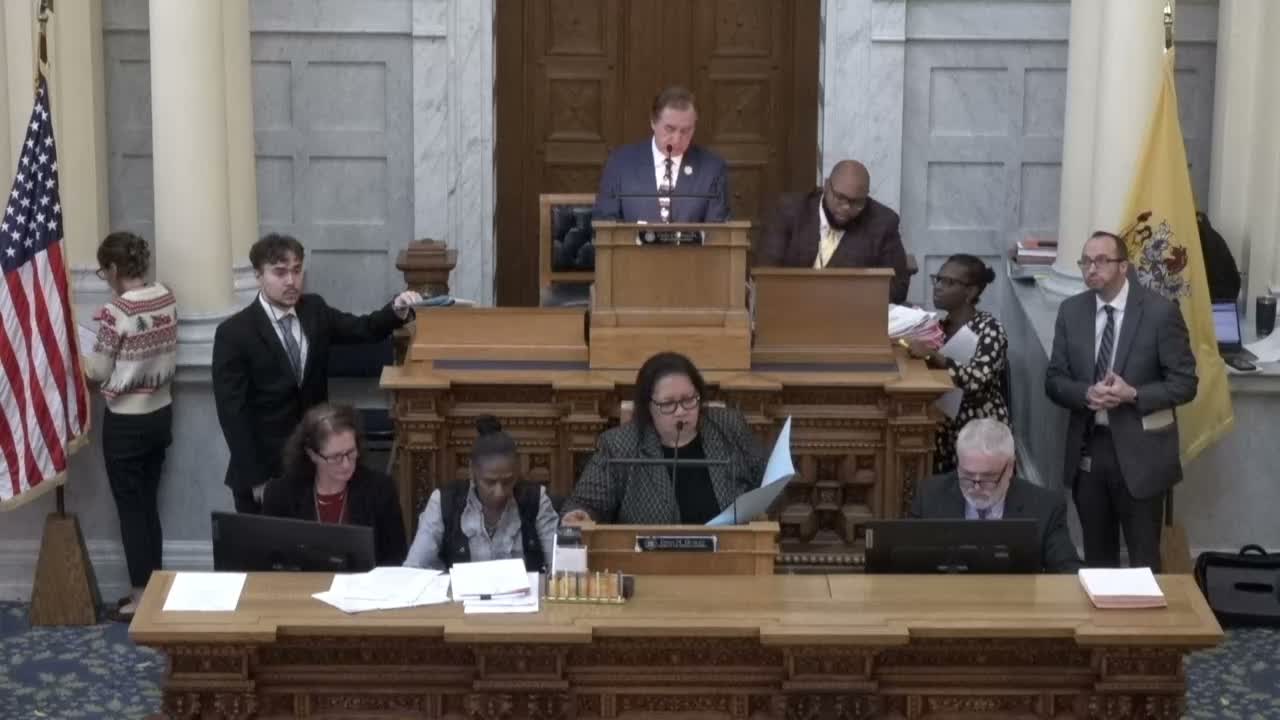
The New Jersey General Assembly on Dec. 22 passed Senate Bill 3156, which permits boards of education to lease school property to federally qualified health centers (FQHCs) without the public bidding process in limited circumstances, after a contentious floor debate over parental notification and consent.
Sponsor Assemblywoman Peter Paul moved the bill on third reading, saying the change merely adjusts the bidding process to allow established FQHCs to operate on campuses where the services already exist and are saving lives. Supporters said the measure preserves parental rights while increasing access to primary care for students who otherwise lack transportation or family availability to reach a doctor.
Opponents, led by Assemblywoman Fantasia, sharply disagreed and said the bill lacks explicit parental‑consent protections. "This bill is not accidental. It is a deliberate decision to place health services on school property without required parental notification or consent," Fantasia said, and she moved to return the bill for further work. That motion was tabled on a 41–26 roll call, where the Assembly approved tabling her motion to return the bill to committee.
Assemblywoman Munoz sought to clarify the bill on the floor, saying the measure does not create new services on campus and that parental consent is required where it already exists: "Number 2, parents must consent. Number 3, we already allow hospitals, veteran homes, home shelters to be on school properties and not have to go through the bidding process," she said.
After debate and procedural votes, the Assembly recorded final passage of SB 3156, 48 yes to 26 no. The bill now proceeds along the usual legislative course toward the Senate or the governor as required by procedure.
Why it matters: Supporters say the change will speed arrangements with community health providers that can bring primary and preventive care into underserved school communities; opponents argue the bill needs stronger, explicit parental‑notification and consent language to protect family rights.
What's next: With passage in the Assembly, the measure will continue through the legislative process; sponsors and opponents signaled both sides may press for clarifying amendments in subsequent steps.
Sponsor Assemblywoman Peter Paul moved the bill on third reading, saying the change merely adjusts the bidding process to allow established FQHCs to operate on campuses where the services already exist and are saving lives. Supporters said the measure preserves parental rights while increasing access to primary care for students who otherwise lack transportation or family availability to reach a doctor.
Opponents, led by Assemblywoman Fantasia, sharply disagreed and said the bill lacks explicit parental‑consent protections. "This bill is not accidental. It is a deliberate decision to place health services on school property without required parental notification or consent," Fantasia said, and she moved to return the bill for further work. That motion was tabled on a 41–26 roll call, where the Assembly approved tabling her motion to return the bill to committee.
Assemblywoman Munoz sought to clarify the bill on the floor, saying the measure does not create new services on campus and that parental consent is required where it already exists: "Number 2, parents must consent. Number 3, we already allow hospitals, veteran homes, home shelters to be on school properties and not have to go through the bidding process," she said.
After debate and procedural votes, the Assembly recorded final passage of SB 3156, 48 yes to 26 no. The bill now proceeds along the usual legislative course toward the Senate or the governor as required by procedure.
Why it matters: Supporters say the change will speed arrangements with community health providers that can bring primary and preventive care into underserved school communities; opponents argue the bill needs stronger, explicit parental‑notification and consent language to protect family rights.
What's next: With passage in the Assembly, the measure will continue through the legislative process; sponsors and opponents signaled both sides may press for clarifying amendments in subsequent steps.
Don't Miss a Word: See the Full Meeting!
Go beyond summaries. Unlock every video, transcript, and key insight with a Founder Membership.
✓
Get instant access to full meeting videos
✓
Search and clip any phrase from complete transcripts
✓
Receive AI-powered summaries & custom alerts
✓
Enjoy lifetime, unrestricted access to government data
30-day money-back guarantee
