Counsel briefs board on SB 707 changes to Brown Act, teleconferencing and social media rules
January 23, 2026 | San Jose , Santa Clara County, California
This article was created by AI summarizing key points discussed. AI makes mistakes, so for full details and context, please refer to the video of the full meeting. Please report any errors so we can fix them. Report an error »
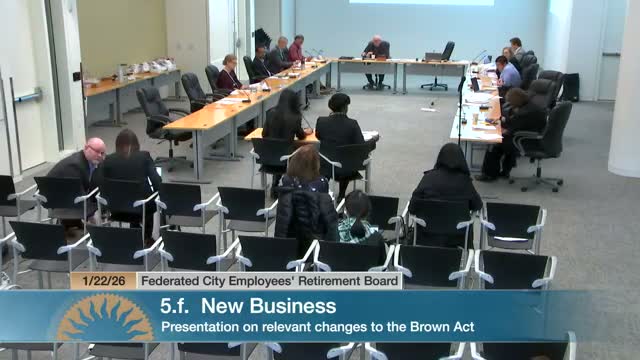
Legal counsel provided an extended Brown Act refresher and a detailed briefing on SB 707, which took effect Jan. 1, 2026 and updates state open-meeting law for teleconferencing, social media and disruptions.
Counsel said SB 707 "modernizes the Brown Act in four key ways," including expanded teleconferencing options, clarified chair authority to address disruptions (including by remote participants), a requirement to provide a copy of the Brown Act to each trustee, and making the social-media exception permanent with guardrails. Counsel explained the traditional teleconferencing rules (posted remote address, ADA accessibility at the remote site), the "just cause" exception (includes childcare, contagious illness, caregiving, official travel and limited military obligations; trustees may use "just cause" for board meetings no more than twice per calendar year and remote locations under just cause need not be posted), and an emergency pathway that also allows the board to declare a local emergency for remote meetings and must be renewed every 45 days.
Counsel cautioned that enforcement must remain content neutral to avoid First Amendment issues and recommended a social-media policy for trustees; trustees asked about how to handle noisy or disruptive remote appearances, posting timelines, and whether likes or comments could be construed as consensus building. Counsel recommended written policies governing social media interactions and warned that removal of disruptive participants should be documented and warnings preserved on the record.
No formal action was required; trustees asked staff to consider drafting a social-media or communications policy as part of the governance framework.
Counsel said SB 707 "modernizes the Brown Act in four key ways," including expanded teleconferencing options, clarified chair authority to address disruptions (including by remote participants), a requirement to provide a copy of the Brown Act to each trustee, and making the social-media exception permanent with guardrails. Counsel explained the traditional teleconferencing rules (posted remote address, ADA accessibility at the remote site), the "just cause" exception (includes childcare, contagious illness, caregiving, official travel and limited military obligations; trustees may use "just cause" for board meetings no more than twice per calendar year and remote locations under just cause need not be posted), and an emergency pathway that also allows the board to declare a local emergency for remote meetings and must be renewed every 45 days.
Counsel cautioned that enforcement must remain content neutral to avoid First Amendment issues and recommended a social-media policy for trustees; trustees asked about how to handle noisy or disruptive remote appearances, posting timelines, and whether likes or comments could be construed as consensus building. Counsel recommended written policies governing social media interactions and warned that removal of disruptive participants should be documented and warnings preserved on the record.
No formal action was required; trustees asked staff to consider drafting a social-media or communications policy as part of the governance framework.
View the Full Meeting & All Its Details
This article offers just a summary. Unlock complete video, transcripts, and insights as a Founder Member.
✓
Watch full, unedited meeting videos
✓
Search every word spoken in unlimited transcripts
✓
AI summaries & real-time alerts (all government levels)
✓
Permanent access to expanding government content
30-day money-back guarantee
