Shelter report shows higher intake, mixed live‑release rates; commissioners debate interim repairs, SOPs and foster policy
January 22, 2026 | Sacramento , Sacramento County, California
This article was created by AI summarizing key points discussed. AI makes mistakes, so for full details and context, please refer to the video of the full meeting. Please report any errors so we can fix them. Report an error »
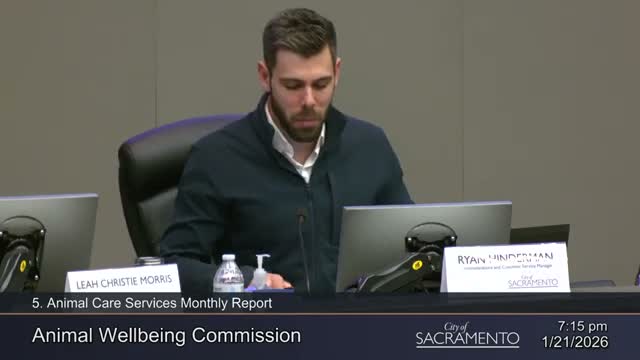
Shelter staff presented the Bridal (Animal) Care Services monthly report, reporting total animals in care of about 375 (205 dogs, 31 cats, 10 other animals) and animals in foster (81 dogs, 48 cats). For the October–December quarter, staff recorded 225 dog euthanasias and 269 cat euthanasias; live‑release rates reported were 89% for dogs and 65% for cats, with an overall live‑release rate of about 81%.
Shelter staff also gave annual intake totals (about 6,032 dogs and 4,149 cats for the prior year) and highlighted staffing updates, recruitment efforts, and pilot programs including a mobile app for the Doggy Day Out program and a spay/neuter event that will sterilize about 200 animals at an approximate cost of $43,000.
Commissioners pressed staff and each other on several operational issues. A recurring concern was the interim site improvement budget: staff said the initial project cost came in over budget and work is underway to reduce the scope and cost to roughly $600,000 pending a final public works budget. Multiple commissioners urged the commission to consider whether interim investments are appropriate if a new shelter site is still under consideration.
Commissioners also debated the request for proposals to create or compile standard operating procedures (SOPs) for shelter operations. Some commissioners argued the commission has expertise and could draft SOPs internally rather than pay an outside vendor; shelter staff and city procurement staff noted that an RFP panel from Community Development will select a consultant and that AB 339 (referred to in the meeting) requires 45 days' written notice to labor unions before issuing RFPs or renewing contracts, which could delay procurement and implementation.
Several commissioners raised volunteer concerns and foster policy questions; one commissioner reported circulating volunteer communications that allege operational changes limiting foster placements for adoptable animals. Shelter staff said they would investigate the origin of that guidance and report back. Commissioners advocated publishing "final plea"/at‑risk lists online and on kennel cards to increase rescue and foster opportunities.
Public commenters and volunteers urged support for staff morale and clarified that a city sterilization fund (funded by penalty and unaltered license fees) exists; one public commenter, Lynn Wiley, noted the code requires a minimum of 50% of certain fees be placed into a sterilization fund and that spay/neuter activity peaked in 2013 and has declined since.
Why it matters: The shelter statistics and debates over interim renovation versus relocation, SOP drafting, foster practices and how limited funds are spent will directly affect animal outcomes, program priorities and possible city budget requests.
What’s next: Staff will report back on RFP timelines, clarify the foster policy questions, share the needs assessment and architect analysis on potential relocation, and circulate follow‑up information on the interim improvements and procurement timeline.
Shelter staff also gave annual intake totals (about 6,032 dogs and 4,149 cats for the prior year) and highlighted staffing updates, recruitment efforts, and pilot programs including a mobile app for the Doggy Day Out program and a spay/neuter event that will sterilize about 200 animals at an approximate cost of $43,000.
Commissioners pressed staff and each other on several operational issues. A recurring concern was the interim site improvement budget: staff said the initial project cost came in over budget and work is underway to reduce the scope and cost to roughly $600,000 pending a final public works budget. Multiple commissioners urged the commission to consider whether interim investments are appropriate if a new shelter site is still under consideration.
Commissioners also debated the request for proposals to create or compile standard operating procedures (SOPs) for shelter operations. Some commissioners argued the commission has expertise and could draft SOPs internally rather than pay an outside vendor; shelter staff and city procurement staff noted that an RFP panel from Community Development will select a consultant and that AB 339 (referred to in the meeting) requires 45 days' written notice to labor unions before issuing RFPs or renewing contracts, which could delay procurement and implementation.
Several commissioners raised volunteer concerns and foster policy questions; one commissioner reported circulating volunteer communications that allege operational changes limiting foster placements for adoptable animals. Shelter staff said they would investigate the origin of that guidance and report back. Commissioners advocated publishing "final plea"/at‑risk lists online and on kennel cards to increase rescue and foster opportunities.
Public commenters and volunteers urged support for staff morale and clarified that a city sterilization fund (funded by penalty and unaltered license fees) exists; one public commenter, Lynn Wiley, noted the code requires a minimum of 50% of certain fees be placed into a sterilization fund and that spay/neuter activity peaked in 2013 and has declined since.
Why it matters: The shelter statistics and debates over interim renovation versus relocation, SOP drafting, foster practices and how limited funds are spent will directly affect animal outcomes, program priorities and possible city budget requests.
What’s next: Staff will report back on RFP timelines, clarify the foster policy questions, share the needs assessment and architect analysis on potential relocation, and circulate follow‑up information on the interim improvements and procurement timeline.
View the Full Meeting & All Its Details
This article offers just a summary. Unlock complete video, transcripts, and insights as a Founder Member.
✓
Watch full, unedited meeting videos
✓
Search every word spoken in unlimited transcripts
✓
AI summaries & real-time alerts (all government levels)
✓
Permanent access to expanding government content
30-day money-back guarantee
