Workforce board presents Penobscot County labor-market snapshot, highlights training priorities
January 29, 2026 | Penobscot County, Maine
This article was created by AI summarizing key points discussed. AI makes mistakes, so for full details and context, please refer to the video of the full meeting. Please report any errors so we can fix them. Report an error »
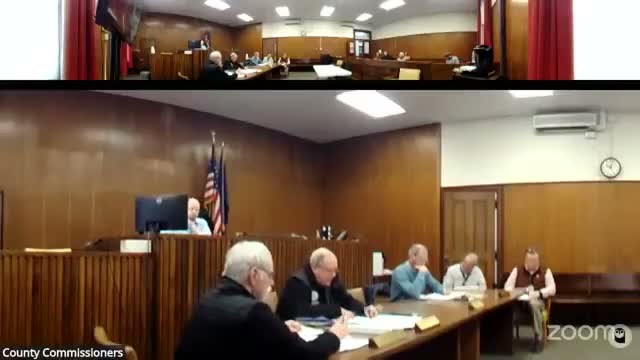
Galen Williamson, executive director with the Northeastern Workforce Development Board, told the Penobscot County Commission on Jan. 28 that county labor-market data show modest gains but persistent gaps.
"Our civilian labor force in Penobscot County is about 77,000," Williamson said, citing JobsEQ figures. He said workforce participation in the county is roughly 60%, slightly below the state average, and that the poverty rate stands at 13.5%. Williamson said about 15% of households receive public benefits such as SNAP.
Williamson highlighted a comparatively low disconnected-youth rate of 1.3% — a measure of 16-to-19-year-olds not in school or working — and described that as a positive indicator for local workforce efforts. He reported an unemployment rate of about 3.3% and said the county lost a net 51 jobs in the most recent reporting period.
Williamson described the county’s industry mix as concentrated in health care (about 21.8% of employment), retail (14.3%) and education (11.3%), and said the board’s strategy is to target training and placement toward good jobs that offer wages and benefits.
He warned commissioners about federal policy uncertainty affecting workforce programs, noting that WIOA reauthorization remained unsettled and that new federal initiatives such as the "Make America Skilled Again" priorities could shift funding and program focus. "It's pretty clear this administration is really behind developing a skilled workforce through partnerships," he said, while adding that the practical effect on local allocations remains unclear.
Williamson asked the commission to support local partnerships that emphasize measurable skill gains, credential attainment and placement into higher-wage jobs. "We want to continue to build a skilled workforce...that is able to go out and gain a great wage," he said.
The commission thanked Williamson and asked staff to share supporting materials. The presentation preceded a more detailed program update from Carrie Dwelle of Eastern Maine Development Corporation, who described local training placements, CDL and CNA course demand and ARPA-funded training stipends for participants.
"Our civilian labor force in Penobscot County is about 77,000," Williamson said, citing JobsEQ figures. He said workforce participation in the county is roughly 60%, slightly below the state average, and that the poverty rate stands at 13.5%. Williamson said about 15% of households receive public benefits such as SNAP.
Williamson highlighted a comparatively low disconnected-youth rate of 1.3% — a measure of 16-to-19-year-olds not in school or working — and described that as a positive indicator for local workforce efforts. He reported an unemployment rate of about 3.3% and said the county lost a net 51 jobs in the most recent reporting period.
Williamson described the county’s industry mix as concentrated in health care (about 21.8% of employment), retail (14.3%) and education (11.3%), and said the board’s strategy is to target training and placement toward good jobs that offer wages and benefits.
He warned commissioners about federal policy uncertainty affecting workforce programs, noting that WIOA reauthorization remained unsettled and that new federal initiatives such as the "Make America Skilled Again" priorities could shift funding and program focus. "It's pretty clear this administration is really behind developing a skilled workforce through partnerships," he said, while adding that the practical effect on local allocations remains unclear.
Williamson asked the commission to support local partnerships that emphasize measurable skill gains, credential attainment and placement into higher-wage jobs. "We want to continue to build a skilled workforce...that is able to go out and gain a great wage," he said.
The commission thanked Williamson and asked staff to share supporting materials. The presentation preceded a more detailed program update from Carrie Dwelle of Eastern Maine Development Corporation, who described local training placements, CDL and CNA course demand and ARPA-funded training stipends for participants.
Don't Miss a Word: See the Full Meeting!
Go beyond summaries. Unlock every video, transcript, and key insight with a Founder Membership.
✓
Get instant access to full meeting videos
✓
Search and clip any phrase from complete transcripts
✓
Receive AI-powered summaries & custom alerts
✓
Enjoy lifetime, unrestricted access to government data
30-day money-back guarantee
