Grand Rapids pauses emerging-developer grants as demand outpaces available brownfield funds
January 29, 2026 | Grand Rapids City, Kent County, Michigan
This article was created by AI summarizing key points discussed. AI makes mistakes, so for full details and context, please refer to the video of the full meeting. Please report any errors so we can fix them. Report an error »
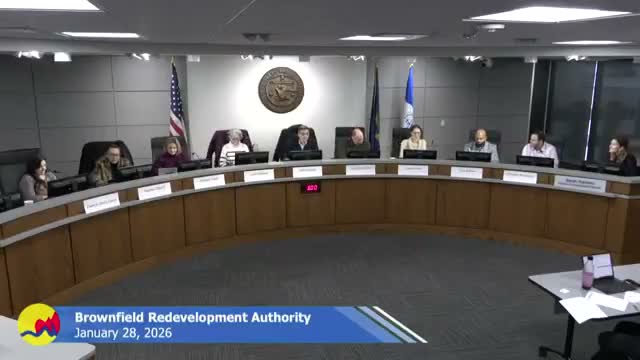
Grand Rapids’ Brownfield Redevelopment Authority announced a temporary pause on new applications to its Emerging Developer grant program as staff and board members weigh how to allocate limited Brownfield Redevelopment Revolving Fund money amid surging interest.
In a presentation, Mackenzie, economic development staff, said the program—launched in 2023—has approved 22 grant awards covering 30 parcels, earmarked $3,114,118 to date, and is associated with roughly 335 potential residential units. Staff told the board the program has produced a 75% conversion rate in 2024 and noted five projects are confirmed under construction.
“The rubber is kind of meeting the road in terms of what we have to work with financially,” Mackenzie said, explaining staff plans to retain existing applications while pausing new submissions so the program can be refined and a specific budget allocation established.
The pause prompted public comment from applicants and development partners. Nathan Miller, who said he submitted a complete application in October for a 24-unit project at MLK and Lafayette, said the pause has left pending applications in limbo and risks killing deals.
“I was informed the program was paused immediately. I tuned in to December’s meeting expecting discussion about the program’s future, and instead, 5 additional grants were awarded with no mention of applications like mine,” Miller said, asking the board to clarify who qualifies as an emerging developer and to preserve momentum for applicants already in process.
Supporters of the program urged the board to continue funding and to add technical underwriting. Carrie Hamrick of Sala Building Company said the program has “expanded the pool of capable local developers” and suggested adding a pro forma review to prioritize projects that are feasible and ready to move forward. James Lewis of Pinnacle Construction and developer Ryan Wheeler said the program helps small infill projects that larger firms will not take on.
Board members acknowledged both the program’s success and fiscal limits. Director Bridal Davis and other board members recommended refining selection criteria, increasing front-end engagement with applicants, and coordinating with community partners—such as the Urban League and Land Bank—to provide mentorship and underwriting support. Staff proposed, as next steps, clarifying guidelines, earmarking a dollar amount for the program in the next budget cycle, and separating environmental site assessments into their own grant stream to preserve emerging-developer funds.
The board did not take a new funding vote at the meeting. Staff said they will return with recommended program refinements and a budget recommendation in coming months.
In a presentation, Mackenzie, economic development staff, said the program—launched in 2023—has approved 22 grant awards covering 30 parcels, earmarked $3,114,118 to date, and is associated with roughly 335 potential residential units. Staff told the board the program has produced a 75% conversion rate in 2024 and noted five projects are confirmed under construction.
“The rubber is kind of meeting the road in terms of what we have to work with financially,” Mackenzie said, explaining staff plans to retain existing applications while pausing new submissions so the program can be refined and a specific budget allocation established.
The pause prompted public comment from applicants and development partners. Nathan Miller, who said he submitted a complete application in October for a 24-unit project at MLK and Lafayette, said the pause has left pending applications in limbo and risks killing deals.
“I was informed the program was paused immediately. I tuned in to December’s meeting expecting discussion about the program’s future, and instead, 5 additional grants were awarded with no mention of applications like mine,” Miller said, asking the board to clarify who qualifies as an emerging developer and to preserve momentum for applicants already in process.
Supporters of the program urged the board to continue funding and to add technical underwriting. Carrie Hamrick of Sala Building Company said the program has “expanded the pool of capable local developers” and suggested adding a pro forma review to prioritize projects that are feasible and ready to move forward. James Lewis of Pinnacle Construction and developer Ryan Wheeler said the program helps small infill projects that larger firms will not take on.
Board members acknowledged both the program’s success and fiscal limits. Director Bridal Davis and other board members recommended refining selection criteria, increasing front-end engagement with applicants, and coordinating with community partners—such as the Urban League and Land Bank—to provide mentorship and underwriting support. Staff proposed, as next steps, clarifying guidelines, earmarking a dollar amount for the program in the next budget cycle, and separating environmental site assessments into their own grant stream to preserve emerging-developer funds.
The board did not take a new funding vote at the meeting. Staff said they will return with recommended program refinements and a budget recommendation in coming months.
Don't Miss a Word: See the Full Meeting!
Go beyond summaries. Unlock every video, transcript, and key insight with a Founder Membership.
✓
Get instant access to full meeting videos
✓
Search and clip any phrase from complete transcripts
✓
Receive AI-powered summaries & custom alerts
✓
Enjoy lifetime, unrestricted access to government data
30-day money-back guarantee
