Maine lobster marketing group outlines strategy, flags LD 2002 extension and recent revenue dip
January 29, 2026 | 2026 Legislature ME, Maine
This article was created by AI summarizing key points discussed. AI makes mistakes, so for full details and context, please refer to the video of the full meeting. Please report any errors so we can fix them. Report an error »
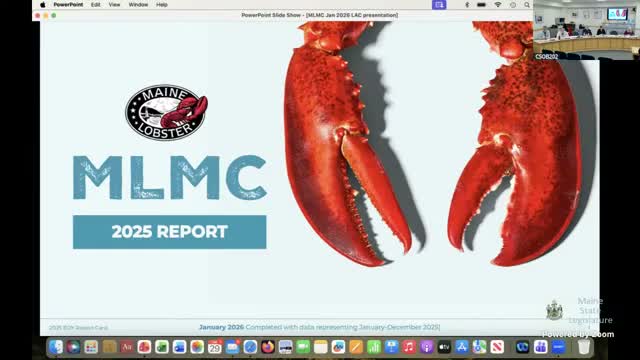
Mary Anne LaCroix, director of the Maine Lobster Marketing Collaborative, told the Joint Standing Committee on Marine Resources that the collaborative is focused on demand generation and brand protection for Maine lobster and that the group’s proposed statutory extension, LD 2,002, has a public hearing scheduled next week.
LaCroix said the collaborative’s funding comes from a surcharge on lobster licenses and that revenue has fallen from a recent high of about $1.9 million to roughly $1.7 million this past year, which she attributed to fewer licensed fishermen and dealers. “We are tasked with marketing and promoting Maine Lobster and doing that as efficiently as possible,” she said.
The collaborative, formed in 2013 after an earlier promotion council, works with an advertising partner (Weber Shandwick), industry sponsors and trade organizations to promote Maine lobster across U.S. consumers and select international markets. LaCroix described recent work aimed at keeping Maine lobster a premium menu item, citing research the group commissioned that found Maine lobster commands about a 17% price premium on menus versus generic lobster.
LaCroix listed marketing activities from the past year: a multimedia outreach to restaurant decision-makers that drove tens of thousands of clicks to a restaurant toolkit; a social influencer program yielding hundreds of thousands of views; and public‑relations hooks tied to Maine Lobster Week and National Lobster Day (Sept. 25). She also said the collaborative drives consumers to a supplier database and reported that its “where to buy” pages drew more than a half‑million visits.
On market pressures, LaCroix spoke about export declines and product substitution, including competition from farmed spiny lobster and shifting demand in China. She also reviewed the collaborative’s “issues management” work after losing two sustainability certifications in 2022, saying the group used short video and fact sheets to provide context about industry actions on right‑whale protections.
Committee members asked about certification status, tariffs and whether non‑claw (spiny) lobster products factor into marketing decisions. LaCroix said the lost certifications had not been restored and that the collaborative is nonetheless exploring differentiation tactics and possible state certification options.
LaCroix said the collaborative will provide the committee with an audit and more detailed financials after the organization completes its audit next week. The committee did not take immediate action on LD 2,002; the bill is set for a public hearing next week and will return to committee for further consideration and any work session vote.
LaCroix said the collaborative’s funding comes from a surcharge on lobster licenses and that revenue has fallen from a recent high of about $1.9 million to roughly $1.7 million this past year, which she attributed to fewer licensed fishermen and dealers. “We are tasked with marketing and promoting Maine Lobster and doing that as efficiently as possible,” she said.
The collaborative, formed in 2013 after an earlier promotion council, works with an advertising partner (Weber Shandwick), industry sponsors and trade organizations to promote Maine lobster across U.S. consumers and select international markets. LaCroix described recent work aimed at keeping Maine lobster a premium menu item, citing research the group commissioned that found Maine lobster commands about a 17% price premium on menus versus generic lobster.
LaCroix listed marketing activities from the past year: a multimedia outreach to restaurant decision-makers that drove tens of thousands of clicks to a restaurant toolkit; a social influencer program yielding hundreds of thousands of views; and public‑relations hooks tied to Maine Lobster Week and National Lobster Day (Sept. 25). She also said the collaborative drives consumers to a supplier database and reported that its “where to buy” pages drew more than a half‑million visits.
On market pressures, LaCroix spoke about export declines and product substitution, including competition from farmed spiny lobster and shifting demand in China. She also reviewed the collaborative’s “issues management” work after losing two sustainability certifications in 2022, saying the group used short video and fact sheets to provide context about industry actions on right‑whale protections.
Committee members asked about certification status, tariffs and whether non‑claw (spiny) lobster products factor into marketing decisions. LaCroix said the lost certifications had not been restored and that the collaborative is nonetheless exploring differentiation tactics and possible state certification options.
LaCroix said the collaborative will provide the committee with an audit and more detailed financials after the organization completes its audit next week. The committee did not take immediate action on LD 2,002; the bill is set for a public hearing next week and will return to committee for further consideration and any work session vote.
View the Full Meeting & All Its Details
This article offers just a summary. Unlock complete video, transcripts, and insights as a Founder Member.
✓
Watch full, unedited meeting videos
✓
Search every word spoken in unlimited transcripts
✓
AI summaries & real-time alerts (all government levels)
✓
Permanent access to expanding government content
30-day money-back guarantee
