State Auditor Doug Hoffer outlines modest budget, emphasizes performance audits
January 29, 2026 | Appropriations, HOUSE OF REPRESENTATIVES, Committees, Legislative , Vermont
This article was created by AI summarizing key points discussed. AI makes mistakes, so for full details and context, please refer to the video of the full meeting. Please report any errors so we can fix them. Report an error »
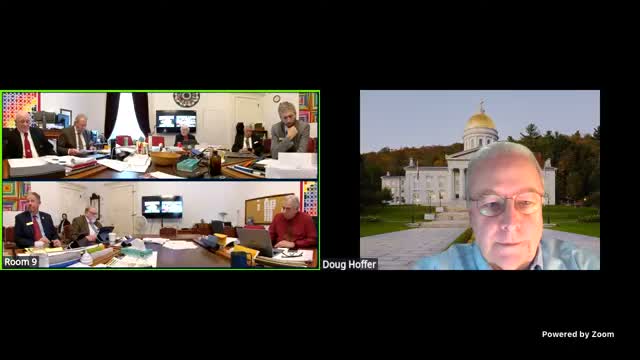
State Auditor Doug Hoffer told the House Appropriations Committee on Jan. 28 that his office’s budget is modest and largely unchanged year to year, with most costs tied to staff pay and the contract with external auditors. "We have 16 total positions," Hoffer said, and the office relies on a mix of a small general-fund allocation, an internal service fund called the single audit revolving fund (SARF), and a nominal special fund held by the treasurer’s office.
Hoffer said his office has emphasized performance auditing for years rather than focusing solely on financial audits. He credited past auditors and adopted standards — noting the office follows Generally Accepted Government Auditing Standards — and described the current contractor relationship: "We have a contract with a group called CLA. We had KPMG for many, many years." He said CLA has produced work that integrates well with the office’s staff and mission.
On staffing and budget mechanics, Hoffer described converting an exempt PR position into a classified senior-auditor role and moving that salary from the general fund into the SARF, which will modestly reduce general-fund expenditures: "We've switched a person from exempt status to audit status, a classified auditor, and that's moving money from the general fund into the SARF." He said the office came in under the governor’s recommended budget.
Hoffer also described operational changes after the auditor’s office building flooded in 2023: staff have worked remotely and prefer the flexibility, and statewide return-to-office guidance did not apply to his office. He emphasized audit quality and documentation: "You can rely on what we do," he said, noting that audit reports are carefully indexed, referenced and backed up with evidence and are subject to peer review.
Committee members asked about audit timelines and scope. Representative John Kacenska of the Essex-Caledonia District asked how long audits typically take; Hoffer replied, "They run anywhere from 6 months to 8 or 9," and said timing depends on scope, auditee responsiveness and IT systems. He also described the office’s practice of giving auditees weeks to provide management responses and tracking recommendation follow-up for one and two years after an audit; the office’s goal for follow-through is 75%.
Hoffer noted the distinction between his office’s reports and the federal single-audit work performed by independent firms, and said the single-audit overview will be reported separately each year in late March. He offered to provide committee members short memos on the validity and accuracy of program-level performance data for six economic development programs he reviewed.
Several members thanked Hoffer for his service and the work of his staff. The committee chair closed by reviewing the next day’s agenda items. The auditor’s written materials, including a budget page, performance report and a full set of worksheets, were provided to members and include live links to audit reports and corrective-action follow-up documents on the auditor’s website.
What’s next: Hoffer said he will share the short program memos with the committee and that the auditor’s office will publish a newsletter item highlighting recently released audits that received little media coverage.
Hoffer said his office has emphasized performance auditing for years rather than focusing solely on financial audits. He credited past auditors and adopted standards — noting the office follows Generally Accepted Government Auditing Standards — and described the current contractor relationship: "We have a contract with a group called CLA. We had KPMG for many, many years." He said CLA has produced work that integrates well with the office’s staff and mission.
On staffing and budget mechanics, Hoffer described converting an exempt PR position into a classified senior-auditor role and moving that salary from the general fund into the SARF, which will modestly reduce general-fund expenditures: "We've switched a person from exempt status to audit status, a classified auditor, and that's moving money from the general fund into the SARF." He said the office came in under the governor’s recommended budget.
Hoffer also described operational changes after the auditor’s office building flooded in 2023: staff have worked remotely and prefer the flexibility, and statewide return-to-office guidance did not apply to his office. He emphasized audit quality and documentation: "You can rely on what we do," he said, noting that audit reports are carefully indexed, referenced and backed up with evidence and are subject to peer review.
Committee members asked about audit timelines and scope. Representative John Kacenska of the Essex-Caledonia District asked how long audits typically take; Hoffer replied, "They run anywhere from 6 months to 8 or 9," and said timing depends on scope, auditee responsiveness and IT systems. He also described the office’s practice of giving auditees weeks to provide management responses and tracking recommendation follow-up for one and two years after an audit; the office’s goal for follow-through is 75%.
Hoffer noted the distinction between his office’s reports and the federal single-audit work performed by independent firms, and said the single-audit overview will be reported separately each year in late March. He offered to provide committee members short memos on the validity and accuracy of program-level performance data for six economic development programs he reviewed.
Several members thanked Hoffer for his service and the work of his staff. The committee chair closed by reviewing the next day’s agenda items. The auditor’s written materials, including a budget page, performance report and a full set of worksheets, were provided to members and include live links to audit reports and corrective-action follow-up documents on the auditor’s website.
What’s next: Hoffer said he will share the short program memos with the committee and that the auditor’s office will publish a newsletter item highlighting recently released audits that received little media coverage.
Don't Miss a Word: See the Full Meeting!
Go beyond summaries. Unlock every video, transcript, and key insight with a Founder Membership.
✓
Get instant access to full meeting videos
✓
Search and clip any phrase from complete transcripts
✓
Receive AI-powered summaries & custom alerts
✓
Enjoy lifetime, unrestricted access to government data
30-day money-back guarantee
