Senate Transportation hears data and advocates urging Nov–May mandatory PFD wear in S.172
January 29, 2026 | Senate Transportation, SENATE, Committees, Legislative , Vermont
This article was created by AI summarizing key points discussed. AI makes mistakes, so for full details and context, please refer to the video of the full meeting. Please report any errors so we can fix them. Report an error »
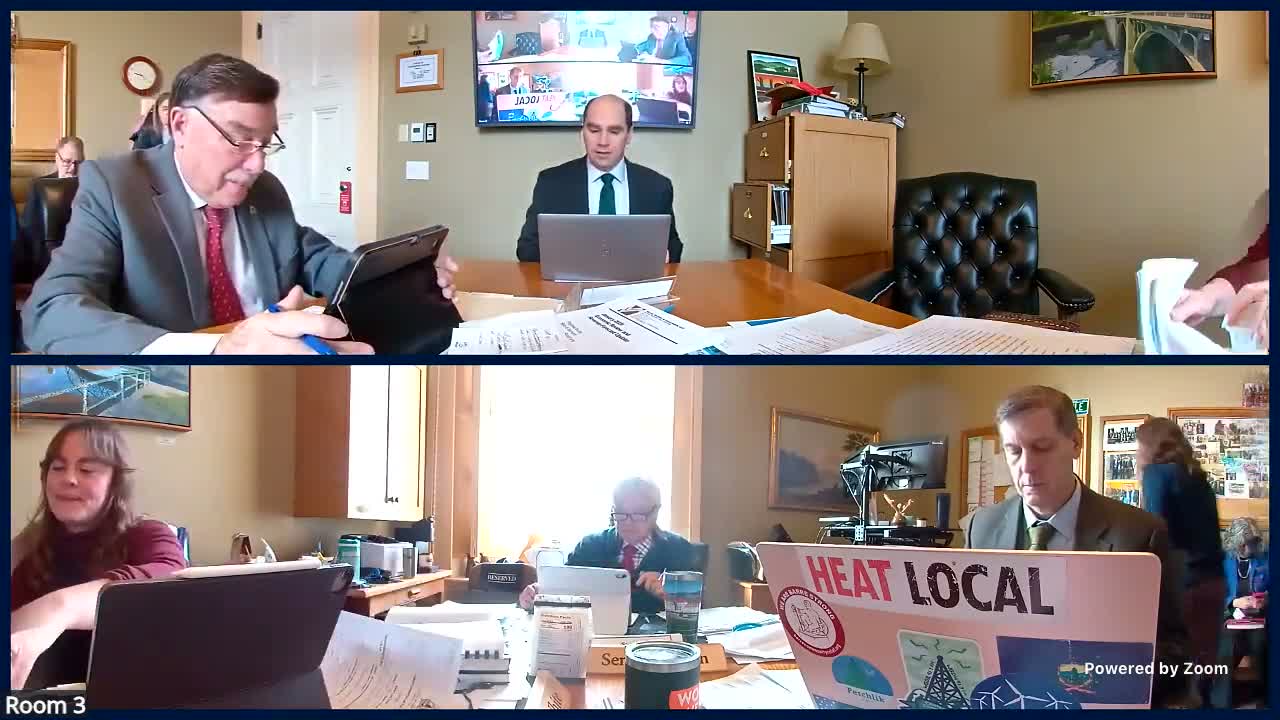
Legislative counsel told the Senate Transportation Committee on Jan. 29 that S.172 would add a requirement that all individuals on open deck of a vessel underway wear a properly secured U.S. Coast Guard–approved personal flotation device during a cold-water period (on or after Nov. 1 and on or before May 1). Inspected commercial vessels, such as Coast Guard–inspected Lake Champlain ferries, would be exempt.
Jess Lucas, director of Aquatics at the Greater Burlington YMCA and a member of the Water Safety Action Committee, testified in support and said Vermont lacks consistent state-level water-safety laws. "There are no reasons to not take this small step to protect one another," Lucas said, urging coordinated state leadership.
Al Johnson, the state's boating law administrator with the Vermont State Police marine division, reviewed the physiological dangers of cold-water immersion — including cold shock and rapid incapacitation — and said cold-water shock can occur at or below about 70 degrees Fahrenheit and is particularly severe around 50 degrees. He cited Coast Guard data and state analyses showing a high proportion of boating fatalities involved victims who were not wearing life jackets and said mandatory legislation is an effective behavior-change tool.
Johnson described enforcement capacity: state and municipal officers conduct vessel stops and seasonal patrols (he cited a typical patrol season roughly mid-May through mid-September), saying patrols funded through grants conduct vessel inspections and compliance checks. He also noted that rescue and recovery efforts can involve multiple agencies, underwater recovery teams, sonar and multi-day operations in deeper water, creating significant human and equipment costs.
Committee members asked for enforcement data and Johnson said the marine unit can provide numbers on stops and citations. Members did not take immediate final action; counsel and agency witnesses will be asked to supply data and follow-up material as the committee considers the bill.
Jess Lucas, director of Aquatics at the Greater Burlington YMCA and a member of the Water Safety Action Committee, testified in support and said Vermont lacks consistent state-level water-safety laws. "There are no reasons to not take this small step to protect one another," Lucas said, urging coordinated state leadership.
Al Johnson, the state's boating law administrator with the Vermont State Police marine division, reviewed the physiological dangers of cold-water immersion — including cold shock and rapid incapacitation — and said cold-water shock can occur at or below about 70 degrees Fahrenheit and is particularly severe around 50 degrees. He cited Coast Guard data and state analyses showing a high proportion of boating fatalities involved victims who were not wearing life jackets and said mandatory legislation is an effective behavior-change tool.
Johnson described enforcement capacity: state and municipal officers conduct vessel stops and seasonal patrols (he cited a typical patrol season roughly mid-May through mid-September), saying patrols funded through grants conduct vessel inspections and compliance checks. He also noted that rescue and recovery efforts can involve multiple agencies, underwater recovery teams, sonar and multi-day operations in deeper water, creating significant human and equipment costs.
Committee members asked for enforcement data and Johnson said the marine unit can provide numbers on stops and citations. Members did not take immediate final action; counsel and agency witnesses will be asked to supply data and follow-up material as the committee considers the bill.
Don't Miss a Word: See the Full Meeting!
Go beyond summaries. Unlock every video, transcript, and key insight with a Founder Membership.
✓
Get instant access to full meeting videos
✓
Search and clip any phrase from complete transcripts
✓
Receive AI-powered summaries & custom alerts
✓
Enjoy lifetime, unrestricted access to government data
30-day money-back guarantee
