Charleston County staff outline sales tax allocation plan; council debates transit share and debt-service impact
January 23, 2026 | Charleston County, South Carolina
This article was created by AI summarizing key points discussed. AI makes mistakes, so for full details and context, please refer to the video of the full meeting. Please report any errors so we can fix them. Report an error »
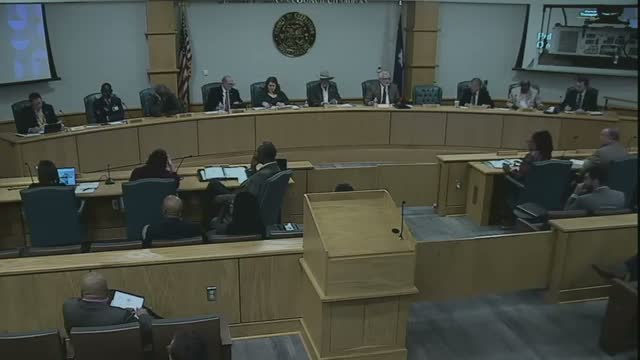
Eric Adams, Charleston County Public Works Director, told the Transportation Sales Tax Special Committee on Jan. 22 that staff will bring a draft program to a Feb. 4 workshop and seek a 30-day public comment period on a proposed extension of the county’s transportation sales tax.
"We're not looking for a motion tonight," Adams said, describing the presentation as a draft to "initiate discussions and set the stage for February 4." He presented public-input results and staff recommendations that would allocate roughly 20% for greenbelt initiatives, about 15% for transit, approximately 5% for bike-and-pedestrian projects and 60% for roadway and infrastructure needs.
The staff presentation cited prior guidance and public meetings and noted financial references from the county chief financial officer. Adams said the 2024 recommendation for transit was about $648 million (rounded in discussion to $650 million) and that staff understand the program could support ongoing operations and more than $200 million in new funding for transit if structured as proposed.
Why it matters: The proposed allocation determines whether the next sales-tax package focuses on expanding transit service or prioritizes pavement, intersection and regional projects. Adams told council the largest infrastructure slice will be further broken down and that the regional-projects portion (about 41% by staff draft) will need to include debt service; staff promised a detailed debt-service estimate at the Feb. 4 workshop.
Councilmembers raised immediate concerns. "When you factor [debt service] in, just spitball a number, let's just say it's 11 or 15% of that 41%, then you've got 25% actually going towards the roads," Councilmember Moody said, urging clarity on how much of the regional slice will be eaten by debt service. Councilmember Wareman said the roughly 15% transit allocation was too low for expanding reliable operations, saying a transit share closer to 25% to 30% would better support ongoing service and shelters.
Adams answered that staff prioritized finishing projects council already committed to and closing funding gaps; the selection process did not use geography as a primary criterion. He said the project list prioritized items closest to construction and that individual project briefings at the workshop would show variability in readiness.
On project types, Adams flagged pavement management and intersection safety as high public priorities and said intersection improvements such as major roundabouts could cost on the order of $5 million apiece. He said signal coordination and technology to improve corridor efficiency were relatively low-cost congestion-relief measures.
Next steps: Staff will produce a draft program for the Feb. 4 workshop, provide an estimate of debt-service costs tied to the regional-projects slice and then run a 30-day public-outreach period. Councilmembers signaled they will press staff for more detail at the workshop and some asked staff to explore whether modest reallocations could free small sums for specific local projects.
Ending: After discussion, the special committee adjourned to the Planning and Public Works Committee for the remainder of the agenda; the Feb. 4 workshop remains the next formal step in the sales-tax schedule.
"We're not looking for a motion tonight," Adams said, describing the presentation as a draft to "initiate discussions and set the stage for February 4." He presented public-input results and staff recommendations that would allocate roughly 20% for greenbelt initiatives, about 15% for transit, approximately 5% for bike-and-pedestrian projects and 60% for roadway and infrastructure needs.
The staff presentation cited prior guidance and public meetings and noted financial references from the county chief financial officer. Adams said the 2024 recommendation for transit was about $648 million (rounded in discussion to $650 million) and that staff understand the program could support ongoing operations and more than $200 million in new funding for transit if structured as proposed.
Why it matters: The proposed allocation determines whether the next sales-tax package focuses on expanding transit service or prioritizes pavement, intersection and regional projects. Adams told council the largest infrastructure slice will be further broken down and that the regional-projects portion (about 41% by staff draft) will need to include debt service; staff promised a detailed debt-service estimate at the Feb. 4 workshop.
Councilmembers raised immediate concerns. "When you factor [debt service] in, just spitball a number, let's just say it's 11 or 15% of that 41%, then you've got 25% actually going towards the roads," Councilmember Moody said, urging clarity on how much of the regional slice will be eaten by debt service. Councilmember Wareman said the roughly 15% transit allocation was too low for expanding reliable operations, saying a transit share closer to 25% to 30% would better support ongoing service and shelters.
Adams answered that staff prioritized finishing projects council already committed to and closing funding gaps; the selection process did not use geography as a primary criterion. He said the project list prioritized items closest to construction and that individual project briefings at the workshop would show variability in readiness.
On project types, Adams flagged pavement management and intersection safety as high public priorities and said intersection improvements such as major roundabouts could cost on the order of $5 million apiece. He said signal coordination and technology to improve corridor efficiency were relatively low-cost congestion-relief measures.
Next steps: Staff will produce a draft program for the Feb. 4 workshop, provide an estimate of debt-service costs tied to the regional-projects slice and then run a 30-day public-outreach period. Councilmembers signaled they will press staff for more detail at the workshop and some asked staff to explore whether modest reallocations could free small sums for specific local projects.
Ending: After discussion, the special committee adjourned to the Planning and Public Works Committee for the remainder of the agenda; the Feb. 4 workshop remains the next formal step in the sales-tax schedule.
Don't Miss a Word: See the Full Meeting!
Go beyond summaries. Unlock every video, transcript, and key insight with a Founder Membership.
✓
Get instant access to full meeting videos
✓
Search and clip any phrase from complete transcripts
✓
Receive AI-powered summaries & custom alerts
✓
Enjoy lifetime, unrestricted access to government data
30-day money-back guarantee
