Syracuse hears public support for both BESS projects and a six-month moratorium as city plans review
January 27, 2026 | Syracuse City, Onondaga County, New York
This article was created by AI summarizing key points discussed. AI makes mistakes, so for full details and context, please refer to the video of the full meeting. Please report any errors so we can fix them. Report an error »
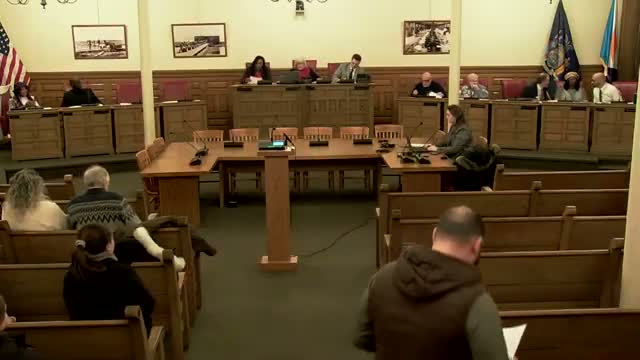
Syracuse City held a public hearing on a proposed six-month moratorium on siting battery energy storage systems (BESS) as city staff said the pause would allow agencies to study safety, siting and code changes and residents offered mostly supportive testimony.
Jake Dishaw, deputy commissioner of code enforcement, told the hearing the moratorium would give “code enforcement, zoning, fire prevention, planning and sustainability, DPW, and engineering time to assess the benefits and also the public concerns associated with battery energy storage facilities and their placements within the city,” and that a city task force would “review and propose local code amendments to address all public safety and other concerns.”
The moratorium proposal was read into the record at the start of the hearing. Dishaw also noted the common council had voted earlier that day on a separate special-use permit for a BESS facility on East Brighton Avenue; the earlier vote was described to listeners as a distinct action from the public comment period.
Public commenters framed the issue as one of both opportunity and caution. Two officers of the Sustainable Energy Club at SUNY ESF said storage is crucial to integrate renewables and meet rising energy demand tied to local investment. “Micron is contributing $100,000,000,000 to Onondaga County over the next 20 plus years,” one student said, arguing that anticipated job growth will increase electricity demand and make storage necessary.
Longtime climate advocate Ria Jazer urged the council to accelerate renewable integration and cited an upcoming April 17 symposium featuring New York State energy and fire-safety experts as a resource for the city. Peter Plumlee of Syracuse University suggested the council also study large-scale water-storage models such as Schoharie Creek and Gilboa as alternatives or complements to chemical batteries.
Residents near proposed sites described competing priorities: several speakers voiced support for battery storage and for the moratorium as a way to create thorough safety and siting rules. “I’m very much for having this type of green energy come to Syracuse,” said a nearby resident who noted proximity to the existing National Grid station on East Brighton Avenue and tied infrastructure improvements to potential increases in housing and the local tax base.
Other speakers emphasized chemistry and safety. Tilde Jensen, who said she lives off-grid on solar and batteries, urged the city to favor nonflammable alternatives and cited Eos Energy’s aqueous chemistry as an example, saying its batteries were “nonflammable, and they are nontoxic” and can be recycled at end of life.
The hearing closed after the council’s presiding officer said there were no remaining speakers and that the legislation would be considered during the council’s regular order of business. There was no vote on the moratorium at the hearing itself; next steps are legislative consideration by the council during its regular meeting schedule.
Jake Dishaw, deputy commissioner of code enforcement, told the hearing the moratorium would give “code enforcement, zoning, fire prevention, planning and sustainability, DPW, and engineering time to assess the benefits and also the public concerns associated with battery energy storage facilities and their placements within the city,” and that a city task force would “review and propose local code amendments to address all public safety and other concerns.”
The moratorium proposal was read into the record at the start of the hearing. Dishaw also noted the common council had voted earlier that day on a separate special-use permit for a BESS facility on East Brighton Avenue; the earlier vote was described to listeners as a distinct action from the public comment period.
Public commenters framed the issue as one of both opportunity and caution. Two officers of the Sustainable Energy Club at SUNY ESF said storage is crucial to integrate renewables and meet rising energy demand tied to local investment. “Micron is contributing $100,000,000,000 to Onondaga County over the next 20 plus years,” one student said, arguing that anticipated job growth will increase electricity demand and make storage necessary.
Longtime climate advocate Ria Jazer urged the council to accelerate renewable integration and cited an upcoming April 17 symposium featuring New York State energy and fire-safety experts as a resource for the city. Peter Plumlee of Syracuse University suggested the council also study large-scale water-storage models such as Schoharie Creek and Gilboa as alternatives or complements to chemical batteries.
Residents near proposed sites described competing priorities: several speakers voiced support for battery storage and for the moratorium as a way to create thorough safety and siting rules. “I’m very much for having this type of green energy come to Syracuse,” said a nearby resident who noted proximity to the existing National Grid station on East Brighton Avenue and tied infrastructure improvements to potential increases in housing and the local tax base.
Other speakers emphasized chemistry and safety. Tilde Jensen, who said she lives off-grid on solar and batteries, urged the city to favor nonflammable alternatives and cited Eos Energy’s aqueous chemistry as an example, saying its batteries were “nonflammable, and they are nontoxic” and can be recycled at end of life.
The hearing closed after the council’s presiding officer said there were no remaining speakers and that the legislation would be considered during the council’s regular order of business. There was no vote on the moratorium at the hearing itself; next steps are legislative consideration by the council during its regular meeting schedule.
Don't Miss a Word: See the Full Meeting!
Go beyond summaries. Unlock every video, transcript, and key insight with a Founder Membership.
✓
Get instant access to full meeting videos
✓
Search and clip any phrase from complete transcripts
✓
Receive AI-powered summaries & custom alerts
✓
Enjoy lifetime, unrestricted access to government data
30-day money-back guarantee
