MakeUtah proposes converting closed Alpine schools into industry-linked community innovation centers
January 29, 2026 | Alpine School District, School Boards, Utah
This article was created by AI summarizing key points discussed. AI makes mistakes, so for full details and context, please refer to the video of the full meeting. Please report any errors so we can fix them. Report an error »
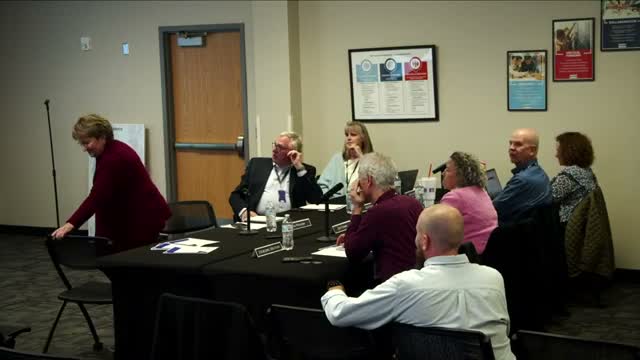
Vanessa Perez, founder of the nonprofit MakeUtah, told the Timpanogos School District board on Jan. 28 that her group and industry partners can convert two recently closed district schools into community-focused innovation centers that provide vocational and entrepreneurship training for students and the broader community.
Perez said MakeUtah has submitted a white paper and an addendum with program detail and that the group has previously helped bring about $9 million in grant funding to Alpine School District. "We want to build the space, the tools, the equipment, and the expertise that allow anybody to bring a product or a thing to life," she told the board, describing a model that blends hands-on trade instruction, robotics, media labs and soft-goods manufacturing.
Why it matters: District staff said the two properties — Valley View in Pleasant Grove and Sharon Elementary in Orem — have been unused for roughly two years and carry ongoing utility and maintenance costs. MakeUtah’s pitch is that by moving in anchor tenants and paid programs the centers would become revenue-generating and cover operating costs while offering reserved seats to district students at no charge.
MakeUtah outlined multiple “academies” it would run, including finishing trades, robotics and electronics, a drone academy, soft-goods manufacturing, grant-writing and sustainable/agritech labs. Industry partners would provide equipment and, in one recent example, a manufacturer offered about 2,000 square feet of woodworking equipment to be installed in the proposed facility.
Board members focused questions on safety, age separation and logistics. The presenters said programming would span "K to gray," from kindergarten through adult learners, and that spaces and schedules would be designed to segregate younger students and protect minors: "We'll have spatial zoning and security around students being in spaces with adults," Perez said. Presenters also said they would reserve a number of free student training slots and could support dual-enrollment and associate-degree pathways.
The presenters described a self-sustaining business model: anchor tenants would pay rent and established companies could lease space; revenue would fund free after-school meals and student programs. Matt Cohen, who leads MakeUtah’s finishing-trades academy, described a 12-week adult cohort model and said cohorts would be hands-on and tied to industry job placement.
What’s next: MakeUtah asked the board for feedback on desired programs and ages, and said it is prepared to invest in renovations under a lease and to negotiate terms that protect district interests. Board members requested the documents the presenters referenced and indicated staff would follow up on lease, site and safety details.
Ending: The board paused questions after the presentation to receive a facilities briefing; presenters were invited to stay for the regular meeting to answer further questions.
Perez said MakeUtah has submitted a white paper and an addendum with program detail and that the group has previously helped bring about $9 million in grant funding to Alpine School District. "We want to build the space, the tools, the equipment, and the expertise that allow anybody to bring a product or a thing to life," she told the board, describing a model that blends hands-on trade instruction, robotics, media labs and soft-goods manufacturing.
Why it matters: District staff said the two properties — Valley View in Pleasant Grove and Sharon Elementary in Orem — have been unused for roughly two years and carry ongoing utility and maintenance costs. MakeUtah’s pitch is that by moving in anchor tenants and paid programs the centers would become revenue-generating and cover operating costs while offering reserved seats to district students at no charge.
MakeUtah outlined multiple “academies” it would run, including finishing trades, robotics and electronics, a drone academy, soft-goods manufacturing, grant-writing and sustainable/agritech labs. Industry partners would provide equipment and, in one recent example, a manufacturer offered about 2,000 square feet of woodworking equipment to be installed in the proposed facility.
Board members focused questions on safety, age separation and logistics. The presenters said programming would span "K to gray," from kindergarten through adult learners, and that spaces and schedules would be designed to segregate younger students and protect minors: "We'll have spatial zoning and security around students being in spaces with adults," Perez said. Presenters also said they would reserve a number of free student training slots and could support dual-enrollment and associate-degree pathways.
The presenters described a self-sustaining business model: anchor tenants would pay rent and established companies could lease space; revenue would fund free after-school meals and student programs. Matt Cohen, who leads MakeUtah’s finishing-trades academy, described a 12-week adult cohort model and said cohorts would be hands-on and tied to industry job placement.
What’s next: MakeUtah asked the board for feedback on desired programs and ages, and said it is prepared to invest in renovations under a lease and to negotiate terms that protect district interests. Board members requested the documents the presenters referenced and indicated staff would follow up on lease, site and safety details.
Ending: The board paused questions after the presentation to receive a facilities briefing; presenters were invited to stay for the regular meeting to answer further questions.
Don't Miss a Word: See the Full Meeting!
Go beyond summaries. Unlock every video, transcript, and key insight with a Founder Membership.
✓
Get instant access to full meeting videos
✓
Search and clip any phrase from complete transcripts
✓
Receive AI-powered summaries & custom alerts
✓
Enjoy lifetime, unrestricted access to government data
30-day money-back guarantee
