Sioux Falls School District assistive‑technology team showcases tools used by about 2,000 students
January 27, 2026 | Sioux Falls School District 49-5, School Districts, South Dakota
This article was created by AI summarizing key points discussed. AI makes mistakes, so for full details and context, please refer to the video of the full meeting. Please report any errors so we can fix them. Report an error »
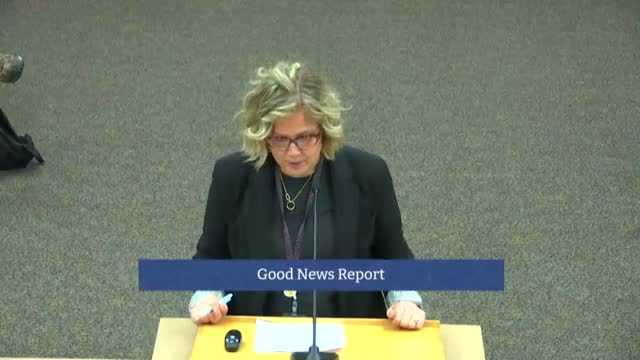
Heather Henters, the district’s AT integrationist, told the board the assistive‑technology team supports “about 2,000 students” across the district who are on IEPs or 504 plans and span ages birth through 21. The team of staff members described a mix of low‑tech and high‑tech supports that help students express themselves and access curriculum.
The presenters outlined augmentative and alternative communication tools, from picture communication boards and communication books to robust speech devices. “This is the most robust vocabulary option that we use in the district,” Henters said, demonstrating an augmentative communication device used to support student speech. The team emphasized that technology alone is not enough: staff, families and teachers must be trained to use supports consistently.
Chris Smith, the district occupational therapist on the AT team, reviewed motor‑access solutions such as mounts for tablets and switches, adaptive styluses and adapted scissors that let students participate in classroom activities. Smith said staff often solve problems through custom mounts and creative adaptations so students can access devices using whatever point of contact they have available.
Shannon Miles, the district’s teacher for students with visual impairments, described tools for blind and low‑vision learners, including digital magnifiers, smart braillers that present both print and Braille, and apps that let students scan music and control page turns with a foot pedal. Miles said the goal is independence: “we are looking at access for independence, not just here at school, but when they graduate,” she said.
Board members asked about how AT supports are integrated into mainstream classrooms. Henters said AT staff do consults and evaluations at the request of IEP teams, provide written recommendations and train school teams, but they are not formal members of each IEP team. The presenters said their workload is high — they estimated roughly 450 individual support requests this year — and that increasing staff capacity in buildings is the most effective way to expand access.
The board and attendees repeatedly thanked the team and suggested showcasing the work to legislators to illustrate the district’s needs. The presentation concluded with a short video of students using AT in classrooms.
The presenters outlined augmentative and alternative communication tools, from picture communication boards and communication books to robust speech devices. “This is the most robust vocabulary option that we use in the district,” Henters said, demonstrating an augmentative communication device used to support student speech. The team emphasized that technology alone is not enough: staff, families and teachers must be trained to use supports consistently.
Chris Smith, the district occupational therapist on the AT team, reviewed motor‑access solutions such as mounts for tablets and switches, adaptive styluses and adapted scissors that let students participate in classroom activities. Smith said staff often solve problems through custom mounts and creative adaptations so students can access devices using whatever point of contact they have available.
Shannon Miles, the district’s teacher for students with visual impairments, described tools for blind and low‑vision learners, including digital magnifiers, smart braillers that present both print and Braille, and apps that let students scan music and control page turns with a foot pedal. Miles said the goal is independence: “we are looking at access for independence, not just here at school, but when they graduate,” she said.
Board members asked about how AT supports are integrated into mainstream classrooms. Henters said AT staff do consults and evaluations at the request of IEP teams, provide written recommendations and train school teams, but they are not formal members of each IEP team. The presenters said their workload is high — they estimated roughly 450 individual support requests this year — and that increasing staff capacity in buildings is the most effective way to expand access.
The board and attendees repeatedly thanked the team and suggested showcasing the work to legislators to illustrate the district’s needs. The presentation concluded with a short video of students using AT in classrooms.
Don't Miss a Word: See the Full Meeting!
Go beyond summaries. Unlock every video, transcript, and key insight with a Founder Membership.
✓
Get instant access to full meeting videos
✓
Search and clip any phrase from complete transcripts
✓
Receive AI-powered summaries & custom alerts
✓
Enjoy lifetime, unrestricted access to government data
30-day money-back guarantee
