County wellness program shows measurable participation; board to coordinate year‑2 costs with West Central Health
January 26, 2026 | Lincoln County, Nebraska
This article was created by AI summarizing key points discussed. AI makes mistakes, so for full details and context, please refer to the video of the full meeting. Please report any errors so we can fix them. Report an error »
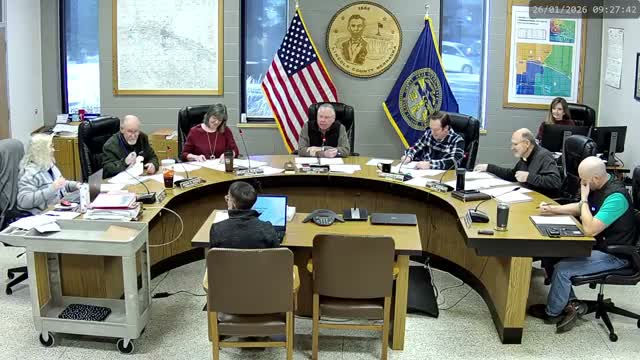
Trudy Merritt of the West Central Nebraska District Health Department gave the board a year‑one report on the county wellness program she oversees, saying the initiative reached 69 initial assessments and a core cohort of about 25 full participants. Merritt said the group lost a combined 102.2 pounds by the first quarter, 152.7 pounds by six months, and 134.8 pounds at the nine‑month mark, and that the program emphasizes education and one‑on‑one coaching rather than quick fixes.
Merritt told the board the county paid about $175 per participating employee for the initial year (roughly $12,000 for the original cohort), and the West Central health district also covered some staff time. Commissioners said they appreciated the health and morale benefits but wanted to ensure the county was getting value for money. Board members raised the point that wellness checks (including bloodwork) are covered 100% by the county’s insurance plan and asked whether West Central could bill insurance for bloodwork to reduce the county’s outlay.
Merritt said West Central and county staff plan to coordinate those options. She also said the county and the health district were invited to jointly apply for the governor’s wellness awards (application deadline May 22), and she volunteered to lead the application. Commissioners asked staff to confer with Megan Trevino at West Central about insurance billing, potential per‑person costs if enrollment grows, and whether West Central could offer convenient on‑site blood draws for employees.
No formal action to fund year two was taken at the meeting; commissioners agreed to keep the program on the agenda while staff and West Central refine cost estimates and billing options. "I care about people," Merritt told the board, "not just numbers," while noting the program’s measured improvements and the education and coaching that supported those results.
What’s next: Staff will follow up with West Central District Health and the county insurance administrator to clarify whether bloodwork can be billed to insurance, produce cost estimates for different enrollment levels, and report back to the board before deciding whether to continue funding year two.
Merritt told the board the county paid about $175 per participating employee for the initial year (roughly $12,000 for the original cohort), and the West Central health district also covered some staff time. Commissioners said they appreciated the health and morale benefits but wanted to ensure the county was getting value for money. Board members raised the point that wellness checks (including bloodwork) are covered 100% by the county’s insurance plan and asked whether West Central could bill insurance for bloodwork to reduce the county’s outlay.
Merritt said West Central and county staff plan to coordinate those options. She also said the county and the health district were invited to jointly apply for the governor’s wellness awards (application deadline May 22), and she volunteered to lead the application. Commissioners asked staff to confer with Megan Trevino at West Central about insurance billing, potential per‑person costs if enrollment grows, and whether West Central could offer convenient on‑site blood draws for employees.
No formal action to fund year two was taken at the meeting; commissioners agreed to keep the program on the agenda while staff and West Central refine cost estimates and billing options. "I care about people," Merritt told the board, "not just numbers," while noting the program’s measured improvements and the education and coaching that supported those results.
What’s next: Staff will follow up with West Central District Health and the county insurance administrator to clarify whether bloodwork can be billed to insurance, produce cost estimates for different enrollment levels, and report back to the board before deciding whether to continue funding year two.
View the Full Meeting & All Its Details
This article offers just a summary. Unlock complete video, transcripts, and insights as a Founder Member.
✓
Watch full, unedited meeting videos
✓
Search every word spoken in unlimited transcripts
✓
AI summaries & real-time alerts (all government levels)
✓
Permanent access to expanding government content
30-day money-back guarantee
