Boulder advisory board hears state, local models for neuroinclusive housing and financing hurdles
January 29, 2026 | Boulder, Boulder County, Colorado
This article was created by AI summarizing key points discussed. AI makes mistakes, so for full details and context, please refer to the video of the full meeting. Please report any errors so we can fix them. Report an error »
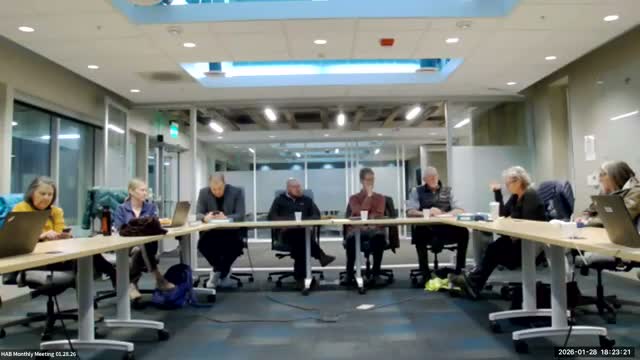
Kristen Heiser, executive director of the Broomfield Housing Alliance, told the Boulder Housing Advisory Board on Jan. 28 that the Grove at Cottonwood — now under construction — will offer 40 affordable, accessible rental units aimed at households earning 30–60% of area median income and will leverage 10 project‑based rental vouchers set aside for people with disabilities. "Those vouchers have to be used by that population," Heiser said, describing MOUs with local providers to make services consumer‑driven rather than property‑controlled.
The meeting brought experts from across Colorado to explain design, funding and policy approaches. Tim Dolan of the Inclusive Housing Coalition outlined statewide needs and resources, noting Medicaid waivers and service pathways administered by the Colorado Department of Health Care Policy and Financing and estimating roughly 127,000 Coloradans have requested services related to intellectual and developmental disabilities. "A big part of this happens to be affordability," Dolan said, urging attention to voucher alignment, provider capacity and aging caregivers who may soon need alternative placements for adult family members.
Architect Brian Bowen and other designers emphasized that small planning choices shape daily community life: courtyard orientation, exterior walkways and a central "common house" can increase casual interactions and reduce social isolation. Bowen described unit design choices such as en‑suite caregiver rooms, in‑unit laundry and layouts that allow pacing and movement as inexpensive but meaningful features for residents.
Panelists also reviewed financing realities. Heiser said the Grove used 9% low‑income housing tax credits, state credits and HOME funding from the Boulder‑Broomfield consortium; she said BHA is contributing operating funds to cover resident services and pursuing grants to sustain on‑site programming. "There are not special pots of money that are particularly serving this population," she said. "We're scrambling for those dollars like everyone else."
Speakers urged policy changes to make projects easier to build at scale: update the Boulder Valley Comprehensive Plan to prioritize transit‑served sites, revise the land‑use code to allow appropriate housing typologies by‑right, and create expedited review tracks and incentives such as density bonuses for neuroinclusive developments. Several panelists and board members recommended HAB pursue a joint study session with city council and site tours of existing projects to translate the panel’s recommendations into local planning language.
The board closed the discussion by scheduling comp‑plan review work in early March and noting the Grove and other models as examples staff and council could study further.
The meeting brought experts from across Colorado to explain design, funding and policy approaches. Tim Dolan of the Inclusive Housing Coalition outlined statewide needs and resources, noting Medicaid waivers and service pathways administered by the Colorado Department of Health Care Policy and Financing and estimating roughly 127,000 Coloradans have requested services related to intellectual and developmental disabilities. "A big part of this happens to be affordability," Dolan said, urging attention to voucher alignment, provider capacity and aging caregivers who may soon need alternative placements for adult family members.
Architect Brian Bowen and other designers emphasized that small planning choices shape daily community life: courtyard orientation, exterior walkways and a central "common house" can increase casual interactions and reduce social isolation. Bowen described unit design choices such as en‑suite caregiver rooms, in‑unit laundry and layouts that allow pacing and movement as inexpensive but meaningful features for residents.
Panelists also reviewed financing realities. Heiser said the Grove used 9% low‑income housing tax credits, state credits and HOME funding from the Boulder‑Broomfield consortium; she said BHA is contributing operating funds to cover resident services and pursuing grants to sustain on‑site programming. "There are not special pots of money that are particularly serving this population," she said. "We're scrambling for those dollars like everyone else."
Speakers urged policy changes to make projects easier to build at scale: update the Boulder Valley Comprehensive Plan to prioritize transit‑served sites, revise the land‑use code to allow appropriate housing typologies by‑right, and create expedited review tracks and incentives such as density bonuses for neuroinclusive developments. Several panelists and board members recommended HAB pursue a joint study session with city council and site tours of existing projects to translate the panel’s recommendations into local planning language.
The board closed the discussion by scheduling comp‑plan review work in early March and noting the Grove and other models as examples staff and council could study further.
Don't Miss a Word: See the Full Meeting!
Go beyond summaries. Unlock every video, transcript, and key insight with a Founder Membership.
✓
Get instant access to full meeting videos
✓
Search and clip any phrase from complete transcripts
✓
Receive AI-powered summaries & custom alerts
✓
Enjoy lifetime, unrestricted access to government data
30-day money-back guarantee
