Vermont transportation officials push odometer-based mileage fee for EVs, plan to pilot with electric vehicles first
January 29, 2026 | Senate Transportation, SENATE, Committees, Legislative , Vermont
This article was created by AI summarizing key points discussed. AI makes mistakes, so for full details and context, please refer to the video of the full meeting. Please report any errors so we can fix them. Report an error »
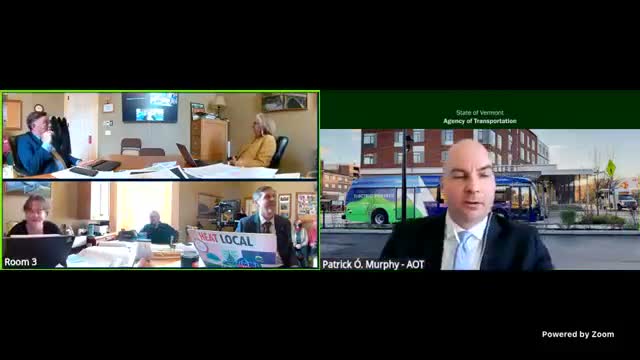
Patrick Murphy, state policy director for the Vermont Agency of Transportation, briefed the Senate Transportation Committee on the state’s mileage-based user-fee design and implementation plan. Murphy said the proposed program would begin with fully electric vehicles and rely primarily on odometer readings from inspection-provider records, integrated into DMV systems via an API, with photo capture as a contingency for pay-as-you-go reporting.
Murphy told members the state’s design favors a state‑administered program for cost effectiveness and estimated administrative costs "somewhere, between 3 and a half and 5%" of revenue at launch, declining toward 2.5–3% as enrollment grows. He said Vermont currently has roughly 12,000–13,000 fully electric vehicles and about 21,000 plug‑in vehicles overall; the mileage-based fee is intended to replace the current $89 annual EV infrastructure fee for fully electric vehicles, while plug‑in hybrids would remain at roughly half that rate (about $44.50) unless the legislature decides otherwise.
Murphy emphasized privacy considerations drove the choice to use odometer reconciliation rather than continuous telematics. Compliance would focus on the vehicle registration process—using final reconciliation at registration and a higher default flat fee for vehicles missing required inspection data—rather than early license suspensions.
On timing, Murphy said the federal grant requires a deliverable by Jan. 1, 2027; the agency negotiated that date with FHWA from an earlier, earlier deadline. He said the Agency will submit a rate‑setting memo from the UVM Transportation Research Center within a week or two and will return to the committee for rate discussion and further technical testimony.
The committee signaled support for beginning with EVs to limit near‑term complexity but asked for follow-up materials on rate methodology, household impacts, out‑of‑state mileage implications and privacy protections. Murphy said he would return with the rate memo and coordinate vendor and vendor‑integration work with DMV teams.
Murphy told members the state’s design favors a state‑administered program for cost effectiveness and estimated administrative costs "somewhere, between 3 and a half and 5%" of revenue at launch, declining toward 2.5–3% as enrollment grows. He said Vermont currently has roughly 12,000–13,000 fully electric vehicles and about 21,000 plug‑in vehicles overall; the mileage-based fee is intended to replace the current $89 annual EV infrastructure fee for fully electric vehicles, while plug‑in hybrids would remain at roughly half that rate (about $44.50) unless the legislature decides otherwise.
Murphy emphasized privacy considerations drove the choice to use odometer reconciliation rather than continuous telematics. Compliance would focus on the vehicle registration process—using final reconciliation at registration and a higher default flat fee for vehicles missing required inspection data—rather than early license suspensions.
On timing, Murphy said the federal grant requires a deliverable by Jan. 1, 2027; the agency negotiated that date with FHWA from an earlier, earlier deadline. He said the Agency will submit a rate‑setting memo from the UVM Transportation Research Center within a week or two and will return to the committee for rate discussion and further technical testimony.
The committee signaled support for beginning with EVs to limit near‑term complexity but asked for follow-up materials on rate methodology, household impacts, out‑of‑state mileage implications and privacy protections. Murphy said he would return with the rate memo and coordinate vendor and vendor‑integration work with DMV teams.
View the Full Meeting & All Its Details
This article offers just a summary. Unlock complete video, transcripts, and insights as a Founder Member.
✓
Watch full, unedited meeting videos
✓
Search every word spoken in unlimited transcripts
✓
AI summaries & real-time alerts (all government levels)
✓
Permanent access to expanding government content
30-day money-back guarantee
