Hutchinson to Demolish Century‑Old Jorgensen Hotel, Developer Plans New 40‑Room Building
January 27, 2026 | McLeod County, Minnesota
This article was created by AI summarizing key points discussed. AI makes mistakes, so for full details and context, please refer to the video of the full meeting. Please report any errors so we can fix them. Report an error »
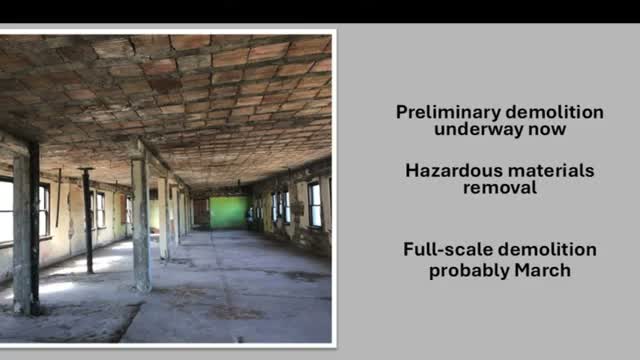
Miles Seppold, Hutchinson’s economic development director, said the century‑old Jorgensen Hotel at Main Street and Washington Avenue will be demolished after hazardous‑material abatement and permitting, and a new 40‑room hotel is planned for the site. “I would imagine that full scale demolition is probably going to be taking place in March,” Seppold said.
Seppold laid out why developers concluded preservation is not feasible: the building’s 1916–17 construction left narrow rooms (originally about 64 hotel rooms), an interior atrium and heavy masonry that make modern conversion costly and structurally difficult. He described water intrusion that has damaged the foundation, a failing parapet and other structural issues that engineers judged would prevent a cost‑effective rehabilitation.
The property was acquired by Titanium Partners in 2022, and Seppold said engineers and the developer determined demolition was the only practical option. He described necessary pre‑demolition steps: testing and removing hazardous materials such as asbestos, lead‑based paint and other contaminants before bulk demolition can occur, and obtaining a Minnesota state demolition permit with a statutory waiting period.
Ken of Bauer and Company, who joined the on‑site tour, confirmed that some historic elements will be salvaged: “Historic Hutchinson wanting to keep those,” he said, referring to decorative railings and other architectural pieces identified for preservation. Seppold said the developer is coordinating salvage for elements that can be reused or preserved by local historic groups.
Seppold described prior redevelopment attempts, noting that earlier efforts removed upper‑floor hotel rooms and converted the main floor for retail and offices; those projects stalled because the building could not produce enough revenue to justify expensive structural work. He cited an approximate elevator and structural retrofit cost example, saying an elevator alone would have been “at least 280,000” dollars in prior retrofit estimates, which contributed to the financial infeasibility of reuse.
Looking ahead, Seppold said the new building under consideration would be roughly 40 rooms and likely four to five stories, with the possibility of an upper‑level event space offering views of the nearby State Theater. He emphasized timing is dependent on the developer’s final plans; no formal council action or vote was part of the presentation.
Next steps identified on the tour include completing hazardous‑materials sampling and removal, securing required state permits and proceeding with demolition when abatement and permitting are complete. Seppold said demolition timing will depend on contractor schedules and permit timelines.
Seppold laid out why developers concluded preservation is not feasible: the building’s 1916–17 construction left narrow rooms (originally about 64 hotel rooms), an interior atrium and heavy masonry that make modern conversion costly and structurally difficult. He described water intrusion that has damaged the foundation, a failing parapet and other structural issues that engineers judged would prevent a cost‑effective rehabilitation.
The property was acquired by Titanium Partners in 2022, and Seppold said engineers and the developer determined demolition was the only practical option. He described necessary pre‑demolition steps: testing and removing hazardous materials such as asbestos, lead‑based paint and other contaminants before bulk demolition can occur, and obtaining a Minnesota state demolition permit with a statutory waiting period.
Ken of Bauer and Company, who joined the on‑site tour, confirmed that some historic elements will be salvaged: “Historic Hutchinson wanting to keep those,” he said, referring to decorative railings and other architectural pieces identified for preservation. Seppold said the developer is coordinating salvage for elements that can be reused or preserved by local historic groups.
Seppold described prior redevelopment attempts, noting that earlier efforts removed upper‑floor hotel rooms and converted the main floor for retail and offices; those projects stalled because the building could not produce enough revenue to justify expensive structural work. He cited an approximate elevator and structural retrofit cost example, saying an elevator alone would have been “at least 280,000” dollars in prior retrofit estimates, which contributed to the financial infeasibility of reuse.
Looking ahead, Seppold said the new building under consideration would be roughly 40 rooms and likely four to five stories, with the possibility of an upper‑level event space offering views of the nearby State Theater. He emphasized timing is dependent on the developer’s final plans; no formal council action or vote was part of the presentation.
Next steps identified on the tour include completing hazardous‑materials sampling and removal, securing required state permits and proceeding with demolition when abatement and permitting are complete. Seppold said demolition timing will depend on contractor schedules and permit timelines.
Don't Miss a Word: See the Full Meeting!
Go beyond summaries. Unlock every video, transcript, and key insight with a Founder Membership.
✓
Get instant access to full meeting videos
✓
Search and clip any phrase from complete transcripts
✓
Receive AI-powered summaries & custom alerts
✓
Enjoy lifetime, unrestricted access to government data
30-day money-back guarantee
