Brooks Bridge replacement: higher clearance, phased closures and weather delays
January 26, 2026 | Okaloosa County, Florida
This article was created by AI summarizing key points discussed. AI makes mistakes, so for full details and context, please refer to the video of the full meeting. Please report any errors so we can fix them. Report an error »
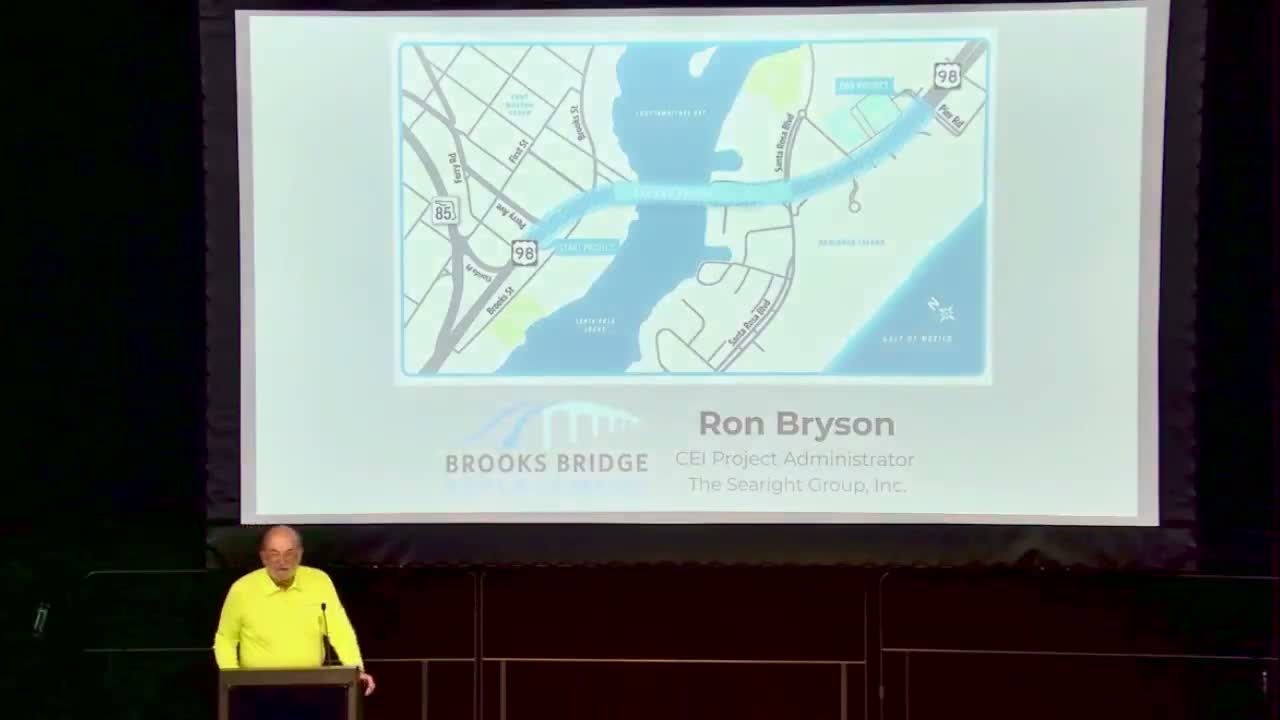
Contractors and project staff briefed waterway users on progress and staging for the Brooks Bridge Replacement during the county’s Waterway Safety Meeting.
Ron Bryson, who has worked multiple Brooks projects, said the new bridge will provide a 65‑foot vertical clearance to meet Coast Guard requirements (the current bridge provides about 49 feet at high tide) and a roughly 150‑foot navigational opening. He described a sequence of channel closures authorized by the Coast Guard—typically from 7 p.m. to 5 a.m.—to allow placement of large components and pile driving.
Bryson said the project has experienced pile‑driving difficulties and permitting waits from the Corps of Engineers and Coast Guard that have delayed activities. "Acquisition of the permit to even get started ... was several weeks," he said, stressing those permitting steps delayed pile work. He also warned that weather constraints—wind limits for heavy lifts and contractor insurance conditions—create unavoidable "weather days" that extend the contract.
Motorists will see a traffic shift when the new westbound span opens; in the near term the visible structure will operate as four lanes even though the final design accommodates six lanes when roadwork allows. Demolition of the old bridge will require additional temporary closures and careful sequencing to avoid major disruption to US‑98 and the Intracoastal Waterway.
Bryson said best‑case traffic access on the new span could occur in early fall 2028, but he cautioned that that date is contingent on weather and construction setbacks. He directed attendees to infomibrooksbridge.com and said DOT public‑information staff will continue to update the community.
What happens next: operators who transit Choctawhatchee Bay should monitor Coast Guard notices to mariners for nightly channel closures and review the project website for schedule updates.
Ron Bryson, who has worked multiple Brooks projects, said the new bridge will provide a 65‑foot vertical clearance to meet Coast Guard requirements (the current bridge provides about 49 feet at high tide) and a roughly 150‑foot navigational opening. He described a sequence of channel closures authorized by the Coast Guard—typically from 7 p.m. to 5 a.m.—to allow placement of large components and pile driving.
Bryson said the project has experienced pile‑driving difficulties and permitting waits from the Corps of Engineers and Coast Guard that have delayed activities. "Acquisition of the permit to even get started ... was several weeks," he said, stressing those permitting steps delayed pile work. He also warned that weather constraints—wind limits for heavy lifts and contractor insurance conditions—create unavoidable "weather days" that extend the contract.
Motorists will see a traffic shift when the new westbound span opens; in the near term the visible structure will operate as four lanes even though the final design accommodates six lanes when roadwork allows. Demolition of the old bridge will require additional temporary closures and careful sequencing to avoid major disruption to US‑98 and the Intracoastal Waterway.
Bryson said best‑case traffic access on the new span could occur in early fall 2028, but he cautioned that that date is contingent on weather and construction setbacks. He directed attendees to infomibrooksbridge.com and said DOT public‑information staff will continue to update the community.
What happens next: operators who transit Choctawhatchee Bay should monitor Coast Guard notices to mariners for nightly channel closures and review the project website for schedule updates.
View the Full Meeting & All Its Details
This article offers just a summary. Unlock complete video, transcripts, and insights as a Founder Member.
✓
Watch full, unedited meeting videos
✓
Search every word spoken in unlimited transcripts
✓
AI summaries & real-time alerts (all government levels)
✓
Permanent access to expanding government content
30-day money-back guarantee
