Design Review Board returns three Swarthmore Drive house proposals for redesign after fire, drainage and habitat concerns
January 23, 2026 | Glendale, Los Angeles County, California
This article was created by AI summarizing key points discussed. AI makes mistakes, so for full details and context, please refer to the video of the full meeting. Please report any errors so we can fix them. Report an error »
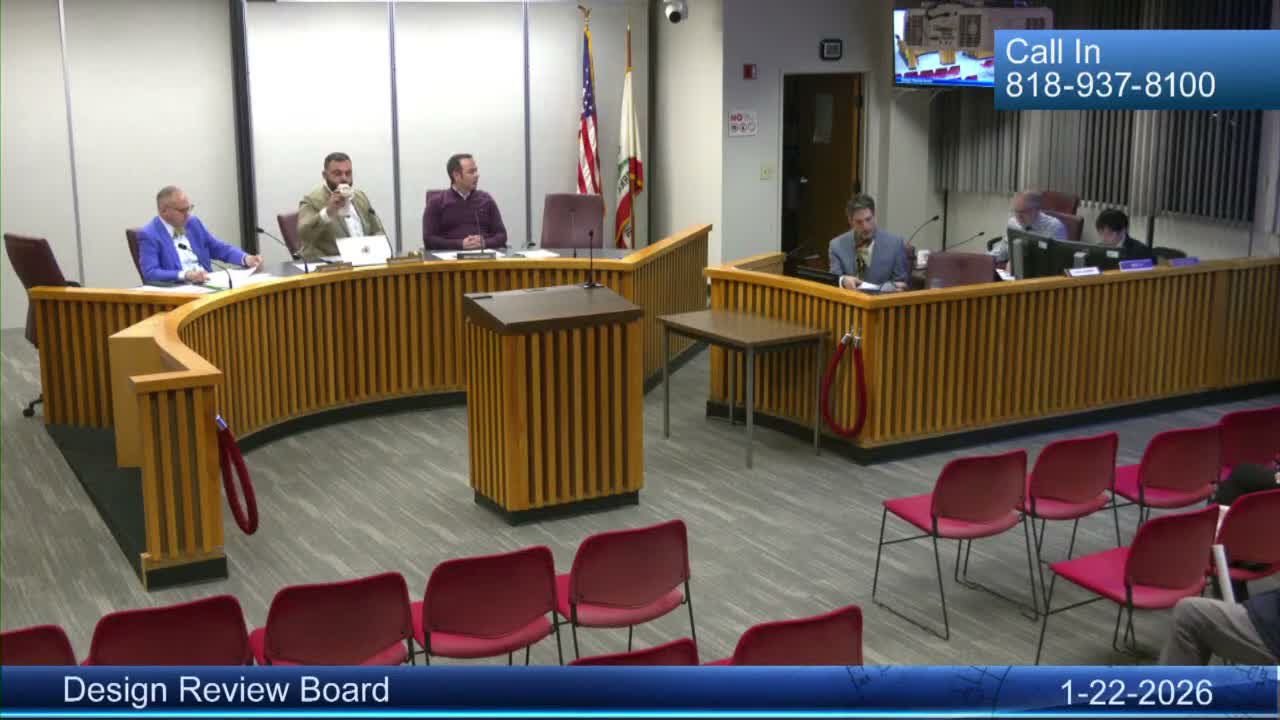
The Glendale Design Review Board voted Jan. 22 to return three proposed hillside homes created by a prior vesting parcel map for redesign after public testimony raised concerns about fire access, drainage, habitat impacts and the projects’ visual character.
Planning staff presented three parcels created by vesting parcel map case no. 1425257. Staff recommended each house be restudied on materials, lighting, integration of mechanicals and limited exterior lighting. The projects are proposed as single-family homes sited to minimize grading using terraced massing; staff estimated that about 89% of one parcel would remain as open space and noted native oak preservation and drought-tolerant plantings.
During a lengthy public comment period, multiple neighbors and stakeholders urged more scrutiny. Mauro Yakubian and several residents cited a 1993 City Council rejection of development in this area and argued persistent constraints — steep slopes, limited road access and wildfire history — make the site unsuitable for intensive development. Several commenters asked whether a full environmental impact report had been prepared; staff noted that single-family homes in an urbanized area may qualify for CEQA exemptions and that project-specific environmental/plan‑check reviews remain pending.
Tim Martinez of the Arroyos & Foothills Conservancy said the lots sit within an active wildlife corridor and warned that Glendale’s 100‑foot defensible‑space requirement could substantially reduce habitat and connectivity. Multiple residents also asked for explicit fire‑department signoff; civil engineer Haik Martirosyan said the team had consulted the fire department informally, designed a cul‑de‑sac with a 70‑foot diameter to accommodate apparatus (the department’s typical requirement is 60 feet), and intends to include sprinklers and fire‑safety measures at plan check.
Board members expressed concerns about the projects’ uniform flat roofs and a “campus-like” appearance and asked applicants to differentiate the three homes with distinct materials, color or altered roof forms so they read as separate residences. Commissioners also flagged parking and trash-enclosure placements: staff and board members agreed Parcel C’s trash enclosure as shown would conflict with an egress stair and should be relocated.
After deliberation, the board voted to return each parcel for redesign with conditions to: restudy and vary roof forms; add material or color differentiation on visible facades; rework front-entry articulation and transitional zones; relocate impractical trash enclosures; show final drainage/stormwater mitigation at plan check; and ensure mechanicals and utilities are integrated and screened. Each return-for-redesign motion passed unanimously on roll call (Welsh, Halagian, Kaskanian). The projects will return to the board after the applicant addresses the specified design and plan corrections.
"Our concern is that these should look like three separate homes, not a campus," Board member Welsh said during deliberations, urging varying of materials and roof forms. Civil engineer Haik Martirosyan said the team had met with fire staff and designed a larger cul-de-sac turnaround "so we have enough area for the engine to turn around."
Planning staff presented three parcels created by vesting parcel map case no. 1425257. Staff recommended each house be restudied on materials, lighting, integration of mechanicals and limited exterior lighting. The projects are proposed as single-family homes sited to minimize grading using terraced massing; staff estimated that about 89% of one parcel would remain as open space and noted native oak preservation and drought-tolerant plantings.
During a lengthy public comment period, multiple neighbors and stakeholders urged more scrutiny. Mauro Yakubian and several residents cited a 1993 City Council rejection of development in this area and argued persistent constraints — steep slopes, limited road access and wildfire history — make the site unsuitable for intensive development. Several commenters asked whether a full environmental impact report had been prepared; staff noted that single-family homes in an urbanized area may qualify for CEQA exemptions and that project-specific environmental/plan‑check reviews remain pending.
Tim Martinez of the Arroyos & Foothills Conservancy said the lots sit within an active wildlife corridor and warned that Glendale’s 100‑foot defensible‑space requirement could substantially reduce habitat and connectivity. Multiple residents also asked for explicit fire‑department signoff; civil engineer Haik Martirosyan said the team had consulted the fire department informally, designed a cul‑de‑sac with a 70‑foot diameter to accommodate apparatus (the department’s typical requirement is 60 feet), and intends to include sprinklers and fire‑safety measures at plan check.
Board members expressed concerns about the projects’ uniform flat roofs and a “campus-like” appearance and asked applicants to differentiate the three homes with distinct materials, color or altered roof forms so they read as separate residences. Commissioners also flagged parking and trash-enclosure placements: staff and board members agreed Parcel C’s trash enclosure as shown would conflict with an egress stair and should be relocated.
After deliberation, the board voted to return each parcel for redesign with conditions to: restudy and vary roof forms; add material or color differentiation on visible facades; rework front-entry articulation and transitional zones; relocate impractical trash enclosures; show final drainage/stormwater mitigation at plan check; and ensure mechanicals and utilities are integrated and screened. Each return-for-redesign motion passed unanimously on roll call (Welsh, Halagian, Kaskanian). The projects will return to the board after the applicant addresses the specified design and plan corrections.
"Our concern is that these should look like three separate homes, not a campus," Board member Welsh said during deliberations, urging varying of materials and roof forms. Civil engineer Haik Martirosyan said the team had met with fire staff and designed a larger cul-de-sac turnaround "so we have enough area for the engine to turn around."
View the Full Meeting & All Its Details
This article offers just a summary. Unlock complete video, transcripts, and insights as a Founder Member.
✓
Watch full, unedited meeting videos
✓
Search every word spoken in unlimited transcripts
✓
AI summaries & real-time alerts (all government levels)
✓
Permanent access to expanding government content
30-day money-back guarantee
