Lapeer commissioners defer decision on Flock Safety license-plate camera contract after hours of public comment
January 22, 2026 | Lapeer County, Michigan
This article was created by AI summarizing key points discussed. AI makes mistakes, so for full details and context, please refer to the video of the full meeting. Please report any errors so we can fix them. Report an error »
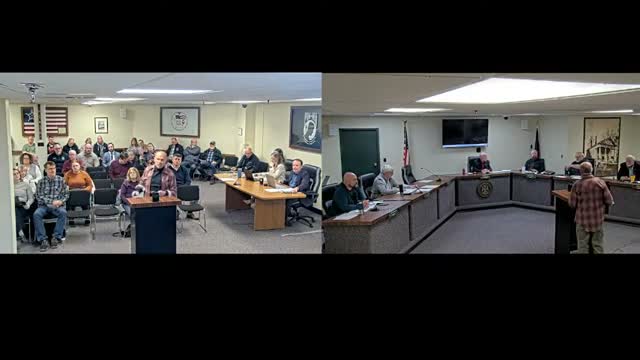
The Lapeer County Board of Commissioners voted 4–3 to defer a decision on a proposed contract with Flock Safety for countywide license-plate reader (LPR) cameras, directing staff to return a completed contract and written answers to questions submitted by commissioners before the next full board meeting.
The motion to defer, made on the floor by a commissioner during the meeting and approved by roll call, followed more than two hours of public comment, a presentation by Sheriff McKenna describing public-safety benefits, and a technical and policy presentation by Flock Safety representatives. The ACLU of Michigan and numerous residents urged the board to reject the system or place the matter before voters, citing civil‑liberties and privacy concerns.
Why it matters: Supporters — including Sheriff McKenna — said LPRs help locate missing seniors, assist in solving transient crimes, and provide investigative leads across jurisdictions. Opponents warned the system creates a searchable database of motorists’ movements, can be expanded with AI or third‑party integrations, and poses risks if data sharing, contract language, or vendor practices allow wider access.
What the presenters said: Sheriff McKenna told the board he had not seen a tool “more beneficial … for protecting a community” in his 32 years of service and emphasized cases where LPR data helped find suspects or missing people. Carrie McCormack of Flock Safety said the company’s LPR product captures only the back of vehicles and license plates, that images are stored in a customer‑segregated section of AWS GovCloud in North America, and that Flock’s default policy is a 30‑day hard deletion unless images are downloaded for an active investigation. McCormack also stated, “We do not sell our customers’ data.”
What opponents said: Gabrielle Dresner, policy strategist for the ACLU of Michigan, told commissioners that ALPR systems can become tracking tools as data are pooled and retained, and urged a vote against procurement unless strict local controls are adopted. Multiple residents raised technical-vulnerability reports, noted pending litigation (including a recent case in Norfolk referenced by speakers), and disputed vendor claims about breach immunity and third‑party access.
Contract and legal concerns: Commissioners pressed Flock on contract language — especially terms governing disclosure of customer data (including a contested Section 5.3), definitions that distinguish “customer data” from raw footage and Flock IP, and termination rights. Several commissioners repeatedly asked whether federal or state agencies could access county images without further local action; Flock representatives said default access is not granted and that sharing requires the customer’s affirmative opt‑in, but offered to have legal teams provide detailed redlines and follow‑up notes.
Outcome and next steps: The board’s motion to defer (passage 4–3 on roll call) requires staff and the vendor to return with a finalized contract that addresses commissioners’ submitted questions. The board also invited the ACLU to provide an educational session. No procurement contract was signed or executed at the meeting.
Vote (roll call): Nisley — No; McMahon — No; Wise — Yes; Zender — Yes; Hagedorn — No; Kemp — Yes; Chairman Howell — Yes. The motion passed 4–3.
The board thanked the sheriff and Flock presenters for their time; commissioners said the item will return for final consideration once contractual clarifications and requested information are provided.
The motion to defer, made on the floor by a commissioner during the meeting and approved by roll call, followed more than two hours of public comment, a presentation by Sheriff McKenna describing public-safety benefits, and a technical and policy presentation by Flock Safety representatives. The ACLU of Michigan and numerous residents urged the board to reject the system or place the matter before voters, citing civil‑liberties and privacy concerns.
Why it matters: Supporters — including Sheriff McKenna — said LPRs help locate missing seniors, assist in solving transient crimes, and provide investigative leads across jurisdictions. Opponents warned the system creates a searchable database of motorists’ movements, can be expanded with AI or third‑party integrations, and poses risks if data sharing, contract language, or vendor practices allow wider access.
What the presenters said: Sheriff McKenna told the board he had not seen a tool “more beneficial … for protecting a community” in his 32 years of service and emphasized cases where LPR data helped find suspects or missing people. Carrie McCormack of Flock Safety said the company’s LPR product captures only the back of vehicles and license plates, that images are stored in a customer‑segregated section of AWS GovCloud in North America, and that Flock’s default policy is a 30‑day hard deletion unless images are downloaded for an active investigation. McCormack also stated, “We do not sell our customers’ data.”
What opponents said: Gabrielle Dresner, policy strategist for the ACLU of Michigan, told commissioners that ALPR systems can become tracking tools as data are pooled and retained, and urged a vote against procurement unless strict local controls are adopted. Multiple residents raised technical-vulnerability reports, noted pending litigation (including a recent case in Norfolk referenced by speakers), and disputed vendor claims about breach immunity and third‑party access.
Contract and legal concerns: Commissioners pressed Flock on contract language — especially terms governing disclosure of customer data (including a contested Section 5.3), definitions that distinguish “customer data” from raw footage and Flock IP, and termination rights. Several commissioners repeatedly asked whether federal or state agencies could access county images without further local action; Flock representatives said default access is not granted and that sharing requires the customer’s affirmative opt‑in, but offered to have legal teams provide detailed redlines and follow‑up notes.
Outcome and next steps: The board’s motion to defer (passage 4–3 on roll call) requires staff and the vendor to return with a finalized contract that addresses commissioners’ submitted questions. The board also invited the ACLU to provide an educational session. No procurement contract was signed or executed at the meeting.
Vote (roll call): Nisley — No; McMahon — No; Wise — Yes; Zender — Yes; Hagedorn — No; Kemp — Yes; Chairman Howell — Yes. The motion passed 4–3.
The board thanked the sheriff and Flock presenters for their time; commissioners said the item will return for final consideration once contractual clarifications and requested information are provided.
View the Full Meeting & All Its Details
This article offers just a summary. Unlock complete video, transcripts, and insights as a Founder Member.
✓
Watch full, unedited meeting videos
✓
Search every word spoken in unlimited transcripts
✓
AI summaries & real-time alerts (all government levels)
✓
Permanent access to expanding government content
30-day money-back guarantee
