Connecticut House approves $300M seed for Early Childhood Education Endowment after heated debate over fiscal trade-offs
May 31, 2025 | 2025 Legislature CT, Connecticut
This article was created by AI summarizing key points discussed. AI makes mistakes, so for full details and context, please refer to the video of the full meeting. Please report any errors so we can fix them. Report an error »
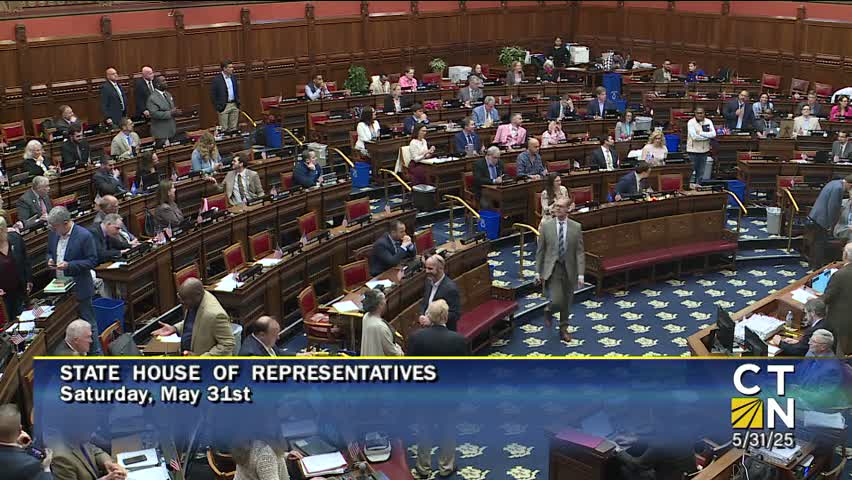
Hartford — The Connecticut House on Saturday approved Senate Bill 1, creating an Early Childhood Education Endowment designed to expand preschool and infant‑toddler care, increase provider rates and fund workforce supports.
Supporters described the measure as a long‑term investment to make child care more available and affordable and to lift wages for early childhood educators. Representative Farrar, the bill’s floor sponsor, told colleagues the endowment will “by 2032 provide for universal preschool for all of Connecticut’s children” and in earlier years begin making infant, toddler and preschool care “meaningfully more affordable for every Connecticut family.”
The legislation establishes a treasurer‑managed endowment and an advisory board, authorizes an initial transfer of up to $300 million from the unappropriated surplus on or before June 30, and allows limited drawdowns to support program rollouts: up to 12% of the fund in the first two fiscal years and up to 10% annually thereafter, subject to advisory‑board recommendations and reporting requirements. The bill also creates a competitive expansion process for new slots, requires that at least 35% of new spaces be for infants and toddlers, and sets a family contribution cap: families earning under $100,000 pay $0 and those above that threshold pay no more than 7% of income.
Opponents warned that seeding the endowment with surplus money will reduce the state’s built‑in surplus transfers used to pay down pension debt and other obligations. Representative Corpus argued that the plan “is putting in a lot of money today” while authorizing withdrawals at rates higher than many established endowments draw, and said the move risks eroding the fiscal guardrails that have delivered billions in savings in recent years.
Other lawmakers raised questions about governance, the political balance on the advisory board, and whether the program’s long‑term commitments are sustainable if future surpluses fall short of expectations. Representative Zupkus repeatedly asked how the fund would be protected if revenue projections were wrong and whether the endowment could become an unfunded mandate for local providers and towns.
Proponents countered that guardrails were included. Representative Farrar noted the bill limits the percentage that can be spent annually and requires an impact analysis and periodic reporting on the endowment’s solvency. She said the fund’s returns will grow the corpus over time and that the first two fiscal years prioritize increases in payments to existing providers and steps toward greater educator pay, plus technical assistance and scholarships to expand the workforce.
A last‑minute amendment from the House to alter the funding mix failed in a roll‑call vote; the final passage of the bill as amended met the constitutional threshold for reallocating unappropriated surplus by a recorded vote of 101 to 45 (absent 5). The constitutional rule requires a three‑fifths majority when the Legislature designates a different use for surplus funds, and House leadership concluded the bill met that test.
What’s next: The statute requires the advisory board to be appointed quickly and to deliver an initial report and a scheduled public hearing. The Office of Early Childhood must produce an impact analysis by 2032 and periodic five‑year reviews. Implementation details — including the RFP process for expansion slots, the composition of the advisory board and the mechanics of the family contribution policy — will be phased in and overseen by state agencies.
Vote and implementation notes: The House vote recorded 101 yes, 45 no, 5 absent; the bill proceeds in concurrence with the Senate as amended.
Why this matters: Supporters say the plan aims to increase access to quality early education and reduce long‑term social and budgetary costs by improving school readiness and workforce participation. Critics say the financing plan risks weakening debt‑reduction efforts and could permanently tie up surplus funds that had been contributing to pension savings and other fiscal priorities.
The House adjourned after a full day of debate and other business; several members described the vote as a generational decision about whether to shift a sizable portion of surplus resources into a long‑term funding vehicle for child care.
Supporters described the measure as a long‑term investment to make child care more available and affordable and to lift wages for early childhood educators. Representative Farrar, the bill’s floor sponsor, told colleagues the endowment will “by 2032 provide for universal preschool for all of Connecticut’s children” and in earlier years begin making infant, toddler and preschool care “meaningfully more affordable for every Connecticut family.”
The legislation establishes a treasurer‑managed endowment and an advisory board, authorizes an initial transfer of up to $300 million from the unappropriated surplus on or before June 30, and allows limited drawdowns to support program rollouts: up to 12% of the fund in the first two fiscal years and up to 10% annually thereafter, subject to advisory‑board recommendations and reporting requirements. The bill also creates a competitive expansion process for new slots, requires that at least 35% of new spaces be for infants and toddlers, and sets a family contribution cap: families earning under $100,000 pay $0 and those above that threshold pay no more than 7% of income.
Opponents warned that seeding the endowment with surplus money will reduce the state’s built‑in surplus transfers used to pay down pension debt and other obligations. Representative Corpus argued that the plan “is putting in a lot of money today” while authorizing withdrawals at rates higher than many established endowments draw, and said the move risks eroding the fiscal guardrails that have delivered billions in savings in recent years.
Other lawmakers raised questions about governance, the political balance on the advisory board, and whether the program’s long‑term commitments are sustainable if future surpluses fall short of expectations. Representative Zupkus repeatedly asked how the fund would be protected if revenue projections were wrong and whether the endowment could become an unfunded mandate for local providers and towns.
Proponents countered that guardrails were included. Representative Farrar noted the bill limits the percentage that can be spent annually and requires an impact analysis and periodic reporting on the endowment’s solvency. She said the fund’s returns will grow the corpus over time and that the first two fiscal years prioritize increases in payments to existing providers and steps toward greater educator pay, plus technical assistance and scholarships to expand the workforce.
A last‑minute amendment from the House to alter the funding mix failed in a roll‑call vote; the final passage of the bill as amended met the constitutional threshold for reallocating unappropriated surplus by a recorded vote of 101 to 45 (absent 5). The constitutional rule requires a three‑fifths majority when the Legislature designates a different use for surplus funds, and House leadership concluded the bill met that test.
What’s next: The statute requires the advisory board to be appointed quickly and to deliver an initial report and a scheduled public hearing. The Office of Early Childhood must produce an impact analysis by 2032 and periodic five‑year reviews. Implementation details — including the RFP process for expansion slots, the composition of the advisory board and the mechanics of the family contribution policy — will be phased in and overseen by state agencies.
Vote and implementation notes: The House vote recorded 101 yes, 45 no, 5 absent; the bill proceeds in concurrence with the Senate as amended.
Why this matters: Supporters say the plan aims to increase access to quality early education and reduce long‑term social and budgetary costs by improving school readiness and workforce participation. Critics say the financing plan risks weakening debt‑reduction efforts and could permanently tie up surplus funds that had been contributing to pension savings and other fiscal priorities.
The House adjourned after a full day of debate and other business; several members described the vote as a generational decision about whether to shift a sizable portion of surplus resources into a long‑term funding vehicle for child care.
Don't Miss a Word: See the Full Meeting!
Go beyond summaries. Unlock every video, transcript, and key insight with a Founder Membership.
✓
Get instant access to full meeting videos
✓
Search and clip any phrase from complete transcripts
✓
Receive AI-powered summaries & custom alerts
✓
Enjoy lifetime, unrestricted access to government data
30-day money-back guarantee
